
essays
Suicides Are Not Car Accidents
When trying to make a point about the troubling rise of suicide rates in America, the statistics are often compared to other modes of fatalities, and understandably so. In order to understand the scale of the problem, it helps to compare it quantitatively to undesirable things we feel more familiar with. But in the case of suicide, I think it diminishes the scope and seriousness of the issue.
I’ll pick on Arthur C. Brooks’s column at the Washington Post, because that’s what got me thinking about this. Brooks rightfully urges a serious confrontation of the undeniably sharp and steady rise in suicide rates, and to convey just how bad things have gotten, he draws comparisons to homicides and motor vehicle accidents. According to his cited statistics, there are now two suicides for every homicide in America, and there are 17 percent more deaths per year by suicide than by car accidents.
While these numbers do help to communicate the scale of the problem, these kinds of comparisons, to my mind, oversimplify the issue to an unacceptable degree and make some morally false equivalencies between only somewhat related actions and phenomena.
Let’s start with the homicide-suicide comparison, and take as granted that twice as many people die by suicide than by homicide. Put aside for the moment the rise in suicide rates. Is the fact that more people take their own lives than have their lives taken from them in itself an obviously bad thing? In every instance? Could it not be a sign that perhaps we are now less eager to murder each other, and that if we must die by someone’s hands, at least it’s more likely to happen by our own choice and volition rather than someone else’s?
Of course it’s not “a good thing” that people want to kill themselves, but what does it actually mean to point out that there are more suicides than homicides? One is a death without choice, the other, at least in the broadest sense, is. What this numerical comparison ignores is what drives a person to make that choice. Would we feel better if those numbers were reversed? I don’t think I’d feel very safe if I was told that I was twice as likely to die by murder versus suicide.
Now let’s look at the comparison to death by motor vehicle accidents. It’s similarly problematic, in that it is not at all clear to me that we’d be pleased to see the statistics in reverse, in which car accident fatalities overtake suicide deaths. In that case, we’d all be wondering what is up with all the careless driving and poorly-made vehicles?
More to the point, Brooks points to the campaigns of a generation ago to improve car safety and how they eventually led to laws and regulations that made cars and driving much safer than they had ever been, and says, essentially, let’s do that, but for suicide.
This makes little sense to me. Absolutely increase public awareness of the issue. Countless people might be helped if more Americans were better educated and empathetic about suicide. But what else are we really talking about? There’s no suicide equivalent to seat belt laws, speed limits, or air bags.
Auto accidents, and to a lesser extent homicides, are more or less binary. They are bad things that result in unwanted deaths, but they can be prevented and mitigated by a fairly straightforward collection of measures. Make cars safer, make guns scarcer, and so on. Homicide is somewhat different in that, like suicide, its tendrils reach much deeper into other societal ills, and I’ll address that in a moment. But both auto accidents and homicides boil down to one thing: They kill people who don’t want to be dead.
Suicide is something else entirely. Let us grant for the sake of simplicity that no one’s starting position is “I want to be dead, and I want it badly enough that I will end my own life myself.” Something has to push a person into that place. Several somethings, both apparent and invisible. Whatever those factors are, they are different for everyone. I’m not even slightly qualified to list them or assign them relative values. But you know some of them; depression, fear, hopelessness, self-loathing, brought on because of abuse, joblessness, loss, addiction, and so on.
The point is that while murders and car crashes steal a person’s life from them, in the case of suicide, something else has stolen a person’s desire to live, and, importantly, driven them to the point that they have concluded that ending their life would be preferable to living it. Even if we could install some sort of air-bag-for-suicides and prevent the vast majority of them from succeeding, we’d certainly bring the suicide numbers down, but we’d have done nothing to address what brought on the choice to try in the first place. There’d be fewer deaths, but just as many miserable people.
So the question can’t be — must not be — “how do we bring down the number of suicides?” The real question is about how we change society so that tens of thousands of people every year do not become so overwhelmed by existential despair that suicide even becomes an option worth considering. Yes, that means laws, but not just preventative laws focused on the act of suicide itself. If that’s all we’re thinking about, then we’re too late anyway. But we will need laws that address poverty, economic anxieties, addiction, basic health and nutrition, mental illness, education, and much, much more.
But we’ll also need to change our culture, heart by heart. We’ll need to call ourselves to become kinder to each other, more sensitive to the pain of our fellow humans, and more willing to be a friend. We’ll need to stamp out those ideologies that thrive on the marginalization of other groups, and teach each other not to fear or resent equality. We have to decide, on an individual basis, to celebrate and embrace each single person’s differences and idiosyncrasies, and rather than seek uniformity, consider our species blessed by its infinite variety of neurologies, talents, flaws, ideas, histories, gifts, and limitations.
When we start to assign value to each and every one of us, then, maybe, we’ll see those suicide numbers go down. Not because we managed to stop more folks from pulling triggers or popping pills, but because far more of us have decided that this world is worth living in for as long as we can.
Forty-Two

Listen: There are things we are supposed to want out of life, and there are the means by which we are supposed to attain them. There are cultural events, life milestones, rites of passage, and personal interactions which we are supposed to eagerly anticipate, and those we are supposed to bemoan. There are standards of comportment we are supposed to uphold, degrees of amiability we are supposed to project, and durations of eye contact we are supposed to maintain.
We are supposed to know when to laugh and when not to laugh. We are supposed to stand a certain way and sit in a certain way, and ways in which we are not supposed to stand or sit. We are supposed to have street smarts, as opposed to book smarts, but we should have enough street smarts to know how to attain those book smarts. We are supposed to be honest, except when we aren’t supposed to be. We are supposed to be careful and we are supposed to take big risks.
We are supposed to have jobs and we are supposed to seek to advance in both position and compensation in these jobs. We are supposed to look forward to lunch. We are supposed to care a great deal about food and eating and sporting events and and acts of geographical transit and the weather. We are supposed to care a great deal about many, many things, and we are supposed to know what those are without being informed in advance.
I have lived my life riven by “suppostas.” From the very first moment I realized that the world had expectations of me beyond the routine of elementary school classrooms, I was in a state of near constant bewilderment as to how I should go about my existence. All rules were unspoken and yet somehow universally understood and viciously enforced. I never received instructions, only penalties for failing to follow them.
So I flailed about in search of guidance; examples to follow and role models to emulate. But I never found any templates that I could build upon, no maps I could interpret, no ciphers I could even attempt to break. In day-to-day moments, there were ways to sit, to stand, to walk, to move, or not move, and I coudn’t make sense of them, which often meant defaulting to keeping very still. In my education, there were crucial tasks to accomplish that had nothing to do with that was in the syllubus, and yet were somehow clear to my peers. In the professional world, the litany of unwritten rules, agendas, rites, and rituals were so perplexing and numerous that it caused a kind of paralysis.
From the quotidian to the global, I simply could not figure out how to be. How I was supposed to be.
The problem may already be obvious to you. My error has been to seek meaning and validation through my perceptions of what other people value. I don’t know how I could have known any better. To observe other humans is to see them behave based on some combination of motivations that are invisible to me, guided by some set of rules that is equally inaccessible. Existing, as I do, as a single individual with no way to read the contents of anyone else’s thoughts, all I can do is look and guess, like trying to describe the constellations in the night sky by looking through a paper towel tube.
I would be 38 by the time I realized why the behavior of my fellow humans baffled me so, and why I was so lost navigating this ocean of “suppostas,” for that’s when I was diagnosed with Asperger's syndrome, when I found out I am autistic. One aspect of this neurological difference is difficulty with ascribing agency to other people. Another is difficulty deciphering, or even perceiving, nonverbal communication. There are many more parts to being among the neurodivergent, but it all boils down to this: I don’t think or behave the way everyone else does, and I have a lot of trouble understanding what is happening around me if it’s not being explicitly stated. I have a neurological supposta deficit.
But forget that. Placing too much value on external validation is not solely the burden of autistics. Being baffled by the motivations and behavior of other people isn’t exclusive to the neurodivergent. We austistics are more likely to face these kinds of difficulties, often to greater degrees of severity, but feeling misunderstood or alienated is part of being human. We all fear being lost or alienated.
We can’t just dismiss this phenomenon as an error in thinking and move along, though. Whether or not we’ve identified the error, we still have the underlying problem, which is, really, how are we supposed to have meaning in our lives? How are we supposed to matter?
I think I have looked to others to tell me what is meaningful because I couldn’t work it out for myself analytically. When I think about the whole life-cycle trip we’re all taking down this mortal coil, it looks like this: We’re born ignorant and helpless, and starting from absolute zero we then spend twenty-odd years learning how to be a human in the world, and then spend what time we have left deteriorating until we eventually expire and utterly cease to exist at all. Good lord, what, I ask you, is the point?
Given that it looks so plainly like there is no point, and that existence has no meaning, the anxious young mind eagerly looks to the example of others. What’s meaningful to them? To what ends to they direct their finite time and energy? What do they celebrate and what do they revile? In short, what do they value? I hoped that by aping the moves of the humans around me, I would know what I was supposed to value.
This was never going to work.
Of course, society at large will always, at the least, set up the guardrails for what we find meaningful about life. We all learn by example from our family, our peers, and our broader culture. None of us find meaning in a vacuum.
What I didn’t realize, and what I think many people don’t realize, is that there is no meaning there to be found. Those expectations that society places on us, or that we place on ourselves, those “suppostas,” can nudge us in one direction or another or, hopefully, keep us from finding meaning in the grotesque or destructive.
Meaning itself, however, is not something that anyone or anything can provide or even define. In The Hitchhiker’s Guide to the Galaxy, the supercomputer Deep Thought is built in order to answer the great question of Life, the Universe, and Everything. Famously, after millions of years of calculations, Deep Thought declares the answer to be 42, which of course makes no sense to its egregiously disappointed audience. Obviously, the Answer is supposed to have a Question, so it builds another, even more unfathomably advanced computer to figure out what the question is that would spit out the cryptic answer 42. More hilarity ensues.
The first (several) times I read that book, I took it as I suspect most people did, as a wonderful example of humor, literary cleverness, misdirection, and a great poke in the eye to know-it-alls everywhere. And it is all of those things. But only now, at this point in my life, do I actually get it.
As a miserable, alienated, and frightened pre-adolescent, terrified of each new school day, I would have given anything to have a Deep Thought of my own to tell me What The Hell It Was All About. Throughout my adulthood, even with whatever wisdom I had accumulated, I would have no less welcomed an algorithmic answer to Life, the Universe, and Everything. But it doesn’t exist. It can’t exist.
In recent years, coming closer to terms with who I am has allowed me the psychic space to better appreciate those things that do not fit into a formula for optimal meaning generation. An atheist and skeptic through and through, I have yet developed warmer feelings toward practices and frames of mind that are usually the domain of religion. I don’t need to believe in the literal existence of supernatural beings in order to find peace, connection, or motivation through ritual and story. I am developing a love for the numinous and the immeasurable.
Ritual, for me, can come in the form of artistic creation. Writing essays like this is a kind of prayer or meditation, allowing me to have a conversation with myself, to interrogate and beseach my own mind for insight. Making theatre is not unlike having a church, where great stories are told by a congregation of participants in order to be shared and experienced by the community. Indeed, theatre and religion are siblings, both born from the stories told by our earliest ancestors around the fire.
These things are not, in and of themselves, meaning. Theatre may have an effect on me that is akin to “spiritual,” and I might just really like doing it, but that’s not what makes it meaningful. It’s not even enough to say that something in my life has meaning because I have chosen to bestow meaning upon it. Really, it’s the fact that I’m not at all sure that it has any meaning at all. Or that anything does.
For our lives to matter, and for what we do to have meaning, we have to endow it with meaning ourselves. But, remember, in the sense of some core, cosmic truth, meaning does not exist. So for me to bestow meaning on something is the same as my granting myself a knighthood. I can do all the bestowing I want, but it doesn’t make it so.
The point, then, is not to discover meaning. The point is to look for it. It’s the search, the investigation, and yes, the agonizing doubt. There are precious few creatures living, that we know of, that are blessed, or cursed, with the ability to even engage in this kind of inquiry. It is a quest to satisfy a yearning for that which can never truly be had.
And there is no single way one is supposed to go about it. “Suppostas” are meaning-repellents.
I was about 10 years old when I realized I was something of an alien among other humans. After college, a dear friend of mine told me I’d figure myself out by age 27, and that didn’t happen. At age 41, still fresh off of an autism diagnosis and a divorce, I looked at an actuarial table that showed that I was at the precise midpoint of my lifespan. Barring unfortunate events, I had lived the first half of my life. A few weeks ago, I stepped into the second half.
Maybe it’s age. Maybe I’m just too old at this point in my life to care anymore what people think of me. Maybe it’s not the result of personal enlightenment, but that I simply no longer have the energy to care. Or maybe being fatigued by all the pretending, all the masking, all the passing as “normal,” maybe that very exhaustion is what has allowed for clarity. I just know that my life is likely more than half over, and I’m tired of the suppostas.
I no longer want to fit in. I want everyone else to make room.
So now I actively combat my old instinct to worry about what it is I’m supposed to be like. It is a daily battle, but at least now I’m waging it. Now I am more interested in that yearning, the endless inquiry into meaning and mystery. And I often feel frustrated by the lack of solid answers and despairing of my failures, but I can also accept that the frustration and despair are themselves part of the story, as much as anything else.
It turns out the question was always the answer. And it just so happened that I would arrive at this understanding at this particular time in my life. So, in a way, the answer was, in fact, 42.
A New World Without Loss
Arthur C. Brooks writes about how Ludwig van Beethoven dealt with his gradual hearing loss, which, while crushing to a genius composer, ultimately lead him to new heights of greatness.
It seems a mystery that Beethoven became more original and brilliant as a composer in inverse proportion to his ability to hear his own — and others’ — music. But maybe it isn’t so surprising. As his hearing deteriorated, he was less influenced by the prevailing compositional fashions, and more by the musical structures forming inside his own head. His early work is pleasantly reminiscent of his early instructor, the hugely popular Josef Haydn. Beethoven’s later work became so original that he was, and is, regarded as the father of music’s romantic period. “He opened up a new world in music,” said French romantic master Hector Berlioz. “Beethoven is not human.”Brooks takes this as a lesson in loss. He says that here Beethoven shows us how losing something precious can open up new possibilities and ideas, and all of that is true. But that’s not the lesson I take.
When Beethoven lost his hearing, he could no longer be aware of what others in his field were doing. Whatever music was being lauded or pilloried at the time, Beethoven had no way to know what it sounded like. He had no way to compare his work to anyone else’s. All he had were his memories of what had come before.
To me, the lesson isn’t how Beethoven turned the tables on fortune and made something beautiful out of loss. (And I do have my own, albeit far less severe, experience of hearing loss to draw from here.) The lesson is that his loss meant that he was no longer burdened with his own perception of what great music is supposed to be. Beyond what he could still hear in his own mind from his musical memory banks, there was nothing for Beethoven to compare himself to. The energy spent and wasted on anxiety and self-doubt brought on by the desire to suit the tastes of the time, his genius was liberated, freeing him to make the best music he was capable of at that moment.
Before I sat down to write this, I caught myself wondering whether the traditional early-2000s-era blog format was still viable, whether anyone would want to read a post by a relative nobody responding to an article by a relative somebody about an indisputably significant somebody. I worried whether the format would make me seem unhip. I worried that whatever I wrote might better suit a magazine essay, which would never be written (nor published if it were), or if it might be best to simply tweet a condensed version of my thoughts, and leave it at that. In other words, I wasted time and energy on anxiety about what my writing is “supposed” to look like.
Imagine that I came to this piece with no preconceived notions of the form my thoughts should take. Imagine I had no respectable essays, eye-catching blog posts, or pithy tweets to compare myself to. Imagine that all I had were my thoughts and my skills as a writer, whatever they happened to be at this moment.
Beethoven’s loss forced him into a position of ignorance. His deafness gave him no choice, but that ignorance freed him. His earlier work sounded like somebody else’s, the work of people he thought were “doing it right.” When he could hear no one else, “doing it right” meant only what was right to him in his own mind.
I, and we, do not have to wait for loss. We do not have to be forced into a kind of ignorance. We can choose to learn from what others have done, build on what we have already accomplished ourselves, and then let everything go. Then we can be free, and we can know it, too. We can open up a new world without loss.
Beethoven is not human, and neither am I. Thank god.
Purposeless on Purpose
I seek to be at peace with my own irrelevance.
In earlier, less distracted, and less accountable years, I was a fount of creative energy. Free time was often spent on writing songs and recording music or writing essays and blogs. I have always been driven to create. That drive formed my earliest sense of identity.
Today, in my forties, raising two kids, and working at an intellectually demanding job, my sparse remaining energy usually feels insufficient for extracurricular creativity. Fumes make for a poor muse.
So I don’t write nearly as much anymore. I rarely pick up an instrument. Songwriting is now filed away in the dusty archives of my persona as ”something I used to do.”
But while the fatigue of existence is real, and my drive to create fires on fewer cylinders, these aren’t the real obstacles to creating. Nor can I lay the blame on the easy abundance of distractions provided by the internet, a phenomenon that had yet to saturate the culture when I was in my prolific twenties.
It used to be that as I worked, with every paragraph or stanza, I believed myself to be building toward something. I was laying the foundations of my career, one in which I would not just be a creator, but one that mattered. “Fame” isn’t quite the right word for what I was after (though I would not have shunned it by any means), but perhaps “prominence.” I would be known.
That didn’t happen. It’s not going to happen, either. For years now, this has been an inexhaustible source of regret and self-loathing. I’ve been dedicating a great deal of thought and work toward being at peace with the fact that whatever meager level of renown I’ve scraped together at this point is about as good as it’s ever going to get.
What does this mean for the creative drive I claim to still possess? Nothing good, I’ll tell you that!
I might become more accepting of my irrelevance to the wider world, but that very acceptance starves me of much of what once served as creative fuel. Why write an essay that only a handful of people will ever read, for which I will not be compensated, and which doesn’t lead to my work being discovered so that I can be placed into the demi-pantheon of People Whose Writing Matters?
In other words, why bother?
The wall of “why bother” is a big one. From any distance, its summit visibly looms over the top of my laptop’s screen. Large, white letters adorn the wall like the Hollywood sign promising “NO ONE CARES.” The letters are much brighter than the display on which I type.
One is not supposed to see things this way. Creation is supposed to be for its own sake. I have always had a great deal of trouble with “supposed to’s.”
So I seek out wisdom. In Zen and the Art of Archery, Eugen Herrigel questions his master about the purpose of his archery training. The master insists that Herrigel take no note of the target. The master insists that he not consider releasing the arrow. For what feels like ages, the master keeps him focused only on drawing back the bow, and nothing else. And Herrigel is utterly flustered. He says to his master that he is unable to lose sight of the fact that he draws the bow and lets loose the arrow in order to hit a target. There is a reason for all of this effort:
“The right art,” cried the Master, “is purposeless, aimless! The more obstinately you try to learn how to shoot the arrow for the sake of hitting the goal, the less you will succeed in the one and the further the other will recede.”They debate this point for a bit, and Herrigel asks:
“What must I do, then?”The idea that art, creation, is purposeless, is very difficult for me to internalize. I can intellectually understand and even appreciate it, but I can’t seem to accept it in my heart. The words “why bother” still ring in my head, and the “NO ONE CARES” sign still leaves a visual trace on my retinas when I close my eyes.“You must learn to wait properly.”
“And how does one learn that?”
“By letting go of yourself, leaving yourself and everything yours behind you so decisively that nothing more is left of you but a purposeless tension.”
“So I must become purposeless — on purpose?” I heard myself say.
“No pupil has ever asked me that, so I don’t know the right answer.”
“You will be somebody, the second you make peace with being nobody,” Heather Havrilesky has written. “You can create great things, the second you recognize that making misshapen, stupid, pointless things isn’t just part of the process of achieving greatness, it is greatness itself.”
Being purposeless on purpose is, itself, greatness? I want to believe. The idea that a creative work is supposed to be purposeless is a claim without evidence. It is less a truth than it is a statement of faith. One has to decide for oneself that the work itself is enough.
“Let go of the shiny, successful, famous human inside your head,” writes Havrilesky. “Be who you are right now. That is how it feels to arrive. That is how it feels to matter.”
I do believe that. I can work with that.
But she also says, “Being a true artist merely lies in recognizing that you already matter.” That, I don’t understand. How does she know what qualifies one as a true artist? How does the archery master know that one’s aim must be aimless?
Like many statements of faith, I suspect the value of the claim that art is purposeless lies less in its veracity, and more in the behavior it induces. Its value is in the discipline required to live that ideal. It may or may not be true that creative work is “supposed to” be purposeless. It may or may not be true that writing this essay right now, or any other, is a meaningful end in itself, regardless of whether it is ever read or appreciated by anyone.
I don’t know if these things are true. I doubt that they are. But I might need to take the leap of faith and live as though they are. Doing so will take a good deal of practice. Discipline. But unlike art, it would not be purposeless. For if I can manage it, I may begin to believe that I do matter right now, and that mattering right now, and at no other time nor to any other people, is enough.
In Between the Pictures is the Dance
 I’m not a dancer by any stretch of the imagination, but I’ve taken my share of dance and movement classes in my previous life as an acting student. I don’t mind being able to tell people that “I studied dance at Alvin Ailey,” which is technically true, as that’s where the acting students in the Actors Studio graduate program had dance classes. I was a hard-working if mostly-hopeless student, and a frequent cause of eye-rolling and pity-sighs from our teacher Rodni, who moved with incredible control, strength, specificity, and power. It was not necessarily transferable.
The man who taught me more about dance and movement than anyone else in my life was Henry, the impossibly graceful, endlessly wise, and astoundingly patient head of the dance department at my undergraduate state college. Truly, there was something superhuman about the man (I assume there still is, he’s alive and well, and I imagine will be for many centuries to come). Taking a dance class with Henry was what I imagine taking a physics class with a gifted professor is like; it seemed as though every lesson had several “ah-ha” moments in which something marvelous about the body in space suddenly broke its way into my bewildered brain.
An example: What is walking? Henry would ask us as we ambled around the studio. The answer, which I was distinctly proud to call out in class when I had my eureka moment: Walking is falling. Think about it, you’ll get it.
Getting through to me was a doubly remarkable feat on Henry’s part, given that I’m autistic (Asperger’s, to be precise), which was unknown to me at the time, and surely made the job of teaching me how to move in a coordinated, graceful way exceedingly difficult. Rodni, gifted as he was, could have learned a few things from Henry, I have no doubt.
One particular “ah-ha” moment with Henry came outside of regular class time, when for some reason I can’t recall, he was looking over some of the choreography he had written for the school’s next big dance concert. I had never seen choreography written down before, only taught to me in person (an experience I do not envy any choreographer). Musical notation I could understand conceptually, of course, but how could one codify movement in unmoving glyphs?
I don’t know what most choreographers do, but Henry’s approach was pretty damned simple: stick figures. Much like a comic strip, the figures would be drawn in particular poses, indicating the moves the dancers would execute at various points in the music. There were probably arrows indicating direction and other marginalia scribbled throughout, but this is all I can remember.
I think I expressed my surprise that this was how choreography was written, that it could be done with stationary pictures even though the art form itself is based entirely on motion. Henry explained that rather than think of them as representations of movement, each picture should be thought of as points for the dancer to reach, marks to hit with their bodies. The stick figure poses were guideposts, “You Are Here” indicators.
“The pictures are the choreography,” explained Henry. “In between the pictures is the dance.”
There’s that cliché about the journey being of greater value than the destination, “it’s not where you go, it’s how you get there,” and so on. Maxims on that theme are so overused that they usually come off as trite to me, if not meaningless, or at least what Daniel Dennett might call a “deepity,” an idea that is true on its face in the most basic and obvious way, but without any of the profundity it’s presumed to convey.
I may be coming around.
Another fellow who, though I’ve never met him, I nonetheless consider one of my most important teachers, is the writer Alan Jacobs. One of his recent books is a short volume called, simply, How to Think, and truly, I feel like no one should be allowed to discuss politics or religion, write opinion columns, or use Twitter until they’ve read it.
The book warrants a substantive review of its own, but I want to call attention to one passage that had my neurons firing off like the 1812 Overture. Thinking, according to Jacobs, is a skill that has been wrongly equated with coming up with answers, decisions, and responses. Thinking becomes about being right, about winning. Jacobs explains what it’s really about:
This is what thinking is: not the decision itself but what goes into the decision, the consideration, the assessment. It’s testing your own responses and weighing the available evidence; it’s grasping, as best you can and with all available and relevant senses, what is, and it’s also speculating, as carefully and responsibly as you can, about what might be. And it’s knowing when not to go it alone, and whom you should ask for help.
Decisions, answers, conclusions; these are the final pose at the end of the music before the curtain falls. Each new piece of data acquired, each bit of information learned, are marks to hit, the guideposts that lead us on. They are static snapshots, pictures. But the thinking itself is what happens while we’re seeking those data points, hunting for information, and piecing it all together in our minds.
In between the pictures is the dance.
A few months ago, a friend of mine fervently insisted I read Mark Manson’s The Subtle Art of Not Giving a Fuck, one of those anti-self-help books that seem to hip right now. I was somewhat reluctant. (Oooh, it has “fuck” in the title! How edgy!) But I am so glad I did, because, much to my surprise, it taught me what happiness is.
That’s overstating it somewhat. But Manson offers a way of thinking about happiness that, for whatever reason, had never consciously occurred to me. Simply put, Manson says that happiness is not a state one achieves, but it is rather a process, it is what we experience when we are solving the problems we want to be solving.
That’s it. Happiness is not something to be attained, it’s just what happens while we’re solving problems. If we hate or don’t care about a set of problems, we’re miserable. If we do care about them, the process of solving them is what makes for a rewarding, meaningful existence. If I am spending my time and energies on tasks that hold no meaning for me, I’ll hate every moment of it.
But when I’m directing a play for my university students, for example, I can actually experience bliss, because I’m solving the problems presented by the production so that it can become its own living, breathing work of art. When it’s over, and the run of the play has finished, I almost always crash hard, and have serious trouble clambering my way out of a serious depression. This is largely because completing the play is not what brings me happiness (though averting a disaster for the production also averts severe psychological breakdowns).
It’s putting the play together that brings me meaning; helping the actors understand what they’re saying and why their characters do what they do; arranging the movement and positions of bodies on stage; coming up with ideas for costumes, sets, props, and sound; helping individual students overcome their hangups and anxieties so that they can grow into their roles and blossom. While it’s gratifying when each problem gets solved, checking off boxes on the great beast of a to-do list that a theatre production can be, each solved problem is one mark, one picture.
The struggle is the point. The joy is in the journey. Happiness is in the process. And in between the pictures is the dance.
Am I too old to have just figured some of this out? Having spent 40 years obsessing over goals and products, I never noticed that everything that mattered was in the reaching, in the creating. The doing, not the having-done. The -ing’s, not the -ed’s. Looking back, it becomes obvious.
I have time left, I think. I hope. I can’t have those previous 40 years back, but maybe I can reframe my memory, tell my story to myself that focuses on the journeys rather than the successes and failures. And maybe I can start the next story from this perspective, though not as a goal to be achieved — I must think differently about my life— but as a process, a discipline, an asymptotic odyssey.
Look, some goals must be achieved, whether they provide meaning or not. Marks do have to be hit and some boxes absolutely have to be checked. You know what kind of box-checking I mean, the Maslovian, bottom-of-the-triangle kind, the kind that provide for one’s life necessities, and that of those in one’s care. There is not always joy in hitting the most remedial marks of mere survival. Though maybe there sometimes is.
This is how love works too, isn’t it? Whether familial, platonic, or romantic, it’s the active cultivation of a relationship, the choice to give of oneself to another person, be it a child, friend, or lover. Like happiness, love can’t just be a feeling, a state that we achieve, or a spell cast upon us. It’s the choice to love — a choice we keep making, moment to moment, picture to picture — that gives it meaning, that makes it matter, that makes it real.
I think that has to be it.
Walking is falling, and in between the pictures is the dance. I between the answers is the thinking. In between the giving is the love.
In between the moments, in between the events, in between the accomplishments, in between the failures, in between the losses, in between the lessons, the steps, the miles.
In between the seconds is life. That’s where it is.
Please Talk Me Out of It
Here’s what I need to know.
I need to know that all is not lost. I don’t need to be told that all is not lost, I need to be convinced. I need proof. Without that proof, I either have to remain in this unbearable state of stomach-churning anxiety, or I have to accept the end and prepare for what’s truly next to come.
So this post is a request. Or maybe a cry for help.
Let me go back a bit. I left my theatre career in order to get involved in politics, because I believed that the good I could do in that arena would be more tangibly meaningful than whatever effect I could have as an actor on a stage. (I was almost certainly wrong, but that’s for another post.)
When I made that decision, George W. Bush had been re-elected president, and as bleak as that was, I knew that there were enough souls in this country to nudge the ship of state in a more positive, enlightened, and humanitarian direction, if only they could be moved to do so.
While the Democratic Party wasn’t exactly doing wonders for itself during this era, it still had the allegiance of about half the electorate, and they managed that following not with aw-shucks faux-average joes or slick media manipulators, but with statesmen. People like Al Gore and John Kerry may not have been the most charismatic politicians, and lord knows they were prone to screw-ups. A lot of folks even doubted the sincerity of their principles, but I didn’t.
There is always ugliness in politics. There are always egos of unusual size and tenderness, always those whose ambitions for power boggle the average citizen, always undesirables and deplorables, even within the wider orbits of leaders and representatives on unquestioned integrity. It will always be so. This is a given.
I always understood the Republican Party to be premised on a lie, on the claim that it was made up of men (and almost entirely men) who stood for traditions, stability, and safety. The reality was and is of course that, as long as I’ve been alive, it has stood for the perpetual acquisition of power for those who already have it. Some within the party and its ancillary groups and movements truly believed in the values the party pretended to care about, and, as all of us are wont, managed to rationalize every ethically or morally repugnant action taken on the party’s behalf; from senseless wars to pandering to theocrats to stoking xenophobia, racism, and disgust for the already-marginalized to decimating the mechanisms of society on which tens of millions of souls rely.
Just as evil men could launch themselves into the orbits of true-hearted leaders of character, well-meaning people could also find themselves pulled by the gravity of this plutocratic gas giant, and therefore in its thrall.
I have taken this all as given. This darkness, this oligarch-trained leviathan disguised as an American political party, was known.
Yet I believed that if the Truth could be successfully and thoroughly conveyed, if the public could only be persuaded to listen and think for a half a moment longer than our lizard brains are inclined, and if the body politic could be exposed to just the right appeal to our innate empathy and higher notions of ourselves, then we could win. I was never so naive as to think that there could ever be anything like a total victory, one in which our politics reflects the loftiest ideations of what true democratic discourse could and ought to be. But I did believe that there were sufficient numbers of us who, given the right nudge, could look past our lazy, atavistic aversions and foster something approaching a national generosity of spirit.
Lost elections didn’t necessarily mean total defeat, either. If the good guys couldn’t quite make their case on one go around the electoral track, we regroup, rethink, and run the race again.
And when a brilliant, professorial black guy whose name rhymes with “Osama” gets elected president, twice, despite running against a lionized maverick war hero, and later a man who was clearly grown in a pod for the purpose of becoming president, I think it’s understandable that I could come to believe that not only could we win sometimes, but that the tide had finally turned. We were winning.
During the Obama years, despite the pride I took in knowing that a truly good man was president, it was impossible to ignore the boiling magma of fear and hate that began cracking the surface of the public sphere and spewing jets of scalding rage and idiocy, disfiguring all who wandered too closely. So too, it was impossible to ignore the depths of cynicism, callousness, hypocrisy, and mendacity that Republican leaders and cultists were willing to employ for even the tiniest gains, at the national, state, and local levels.
I knew it was there, and it made me sick, physically ill. And yet I still couldn’t allow myself to believe that it was indicative of more than a disgruntled ruling class and a baffled, aging demographic lashing out like a cornered animal. If nothing else, it would only be a couple of decades before these increasingly anarchic tribes of aggrieved aristocrats, and the ignorant mobs to whom they distributed pitchforks, would simply die off.
Now it’s 2018. Every branch of government is not only utterly dominated by Republicans, but by the very worst kinds of Republicans. The grotesque horror that is the president is well established, but he is only one part of a triumvirate of depravity.
There may be no one living who encapsulates the word “soulless” better than Mitch McConnell. With truly inhuman coldness, he lies, schemes, and destroys. I find him terrifying.
Paul Ryan is a tool. If Republicans keep hold of the House, Kevin McCarthy will be a stupider tool. Less principled than Ryan, if that’s even possible, and without all those pesky brains to confuse matters. And the House Republicans themselves are not much better than the most conspiracy-crazed Tea Party rally, only wearing suits instead of eagle-emblazoned tank tops.
And there’s the latest tragedy, the courts. Among a Supreme Court conservative majority largely made up of partisan hacks, Brett Kavanaugh has asked America to hold his beer(s) as he proceeds to out-hack them all. He is the Platonic ideal of the aggrieved, old, rich, white guy, a Euclidean avatar of the spoiled, entitled country-clubber, who now feels that he has been wronged by Democrats and, more importantly, American women, who dared to question his right to their bodies. Well, now he gets to show them who’s boss.
Let’s not stop there! In state after state, legislatures and governors conspire to dismantle democracy itself. From the disenfranchisement of minorities and the poor to the revocation of municipalities’ right to local governance, Republicans are torching the fields and salting the soil.
If we’ve learned nothing else from the past decade, it’s that if Republicans can’t win through persuasion, they’ll simply rewrite the rules. They control Boardwalk and Park Place perpetually. It’s written right on the inside of the box, that they shall eternally passeth Go, over and over, forever and ever, amen.
Today, those of us in the reality-based community, those of us who aspire to something more meaningful than personal power or status, those of us who feel a whit of empathy for those unlike ourselves, are scared. We are marching, we are rallying, we are donating time, money, and energy. We are sparking vital social movements and unleashing waves of compassion, creativity, and raw determination, the likes of which I cannot recall seeing in my lifetime. We sense the threat, the feeling of permanence to the darkness already snuffing out light after light. It feels like an emergency.
It is an emergency. I do believe that people are waking up to that simple fact. Many millions of people have come to realize that things have not only gone wrong, but horribly, existentially wrong. The republic is in mortal danger, and the blight will not be contained within our borders. It’s soaking into the Earth’s crust. It’s riding the oceans’ currents. It’s attached to the very molecules we breathe.
There’s no more nudging. We’re heading headlong into a new Dark Age, and a minor course correction will not suffice.
And my fear, my despair, is that it’s too late.
I fear that there aren’t enough good souls in the electorate to transfer power from the monsters in the Republican cult.
I fear that even if we do outnumber the bastards, that they have so twisted our electoral mechanisms that even the bluest of waves could not wash them from power.
I fear that Republicans and their allied extra-national agitators have so successfully sowed confusion and mistrust, not only of our institutions, but of reality itself, that there is no path back to a shared understanding of what is and is not so.
I fear that our better angels are simply no match for our worst demons.
I said this post was a request. I admit, it took me a while to get here. But this is it: Someone convince me I’m wrong.
Show me that the anti-democratic voting laws, the boots on the necks of the poor, the dehumanization of women, the tantrums of white men, the open racism, the soulless quislings, the partisan hacks, the bullies who cast themselves as victims, and the dumptrucks of money sloshing through the system do not spell the end of this American project.
We’re stealing children from their parents and putting them into camps. We’re destroying our ability to inhabit the only planet we have. We’re callously incarcerating generations of black and brown men. We’re revoking the ability of millions to vote. We’re robbing women of the right to control when and whether they give birth. We’re kissing the rings of sociopathic and psychopathic dictators and turning our backs on the world’s democracies. These are just a few things I just now thought of. I could go on.
How does this get fixed? Show me the math and illustrate the physics. Point me to those who are in a position to repair the damage to our democracy, and explain to me how they’ll even find the opportunity to do it. Make me understand how control of a grossly unrepresentative Congress will be wrenched from the iron grip of the evil men who currently wield power.
Persuade me that if the good guys start winning again, that the bad guys will even acknowledge it or allow it. Obviously, nothing is beneath them. The mask of civility has long been discarded, and I don’t believe for a second that they see any means as too savage or too depraved. They have proven this time and again. Ecological catastrophe is fine. Mass poverty is fine. Violence and brutality are fine. Nazis are fine. Sexual assault is fine. What depths are even left to plumb? Let your imagination run wild. They certainly let theirs.
If I’m wrong, if there’s real hope, show me. Make me see how Republicans lose control of Congress, the White House, the Supreme Court, the federal courts, the state capitols, the school boards, and how power gets into the hands of men and women who aren’t moral monsters. Convince me that the haze of misinformation that burns our eyes and ears is not the new normal, and that Americans can have something approaching a shared understanding of reality.
Point me to the light at the end of the tunnel, and prove to me that the tunnel hasn’t already caved in. Because I can’t see it, and it’s getting harder to breathe.
I have withdrawn not only from men, but from affairs, especially from my own affairs; I am working for later generations, writing down some ideas that may be of assistance to them. There are certain wholesome counsels, which may be compared to prescriptions of useful drugs; these I am putting into writing; for I have found them helpful in ministering to my own sores, which, if not wholly cured, have at any rate ceased to spread.
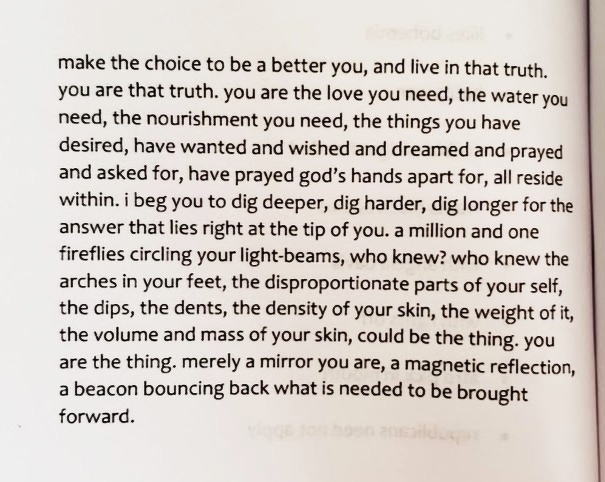
joel l. daniels, a book about things i will tell my daughter
alan jacobs on the commonplace book:
I think I can hazard this claim: Keeping a commonplace book is easy, but using one? Not so much. I started my first one when I was a teenager, and day after day I wedged open books under a foot of my ancient Smith-Corona manual typewriter and banged out the day’s words of wisdom. I had somewhat different ideas then of what counted as wisdom. The mainstays of that era—Arthur C. Clarke and Carl Sagan were perhaps the dominant figures—haven’t made any appearances in my online world. But even then I suspected something that I now know to be true: The task of adding new lines and sentences and paragraphs to one’s collection can become an ever tempting substitute for reading, marking, learning, and inwardly digesting what’s already there. And wisdom that is not frequently revisited is wisdom wasted.
Cynical Boy: Thoughts on Marshall Crenshaw's 1982 Self-Titled Album
Inspired by The Incomparable podcast’s series of “album draft” episodes, I thought it might be an interesting exercise to write about some of the albums that have been the most meaningful to me. So whether or not I decide to do several of these kinds of posts, here’s my first stab at it.
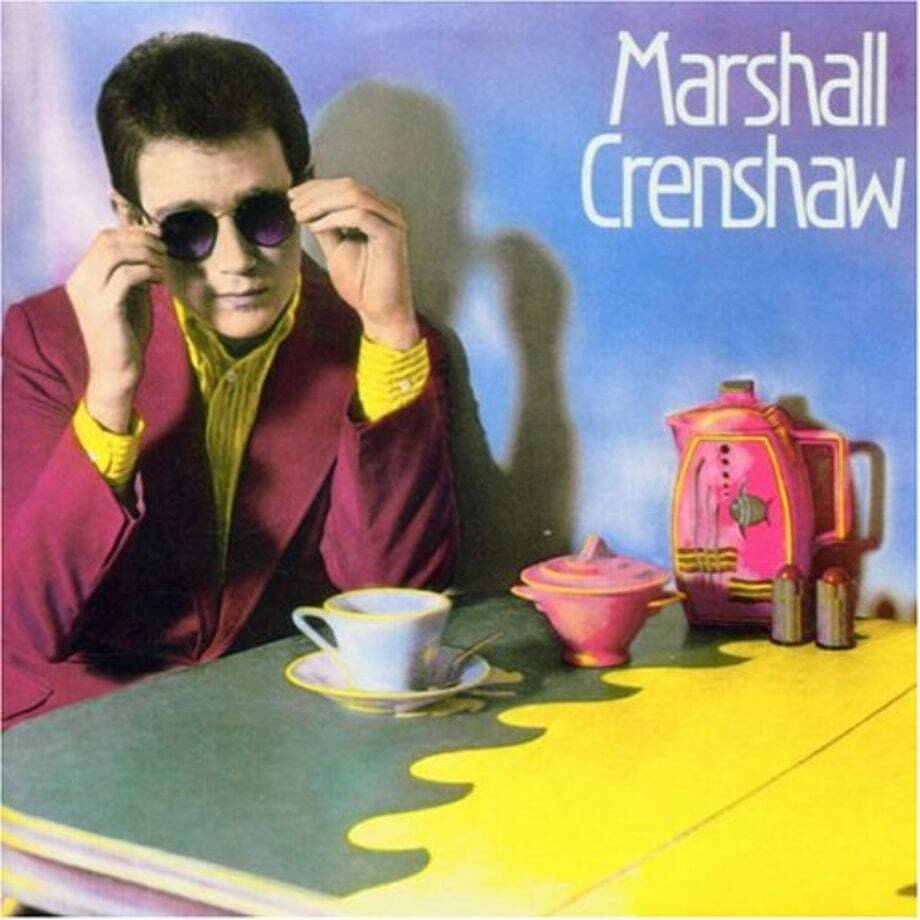 I was very close to never having heard of Marshall Crenshaw. It just so happened that my dad had used a cassette copy of Crenshaw’s eponymous first album to mix down one of his own original songs (Billy Joel’s Nylon Curtain was on the other side, which I’ll probably get into in another post). One day while in my teens, I went searching through my dad’s tape collection to find his song, and gave it a listen. The tape kept playing after dad’s song, and suddenly this simple and engrossing little guitar riff grabbed my attention, and I was pretty much hooked from then on.
That riff was, of course, the opening notes of Crenshaw’s “There She Goes Again," which remains one of my absolute favorite songs. It pretends to evince optimism and liberation in the face of separation and loss, but it’s all obviously a mask for the sickening weight of regret and the sting of rejection.
His album, Marshall Crenshaw (1982), largely remains in this vein, with nostalgically styled pop-rock tunes that sound like they could have been recorded in a basement, and I mean that as a compliment. It’s certainly polished, but it also has an immediacy and organic feeling, as though Crenshaw and his band are friends of yours who are working on their record right in front of you.
Once I discovered Crenshaw, I immediately related to him. He’s a smaller guy with glasses who likes hats, and he writes extraordinarily satisfying, hook-infused melodies and arrangements, almost all of which serve as wrappers for some sort of pain, self-doubt, or regret. This element is rarely overt, instead it comes out in comic self-deprecation, little jabs at his blunders, and a kind of hapless, “well what can you do?” persona. I really get that.
Anyway, the album. “Someday, Someway” is the album’s hit, which you’ll still hear once in a while on the radio or pop up in TV shows. It’s a very good song, but it’s not even one of the better ones on the record. Apart from the opening track, highlights include “Rockin’ Around in NYC," which is both bouncy and tense at the same, in which he sings, “I get the feeling that it really was worth coming after we tasted disaster”; and “Mary Anne” with its gorgeous counterpoint backing vocals and its resignation to someone’s else’s despair.
“The Usual Thing” and “Cynical Girl” are rather different in tone, but both are defiant love songs that embrace uniqueness and alienation. On “The Usual Thing,” he worries that giving himself over to someone else will cause him to “lose his energy,” which sounds to me like the lamentation of an introvert. “But,” he tells her, “if I didn’t think you were a little bit out-there too, I just wouldn’t bother with you.”
And on “Cynical Girl,” he longs for a partner who, like him, has “got no use for the real world.” He sings, “I hate TV. There’s gotta be somebody other than me who’s ready to write it off immediately.” Damn right.
I really like a lot of Crenshaw’s other albums, most particularly #447 and Miracle of Science, but Marshall Crenshaw is something truly special, a rare distillation of the delights of classic pop-rock and the pain of being “a little bit out-there.”
Fret No More

Time flies when you’re having fun, and it flies at Mach 5 when you’re not. When I hear my kids complain, “I’m bored,” I tell them how much I envy them. Oh, to be bored! To have no immediate demands on my time, energy, and attention! Boredom may appear to be an unpleasant state, but it’s also a harbinger and a breeding ground of things worth doing. It’s the preamble for activities of choice, not obligation.
By mere coincidence I read in succession two pieces on how terrible we humans are at perceiving time and its passage, and how we might alter those perceptions in a more meaningful and satisfying way. They are both entirely convincing, and yet they each offer conflicting ideal states of mind. Or they might not.
First, Alan Jacobs in The Guardian. (I have never met this man, but I swear I count him among the most valuable teachers of my life.) Jacobs refers to our culture, as driven by our various media, as “presentist.” He writes, “The social media ecosystem is designed to generate constant, instantaneous responses to the provocations of Now.” There’s no way to think deeply or consider alternate or broader perspectives because the fire hose of stimuli never ceases.
The only solution is to cultivate “temporal bandwidth,” which Jacobs defines as “an awareness of our experience as extending into the past and the future.” Less “now” and more “back then, now, and later.” And the way we do that is to read books. Old books, preferably. “To read old books is to get an education in possibility for next to nothing.”
That education sets the stage for one’s mind to not only absorb the wisdom and the mistakes of the past, but to contemplate how they “reverberate into the future”:
You see that some decisions that seemed trivial when they were made proved immensely important, while others which seemed world-transforming quickly sank into insignificance. The “tenuous” self, sensitive only to the needs of This Instant, always believes — often incorrectly — that the present is infinitely consequential.But cultivating temporal bandwidth is happening less and less, it seems. And as Jacobs says in a separate post, “Those who once might have been readers are all shouting at one another on Twitter.”
But while Jacobs recommends steering us away from believing the present to be of prime significance, David Cain at Raptitude urges us to grasp the present more tightly, and let concerns about the past and future fade to periphery.
And it is all to address the same basic problem: we feel washed away by the force and flow of time. Comparing an adult’s perceptions of time to a child’s, Cain writes:
As we become adults, we tend to take on more time commitments. We need to work, maintain a household, and fulfill obligations to others. […] Because these commitments are so important to manage, adult life is characterized by thoughts and worries about time. For us, time always feels limited and scarce, whereas for children, who are busy experiencing life, it’s mostly an abstract thing grownups are always fretting about. There’s nothing we grownups think about more than time — how things are going to go, could go, or did go.Cain doesn’t point to social media or cultural illiteracy as culprits, but rather our disproportionate fixation on the past and the future. It may be that Cain is largely discussing a different scale of time than is Jacobs. Cain seems to be referring to our fixation on what has happened in the relatively recent past (10 minutes ago or 10 years ago, for example) and what the immediate future bodes (say, the next couple of hours or the next couple of months). Jacobs, by emphasizing the reading of “old books” (and by quoting lines from Horace) is certainly thinking of a much deeper past and a more distant future, spans that transcend our own lifetimes.
But as I said, Cain recommends regarding the past and future less, and home in on the present. “The more life is weighted towards attending to present moment experience, the more abundant time seems,” he says. And the way to attend to that present moment, as clichéd as it might sound these days, is through mindfulness, which can mean meditation or any activities “that you can’t do absent-mindedly: arts and crafts, sports, gardening, dancing.” Here’s why:
It’s only when we’re fretting about the future or reminiscing over the past that life seems too short, too fast, too out of control. When your attention is invested in present-moment experience, there is always exactly enough time. Every experience fits perfectly into its moment.Note that Cain never mentions reading as one of those activities that one can’t do absent-mindedly. I don’t know about you, but if I read absent-mindedly I’m probably not actually reading at all, or at least not in such a way that I’ll retain anything. So whether or not he intended it or agrees with it, I’m throwing “reading books” into that list.
This is the bridge that connects these seemingly-conflicting viewpoints, making them complementary. Much of this rests on the difference in time scale I referred to, which, if taken into account, begins to form a complete picture. Few would argue with the idea that fretting about the immediate past and future is detrimental to one’s experience of time, or that contemplation and consideration of history and the long-term repercussions of our actions is a waste of time.
They key word here might indeed be “fretting.” In this sense, the definition of “fretting” isn’t limited to “worrying,” but describes a broader practice of wasting energy and attention on things within a narrow temporal scope without taking any meaningful action to address whatever concerns might be contained within. We fret about choices we’ve made and what such-and-such a person is thinking about us or how we’ll ever manage to get through the day, week, or year with our sanity intact. We rarely fret about how the Khwarazmian Empire was woefully unprepared for the Mongol army under Genghis Khan in 1219, or how the human inhabitants of TRAPPIST-1d will successfully harvest the planet’s resources to support a growing populace.
And of course, nothing engenders fretting like social media. Already primed for fretting by the demands of work, family, and self-doubt, now we can fret in real time (and repeatedly) over anything relatives, acquaintances, total strangers, politicians, celebrities, and algorithms flash before our awareness. It is possible to exist in a state of permanent fret.
Let me tell you, time really freaking zooms when you’re fretting.
So let’s combine the recommendations of Jacobs and Cain to address our temporal-perception crisis. Let’s get off of Facebook and Twitter, let’s turn off the television, and let’s get to that stack of books (or list of ebooks if you prefer) and read. Let’s allow our brains to expand our awareness, considerations, and moral circle beyond this moment, this year, this era. Let’s not burden ourselves with the exhausting worries about what we’re reading or how long it will take to read it or what else we should be reading but aren’t. Let’s make time to chat with our kids and our parents, and write, tinker, draw, arrange, organize, build, repair, or tend as best suits us. Let’s stop and breathe and think of nothing for a few minutes as we focus on the present instant in time and space, even to the atomic level. And then let’s think big, daring, universe-spanning thoughts beyond all measure.
Let’s be bored, and let that boredom nudge, inspire, or shock us into activity, be it infinitesimal or polycosmic.
It will take practice. It will not be easy. Let’s accept that this, too, is a journey of time and effort and moments.
And let us fret no more.
If you feel so inclined, you can support my work through Patreon.
Spocks and Datas
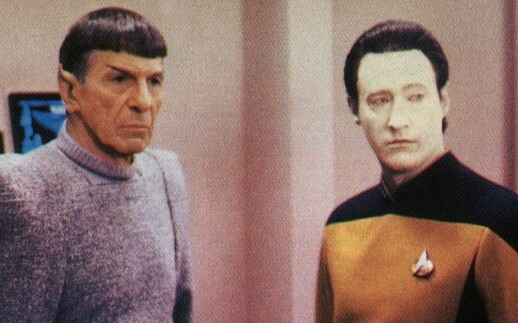
SPOCK: He intrigues me, this Picard.DATA: In what manner, sir?
SPOCK: Remarkably analytical and dispassionate, for a human. I understand why my father chose to mind-meld with him. There’s almost a Vulcan quality to the man.
DATA: Interesting. I have not considered that. And Captain Picard has been a role model in my quest to be more human.
SPOCK: More human?
DATA: Yes, Ambassador.
SPOCK: Fascinating. You have an efficient intellect, superior physical skills and no emotional impediments. There are Vulcans who aspire all their lives to achieve what you’ve been given by design.
DATA: You are half human.
SPOCK: Yes.
DATA: Yet you have chosen a Vulcan way of life.
SPOCK: I have.
DATA: In effect, you have abandoned what I have sought all my life.
- Star Trek: The Next Generation, “Unification Part 2” (1991)
For the socially alienated, such as autistics like myself, the characters of Spock and Data from Star Trek are immediately relatable. Not because of their lack of emotion, but because of their estrangement from their peers. Extraordinarily intelligent, yet unable to understand the motivations or the social and emotional needs of the humans around them. Though full members of their respective crews and fully equal members (eventually, for Data) of their adopted societies, they are nonetheless alone.But apart from being non-human, the sources of Spock’s and Data’s alienation are quite different. Spock, genetically half-human and half-Vulcan, aspires to overcome the psychological weaknesses he believes his human side burdens him with. Data, the creation of humans, has put himself on a quest to exhibit the qualities of humanity as faithfully as possible. While he may be confused by human weaknesses, he nonetheless wishes to replicate them.
Framed this way, Data may be the more relatable to the socially alienated. Those with Asperger’s like me, for example, are obviously the product of humans, and live and work among other humans, but struggle to make meaningful social and emotional connections with the neurotypical majority. This is painful, and there seems to be no remedy. No matter how hard they try to ape the behavior of neurotypicals, it is just that, an aping. And yet they, we, pine for that connection. For belonging.
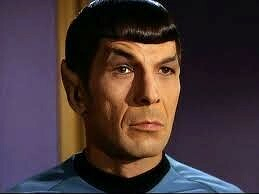 Spock represents something that I would guess is less common, the socially alienated person who wishes to remain alienated, because to assimilate would be to corrupt oneself, to debase oneself. Surely there are those intellectuals and savants who identify with Spock in this, and surely they too experience the discomfort of alienation. But I suspect that is the Datas among us that are truly suffering from their estrangement.
To the normals and the neurotypicals, I have to assume that these two dispositions, the Spock and the Data, are more or less indistinguishable. Both exhibit as emotionally distant. Both are prone to say things that, to the normals, are considered inappropriate, offensive, or bizarre, despite innocent or benign intentions. Both invite varying degrees of pity or condescension from normals for what they perceive as naivete or “disability.”
For a Data, there is a constant pull toward the group, a tug toward the tribe. The Data will practice the mannerisms and idioms of the normals, and often fail laughably. For a Spock, the social distance is actively maintained. Rather than gravitate toward inclusion, they prefer to observe from a safe and less distracting distance. There is no attempt to do as the Romans do. To the Spock, the Romans are silly.
From my own point of view, to adopt the Spock approach would be a luxury. While I do not believe that a Spock-type never suffers in her alienation, she certainly suffers less. A Spock has already decided that there is little to be gained from full social inclusion, and little to envy from the normals’ mindset. What a relief that would be.
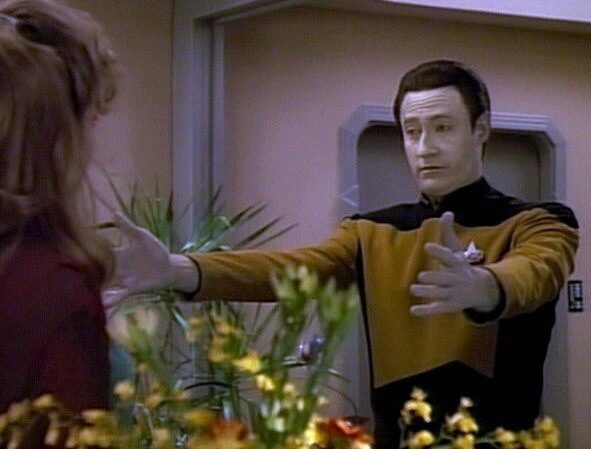 The Data, however, is all too aware of the myriad ways she does not match up to her normal peers. She suffers from the humiliation of failed attempts to assimilate, and she suffers from her solitude. And unlike the character of Data the android, Data-types definitely experience emotions, often severely. It is a sisyphean way to live, except that everyone is watching and audibly commenting on how weirdly one is pushing the rock up the hill.
In a previous piece, I chose another Star Trek character as an Aspie-analogue, and reflecting on it now, it seems to fill a kind of middle-ground between the Spock and the Data. I’m talking about Odo. I wrote:
If Spock and Data show us two poles of how the socially alienated cope with their weirdness, Odo shows us the consequences of all that work. What does the outcast do after all the failed attempts to commune, or after a day of navigating the incomprehensible absurdities of the normals’ behavior? What toll does it take?Though he takes a humanoid form as best he can, no one thinks Odo, the changeling, really looks like them. He doesn’t understand humanoid behavior, but he does try to map it out in order to follow others’ motivations and how they lead to actions. He is impatient with the things that humanoids seem to find fulfilling and important, which to him seem pointless and wasteful. He comes off as mean when he doesn’t intend to. He craves companionship, but knows he can’t have it. And when it all comes down to it, when he’s tired of pretending to be one of the “solids,” he must — absolutely must — return to his bucket. He must resume his true liquid form, stop pretending, find total solitude, and rest.
Odo shows us. We must return to our bucket, or we dissolve.
Please consider supporting my work through Patreon.
Busted Heart
How’s this for an eventful couple of years: I discovered that I was autistic. I lost much of the hearing in my right ear for reasons unknown. I turned 40.
And now—let’s go ahead and rip this excruciating band-aid off—my marriage of ten years has ended.
(This is not going to be a post about what lead to this, nor will it be about the ongoing cascade of pain, depression, and fear I’ve experienced, as I’m just not ready for that, so adjust your expectations accordingly.)
The cliche about turning 40 is that I am now “over the hill,” and if so, the timing for that could not be worse. Over the course of two years I have made the most profound self-discoveries of my life, having the nature of my brain, personality, quirks, aversions, talents, and handicaps revealed to me as products of Asperger’s syndrome. In the midst of this, I was given opportunities to put my talents into practice in new ways; directing plays, doing a residency at a writers’ refuge, hosting a podcast with an actual audience, writing for an excellent technology website, and soon, the publication of my work in a journal near and dear to my heart. Of course I’ve also been learning to deal with my hearing loss.
The end of my marriage, obviously, is quite something else. It is utterly disorienting. It gives me the feeling of being uncontrollably adrift, like an astronaut on a space walk whose tether has been severed. This is particularly so considering that Maine is not my home turf. We came to live here to be near my wife’s family. While they have gone out of their way to make certain that I feel that I am still and will always be a part of that family, it remains that I have no circle of friends here of my own. Almost all of my acquaintances are second-degree connections from the marriage. Because of the love of these wonderful in-laws (former in-laws?), I am not actually alone. But because I have no social or familial foundation of my own, in some important ways, I am indeed alone.
I keep thinking of the song “Busted Heart” by the band Bishop Allen, which says:
Follow me To the shipwreck shores Of a dark and strange country I was born A stranger thinking out loud In a foreign tongueThis reminds me of how I feel in any new environment, really, but seems particularly apt for suddenly finding myself spouse-less in Maine.I was out of place I was looking all around Just a trying to find a friendly face But they’re all gone
What a thought. At the dawn of my fifth decade, I am forced to reset. I begin 40 without nearby close friends, without nearby relations, and without a significant other. (In fact, I haven’t been “single” for more than 16 years.) I begin 40 with a new debilitation, my hearing loss, and with a still-new and bewildering understanding of why I am as weird as I am, my autism.
In one positive sense, it’s a refreshing chance to “start over,” and begin a fresh, new life with a deeper understanding of who I am, what I’m capable of, and what I’m not. But it’s not really starting over, because the time has still passed. I don’t get to start from 18 again. I still have to go from 40.
And so it must be. When I was diagnosed as autistic, part of me mourned for the years I had lost in which I had no idea why I was the way I was, why I couldn’t meet others’ expectations of normalcy, why I couldn’t bring myself to share others’ priorities or interests, and why I felt like a member of some different species.
The second verse of “Busted Heart” reminds me of what it’s like to be weird like me, to have Asperger’s:
And wisdom is a whisper And I’m trying to understand What I say, what I think, Where I sleep, when I breathe What I do with my handsSo perhaps I am now in a dark and strange country, but maybe it means I have the chance to re-enter that country with this greater understanding, but instead of laboring to apologize and make up for my oddness, I can embrace it, and advocate for my right to be the way I am. More than that, maybe I can “be like what I’m like,” and consider my differences to be positive, distinguishing qualities.
Maybe.
No, really. Maybe. The song is called “Busted Heart,” which is a sad thought. But read the lyrics of the chorus:
And a busted heart Is a welcome friend And when that heart leaves What will you do then?Really, my heart was busted long before my marriage, long before I grew up. In a way, I was born with a busted heart. But you know what? A busted heart is a welcome friend. Not to me, but to others. I’m a little broken, and I think out loud in a foreign tongue, but because of that, not in spite of it, I might be worth having around...to someone.
I’m 40. I’m over the hill. Over that hill is a dark and strange country. But maybe the people there will be cool.
Maybe.
[youtube www.youtube.com/watch
Hearing, Loss
It’s the late autumn of 2017, and I’m in Point Reyes Station, California for a two-week writers’ retreat. I was walking down a remote road, taking one of my regular strolls into town for supplies, a bit of exercise, and to take in the landscape, which was stunningly beautiful. The weather was nearly perfect, and being so removed from everything, cars and other pedestrians on the road were quite rare. I was alone and enjoying the movement and the environment.
The wind picked up a little and it whooshed deeply in my ears. You know the sound, the low thup-thup as the air pummels your earlobes. Maybe I hear it more than others because my ears are little on the bigger side, so they scoop up a bit more air.
Only something was off. The whooshing sound was there, but it was only coming in on the right side of my head. That was weird. I must have just happened to be facing in such a direction that the wind was hitting my head at that particular angle. So I checked.
I pivoted my head in different directions, while walking, while standing still, and nothing changed. I walked to different parts of the road with different landscape features; fewer trees, fewer houses, atop an incline, then toward the bottom. Still the same. I wasn’t hearing the wind in my right ear at all.
I snapped my fingers in both ears, and noticed no meaningful difference. I rubbed my finger along the surface of my earlobes and ear canals. In the left ear, I could hear the deep rubbing and rumbling sounds of the friction. In my right ear, I heard a faint and wispier sound, like something soft brushing on paper, at a distance.
I got out my headphones and attached them to my phone. I played some songs, and only listened through one earbud at a time. In the left ear, the full, rich sound came through that I had come to expect and enjoy from this particular pair of headphones. In my right, the bass and mids were, alarmingly, almost nonexistent, save for the high-frequency sounds of strings being scratched or plucked. All I heard were higher-end sounds, such as vocals, snares, and cymbals, only much tinnier, thinner, weaker.
Finally, I tried listening to a voicemail to see if I could hear a phone call. Again, the expected normal sound of the voice came through the phone’s little speaker into my left ear. Putting the phone up to my right ear, the voice sounded like it was coming from a tin can stuffed with cotton. I could hear the voice, but barely.
This was unmistakable. I wasn’t being paranoid. I had lost hearing in my right ear.
*
It’s the spring of 1994 in Absecon, New Jersey. I’m a 16-year-old junior in high school, in an exurban basement. It’s the house of one of my friends from marching band, Chris, and by way of some now-forgotten confluence of agreements and compromises, I have formed a crappy little band with him and two other friends; Chris on drums (talented thrash metal devotee), my best friend Rob on bass (had never played, and was borrowing my dad’s sort-of vintage bass guitar), me on lead guitar (I had no business being a lead guitarist but I could play chords and learn songs by ear relatively easily), and one guy I met through Chris, Corey, our lead vocalist, a kind of Axl Rose/grunge type (and who was tone deaf).I told you it was a crappy band.
Nonetheless, it was my band, and my sole outlet for playing with a full set of musicians on a few songs I really liked (and some I really didn’t, but like I said, agreements and compromises). In the year or so we played together, I don’t know that we ever got to the point of being “good,” but we did manage to scrape together a handful of songs that we could enjoyably hack our way through. It was fun, at least some of the time.
On this occasion, we’ve been a band for a few months, and Corey and Chris have brought with them a friend of theirs, another guitarist who was straight from the Metallica/Megadeth school of metal. He had the requisite long hair and patchy teenage facial hair, including that mustache so many of those guys wore back then that usually signaled to me, for some reason, that I should be wary of them. I don’t remember his name, so let’s just call him “Patchy-stache.”
Apart from having some obviously advanced skills in metal lead guitar, Patchy-stache also brought with him something else we didn’t have: a giant-ass stack of huge amplifiers. For our usual rehearsals, I hauled back and forth my dad’s ancient Vox tube amp and a very small beginner’s amp that I’d gotten as a birthday present. Corey had a decent amp and PA for his vocals and occasional guitar playing. With what we had, we could barely hear ourselves over the astounding pound of Chris’s drums. That guy did not mess around behind that set. Usually I wore earplugs to protect my hearing, though not always. I was afraid it made me seem like a wuss.
So here we were in this small space, enclosed in concrete, with our usual collection of aspirationally loud shit. And now here’s Patchy-stache with his menacing obelisk. When he played through it, the obelisk emitted these teeth-rattling, piercing riffs, filled with stabbing licks and needle-like harmonics. It was painful. I of course didn’t know at the time that I was autistic, and already wired to be overwhelmed by stimuli like noise, and I didn’t have my earplugs in.
But I dared not show my discomfort. Checking for the other guys’ responses to this sonic assault, they seemed totally unfazed. I tried to indicate that this decibel level might be a bit too much with some humorous gesticulations of my ears exploding. It got me some smirks, but nothing else. It was really quite awful, but if there was one thing I found more excruciating than a storm of stimuli, it was the threat of social rejection, of being called out as lesser than the others. So I endured.
That night, I of course had ringing in my ears, like anyone would after a loud concert or something. But in addition to the ringing, there was also a low humming sound in my right ear, which happened to be the ear that was more directly facing Patchy-stache’s amps. It had clearly taken the brunt of the abuse.
The next day, the ringing had left both of my ears, but the hum remained. And it stayed. Forever.
*
I got used to it. At first it drove me nuts, and I had trouble sleeping. But I think it was only a few months before I’d learned to manage it. When there was sufficient ambient sound, the humming almost “turned off.” It weirdly just seemed to stop when there was enough sound around, not just fade to the background to become less noticeable. Whether that’s true or not is kind of academic, since tinnitus (the name of the condition) is mostly about the brain responding to a trauma. It’s a kind of illusion, but also not.I’d learned to sleep by having music on at night, and that became a years-long habit regardless of my tinnitus. Throughout high school and college, most of my music listening happened in bed, where I’d fantasize scenarios in which I and my friends, all of us now musical virtuosos, were the ones performing these songs. I loved those fantasies. Now they just hurt, but explaining that is for another time.
Going into full adulthood (assuming I have actually done that), the hum became a total non-issue. It was always there, and I was aware of it, but it no longer troubled me at all. It was just part of the sound of being alive.
The right ear remained sensitive, however, so I’d shrink from blasts of sound directed at it. I’d had a few scares after, say, acting partners or overexcited children would inadvertently scream in my ear, causing me acute physical pain, but it always subsided and things went back to normal. And if the stabbing that Patchy-stache’s amps perpetrated on my ear had reduced my hearing at all, I couldn’t tell. For over two decades, I enjoyed the full scope of stereo sound, and as far as I could perceive, heard equally well out of both ears.
I didn’t appreciate it like I should have.
*
It’s the early autumn of 2017, a few weeks before I’d go to the writers’ retreat in California. My sinuses feel a little plugged up, which is not at all unusual for me. The usual pressure, the usual feeling of crud in the back of the throat, but it’s all very mild. I don’t even really notice it.What I do notice one evening is my tinnitus. As I said, I have a baseline awareness of it as a matter of course, but I don’t often “notice” it. Well, now I did, a lot. The subtle hum was now blaring in my ear, several orders of magnitude louder than usual. Though this was unpleasant, it wasn’t totally surprising. Once every long while, some nasal or sinus related thing will make it sound a little more present in my head, and it always passes, returning to normal.
But jeez, this was really quite loud.
Days went by, and it wasn’t getting any better. If anything, it was getting worse. The sound was even louder, producing a sensation that was kind of like something pressing against my face. It felt like I had my head flat up against a some sort of enormous air compressor, subtly pushing into me. Or like the hum of all the electricity in the world was behind a wall to which my ear had been affixed with superglue.
My doctor said it was probably just a sinus infection affecting the existing tinnitus, and that would hopefully clear up with some antibiotics and decongestant. This felt particularly urgent, given that I was about to head off to California for my fortnight of writing. The last thing I wanted while trying to enjoy the peace of staring out over the San Andreas fault was to have the sublime state constantly interrupted by the jet engine in my head.
Unfortunately, by the time of my trip, the problem still persisted. The sinus treatment had no effect. I had some hope that maybe the shifting air pressure of my upcoming flights might sort of pop the problem out. But, of course, no. So I just had to cope.
A few days in, I noticed that I couldn’t hear the wind in my ear. A couple of days after that, the sound amplified yet again, out of nowhere, to the point that it physically hurt, causing me to experience a little vertigo. I saw a doctor in town and was prescribed some ear drops as a kind of shot in the dark, which also did not help.
Shortly after my return home, I saw a couple of specialists and had my brain scanned. The audiologist was the only one with any news, and it was not really news. I had indeed lost much of my ability to hear the low and middle frequencies of the sound spectrum in my right ear, and the tinnitus was my brain’s misguided attempt to investigate and compensate for the loss. Because they were happening at the level of the brain and inner ear, both were almost certainly permanent.
Both are permanent.
*
I have lost very little, really. I’m not by any means disabled. I’m not even a good candidate for a hearing aid. Someone whose pinky was cut off in an accident will struggle far more with their loss than I will have to with mine. With all the things that a human could suffer, with all the debilitating diseases, injuries, and accidents of fate that could befall a body, this doesn’t even approach the status of “big deal.”But it’s still a loss, isn’t it? A little one. And sometimes little things matter a whole lot.
There is a space in the constellation of sound that one of my ears won’t ever experience again, not meaningfully. It’s just gone.
When I’m working on a recording for one of my songs, I’ll no longer be able to rely on my own senses to find the right blends and mixes of sounds that will bring the music to life. One side of my head will be missing way too much of it. It would be like directing a play with the lights dimmed on half the stage.
(I guess I could produce everything in mono. I mean, the Beatles did for a while.)
The other ear is fine. The full sonic palette remains available to it. But both ears, of course, will now only get worse as I age, because that’s what happens to human bodies. More colors will dry up or be scrubbed off my palette.
And then there’s the hum. Or rather, the droning. That’s a new reality that must be accepted as well. I became so accustomed to its first manifestation over the past 23 years, that I had the luxury of giving it almost no thought at all.
Now it’s a different story. This new, louder sound is always there. Even when I’m distracted by other sounds, ambient or otherwise, I remain aware of the droning. And because it pulses erratically in tone and intensity, it’s as though it’s not satisfied to merely exist. It’s like it wants my attention. It wants me to feel menaced by it.
It might yet become tolerable or even of negligible concern as the years go by. I kind of doubt it.
But I’m fine. As far as da-to-day obstacles, the hearing loss just means I’ll have to say “what?” more often, which will at times get a little frustrating for me and the people around me, and that’s really nothing. The droning, well, that will bother me exclusively.
Regardless of the relative severity (or lack thereof) of the loss, I’m grieving it. I’m sad and angry about the fact that I’ll never experience music and sound to the full, rich extent that I once did. That I so loved. That filled me up and saved me. Most of it is still there, but it will never be the same again. And I’m going to mourn that.
Please consider supporting my work through Patreon.
Writing Without a Mask
Clearly, there’s something I’m not doing right.
It is my third full day at the writers’ refuge and I am researching my article’s topic, the muscles in my neck and shoulders simultaneously taut and compacted such that I find my range of motion constrained.
 I am in a veritable paradise, with astounding natural beauty, a sublime and comfortable writing environment, surrounded by books and supplies and various corners and nooks into which I can settle and work my craft, smart and friendly people around who are both few in number and fully understanding of my need for solitude, but also interesting and enlightening when I do get into conversation with them, and two weeks to pursue this project in any way I please. Oh, and I am right now looking at a different tectonic plate than the one on which I stand. Seriously, it’s right there. Also, deer aren’t afraid of us, and they hang out and eat apples. Oh oh oh and there’s a hawk that flies around my part of the house, sometimes so close I can look into its eye.
And I’m lost. Whereas I had begun this retreat with a lot of enthusiasm for this project and eagerness to get it going, I’m now overwhelmed by the breadth of the topic, unsure of the degree of depth that is most appropriate, ignorant of the best practices for this kind of work, anxious about the unwise use of my time, and generally feeling beneath the task. I even think I broke the electric kettle in the kitchen.
I am being treated to more privilege than billions of people will ever experience, and here I am, angsty. I hope I at least get credit for recognizing the absurdity of my own hangups.
I know there is no right way to go about this. That’s really the point of this retreat, to give writers the space and time to take things at a pace and within a structure that suits the writers themselves. I’m so accustomed to stop-and-start times, specific formats and styles for particular written products, and an established approval process, that this freedom, this liberation, is bewildering.
But now that I think about it, I suspect that what’s really going on is very similar to the distinction I make between performing as an actor on stage in a play and giving a presentation on a real-world topic for my job. There is too much of me riding on it.
Let’s begin with the theatre/work-presentation distinction. Upon learning of my autism/Asperger’s diagnosis, many people who know me from my theatre life are in disbelief. How can I feel anti-social, afraid of human interaction, uncomfortable in crowds, and oversensitive to stimulation and also thrive on stage? It’s a perfectly reasonable question (though I bristle at the skepticism of my diagnosis that it implies), and one that took some time to for me to understand myself.
When I’m performing a role in a play, there is no question as to what I will talk about. My words are predetermined, and not just for what I will say, but when I will say it. The play will also have been blocked, meaning that where I am in space will also have been set and rehearsed well in advance. Through the rehearsal process, it will be determined how I will say all these words, how I will conduct myself physically, and even how I will imagine my character to have reached those various decisions. There is always room for change, iteration, adjustment, and depending on the production, sometimes even improvisation, but the structure is always there, and it is firm. Most importantly, I am not me. I am someone else. Not literally, of course, but there are sufficient layers between me and the audience (and even between me and my fellow actors on stage) that the excruciating discomforts associated with my autism are, if not wholly eliminated, sufficiently dampened. The role is a mask.
But take me out of the world of the performing arts, and into the world of speaking on behalf of an organization or a cause, and those layers are stripped away. If I am, for example, expected to give a talk about communications work, I know I will be utterly exposed. Not only can I not play a character (try as I might), but the “real me” must also lay bare whatever degree of expertise I have, or claim to have. “I’m Paul, and this is what I know.” My words, my physical comportment, my inflection, my gestures, and even the very contents of my brain are open to public scrutiny. There is no mask. That is unbearable.
So let’s apply this basic idea to writing, and, in a way, the dynamics flip, with two different areas of my life producing opposite results. As I mentioned, my writing for work is routinized with established formats and processes. As with a public presentation, I am the one producing the words, but I am rarely writing them in my own voice. In a very real sense, when I write press releases, emails to supporters, and newsletters, I am writing “in the character” of the institution I work for. I’m playing the role of my organization. My job title and the institution’s logo, they are my masks. Those layers are sufficient, once I am settled into the given employers’ needs, processes, and, importantly, voice.
Here at the refuge, I am attempting to write a long form magazine article on a topic of great interest to me. But I am not writing or “reporting” it in the voice of my institution, nor in the voice of the publication in which it will appear, as one might do with a straight-news newspaper article. With this project, the speaker is me. The facts I present, the sources I’ve chosen to mine, the people whose perspectives I’ve sought, the conversations and quotations I’ve initiated, the things I’ve chosen to omit or gloss over, and the conclusions reached, they’re all me, in my own voice. Whatever is wrong or unsatisfying or weak about the final product is a reflection of me, with no mask to hide behind. That, I tell you, is dizzying.
Now, one might then wonder, hey Paul, you seem to have no trouble opening every one of your precious little wounds and examining them in detail on this little blog of yours. Too true! And I’m not certain why this kind of writing that I’m doing right now doesn’t make me feel just as vulnerable. But I suspect it’s because I’m rather sure of the topic at hand, that being myself. Even if I’m completely deluded about what is going on within my own tempestuous morass of a psyche, there’s no one else in existence who can claim a greater level of expertise or comparably intimate knowledge. There is relative safety in that. Whatever the reason, exposing my inner thoughts and struggles is far less perilous than claiming the authority to expound upon an external subject.
So perhaps a healthy approach, and even a more fruitful approach, is to lean into my own inclinations and preferences, and tackle the subject of this project through my own lens. In other words, rather than present facts and an argument impersonally, maybe I can chronicle my own experience of the subject as I absorb it, and recount for the reader my intellectual journey to better understand it. The cliché is that one ought to “write what you know,” but I really don’t know much. So maybe the best thing to do is to write what I am coming to know – of the project’s subject and of what it comes to mean to me personally.
Okay, maybe I can do that. Take it easy now, oh knotty neck muscles of mine. Let’s get a few deep breaths in. Let’s take in the vast scene of nature around us and indulge in its otherworldly peacefulness. Let’s let the brain soak up what it’s learning and let the new information bounce off the thoughts and values that are already there.
And then, let’s write.
(And pay for the kettle I broke.)
Why yes, you certainly can support my work through Patreon.
A Sore Thumb, a New Face
I’m on a plane to California, about to spend two weeks at a refuge for writers, a retreat for which I was nominated by a colleague who had himself been a resident as part of a fellowship for writers in the freethought community.
Being selected for this wasn’t just a surprise. Certainly, I went through all the thoughts of “what an honor” and “what a wonderful opportunity,” and they are very sincerely felt. But my dominant attitude is, “Oh, dear, they’ve made a mistake.”
Wait, this isn’t the usual imposter-syndrome lament. Let me go at this sort of orthogonally. As I was preparing for this excursion, I figured I ought to get at least a couple of new shirts or pairs of pants, since so many of the nicer items in my already spare wardrobe are looking worse for wear. As poked around the men’s section, haplessly, I found myself fixed to an idea of what a “real writer” is supposed to look and dress like. It wasn’t a fully conscious thought, just something I became gradually aware that I was aiming for as I shopped. Despite the anxiety this caused me, whatever that writerly image is or was, I’m fairly certain I did not achieve it. I’ll come back to this is a bit.
This retreat will take place in what appears to be a big, gorgeous house in a ridiculously picturesque area of Southern California, overlooking a fault line I think, and yes, the weather is supposed to be heavenly while I’m there. Apart from a couple of formal meet-and-greet meals held by the proprietors, writers are otherwise left to themselves to work on whatever it is they’re working on. When not writing or sleeping, we’re encouraged to take advantage of the local restaurants, outdoor activities, and I think there’s even a tennis court.
I’ll be in residence with two other writers, selected, I assume, through different means, since my spot is specific to those writing about freethought and secularism. These two writers, my soon-to-be housemates, are very accomplished, particularly for their ages, as I suspect they are both a good decade younger than me, though that’s just a guess. One is an award-winning novelist, the other a journalist with bylines at prestigious outlets and publications. Me? I’ve written a whole lot of press releases and email newsletters. I have a personal blog that more or less no one reads. I have a blog for work where I round up news stories and make dumb jokes. That’s…kind of it. And I’m gonna be 40 soon! I mean, I also now host a podcast that is listened to by a few thousand people, but I was selected for this retreat well before that got started. So what am I doing here, on this plane, heading for this gorgeous place and joining these amazing people?
I’m not seeking validation. I mean, I usually am, but not here, not for this. I actually do think I’m a pretty good writer, so my discomfort and foreboding aren’t due doubts about my skills. I suck at many, many things — but I’m fairly sure I can write.
But I also know I don’t have the resume, the credentials. For the vast majority of my public writing, there are several layers separating me from the material. I am writing in the voice of an institution, not my own. I am rarely writing in the first person, or from my own personal perspective at all, but from the point of view of an organization or one of its leaders. Even were I to grant that my work was uncommonly exemplary, it wouldn’t even begin to approach the prestige or cultural significance of what my fellow residents have achieved with their work. My predecessor for this fellowship who nominated me to succeed him is also incredibly accomplished. Holding a similar position to mine in his own organization, he has been a well known and highly respected leader, not just in secularism, but in political advocacy in general. He’s written books, academic articles, and has had a leading role in the advancement of the cause for which he fights. He’s not only qualified to be at a writers’ retreat like this, he’s overqualified and overdue for even greater honors.
Oh but hey, I’m kinda funny on Twitter!
Okay, well, they knew all of this when I was nominated and selected. And they didn’t hedge their invitation with anything like, “Well, you don’t quite have the pedigree we normally look for in our residents, but your friend seemed to think you might be worth a shot.” They were as warm and welcoming and excited about my arrival as they would be for anyone else. (Or at least they made it seem so, which is almost the same thing. As a parent, I know all too well the emotional and psychological cost of feigning enthusiasm.)
Remember the clothes shopping? Half-consciously, I was focused on looking the part of what I think they think a real writer is supposed to be. I didn’t want them to think of me as a weird outlier, an exception to their usual standards. Just as I have always done as an unknowing-autistic for all of my life, I was aiming to pass.
In attending this retreat, I am entering a world that is both aspirational and alien to me. I have always wanted to be taken seriously as a writer, a thinker, a creator. I’ve been on the cold street, looking in through the window at that society of the humanities, the creative class, the intellectuals, feeling simultaneously compelled to become one of them and certain that I could never, ever truly belong. So I never stood close enough to that window to fog up the glass. Someone might have noticed me.
In my mind, this is a world of people with deep, varied, and rich life experiences, who have achieved greatness in their fields, who have been intellectually and creatively ahead of the curve since toddlerhood. And now, they write thinkpieces and longform articles and nonfiction books and novels and poetry, and are rewarded with respect, admiration, income (I assume), a place in a network of brilliant and thoughtful people seeking to learn from and collaborate with each other, invitations to speaking engagements, conference panels, NPR interviews, generous fellowships, and, of course, retreats.
The stereotype in my head gets richer still! They love nature and trekking about in it. They also love the city and its unrelenting stimuli. They love fancy and eclectic restaurants. They also love — really love — dinner parties, where they drink and laugh and eat exotic food and swap stories of their adventures and the many, many books they’ve read.
I’m not one of these people (whom I’ve mostly made up). I don’t like dinner parties or almost any kind of party. I don’t like exotic or unfamiliar food. Hell, I don’t even really like eating at all. I wear silly T-shirts and ratty jeans, I read very slowly, and I am averse to being outdoors, what with the sun and bodies of water and insects and all that. My education has been modest and not culturally rich, and both my acting and nonprofit communications careers have been fairly static, owing in large part to my own reticence to do what is necessary to advance socially and professionally. I’m an awkward little man with Asperger’s and a lifetime of experience considering myself broken, failed from birth, only achieving what I have by dint of happenstance and people making exceptions for me. I am the sore thumb. Humiliation is my default expectation.
But here I am on this damn plane. Here I go, nonetheless, onto alien soil. My best hope would be to go there, to be there, as me, unapologetically, and perfectly content with myself as I am, without crossing the line into being ungenerous or unaccomodating. If I am truly not “like them,” then so be it. They asked me to come, and this is who they get. It’s not like I’m going to do any damage or hurt anyone’s feelings. I just might not be the usual thing, or what they expect.
I want it to be okay to jut out a bit, not like a sore thumb, but simply to stand out as a new face. The face of someone who thinks and acts a little differently and has something meaningful to offer. Someone who, if he’s not liked or appreciated, is okay with that too.
I suppose I’ll find out if this is possible, at least to some meaningful degree. I’ll enter that world in a few hours. I guess we’ll see what things look like at the other side of a fortnight.
If you would like to validate me by monetary means, you could always support my work through Patreon.
Noble Fictions and Sacred Texts
Note: This is my contribution to the book What Do We Do about Inequality?, the first such book from an initiative called The Wicked Problems Collaborative. The book just marked one year since publication, and with the blessing of WPC publisher and editor Chris Oestereich I’m posting it here. It has been very lightly edited from the original.
It has been asserted that the relative morality of cultures and practices can be scientifically determined—“scientific” not in the sense of people in white coats doing lab experiments, but in the sense of being empirically perceivable. The idea is that we can compare one cultural practice or norm or moral tenet to others, observe how they affect human happiness, and make an objective judgment. This is a controversial way of thinking, notably advocated by Sam Harris in his concept of “The Moral Landcape,” and I largely agree with it. To be broad, I feel very secure in saying that a culture or morality that, say, makes a virtue of the subjugation, demonization, or abuse of entire classes of people is objectively worse than one that values all members of society and works to see them realize their individual potentials.In order to say that a practice is morally better because of its impact on human happiness, we have to first decide that human happiness is something worth achieving. For if we choose not to grant that human happiness is an assumed goal of any moral code (in favor of, say, maximized production or complete subjugation of a given class or ethnic group), what we then determine is and isn’t “moral” changes drastically. There is no Cosmic Rulebook that states with utter authority that human happiness is something anyone, humans included, should give a damn about, so we have to choose it as our goal. We have to decide for ourselves that we will base our morality on what best allows for the flourishing of human happiness, and then behave as though it is an irrevocable law of existence. If we behave as though this is a malleable idea, that human happiness is only sort of important, then all choices that flow from this change entirely. Not only do we choose human happiness as our moral bedrock, but we also act as though it could be no other way even if we wanted it to be.
Let’s leave this aside for a moment.
I used to make my living (such as it was) as a Shakespearean actor. In the theatre world, there exists the concept of “the sacred text,” a kind of secular devotion to the words on the page over all else. If, as an actor, you want to make some kind of bold choice with your character, it cannot be out of the blue; there has to be support for it, an explanation of that behavior, in the script. If one is playing Willy Loman, and one feels compelled to perform him with an outlandish Australian accent, one had better see something within the words written by Arthur Miller in the text of Death of a Salesman that provides the basis for this.
The idea of the sacred text is given extra weight when referring to Shakespearean drama, partly because Shakespeare is widely considered to be the English language’s greatest writer (and so we assume that he probably knew what he was doing), but also because his works are, to us, so very old. They are now part of the very foundation of Western civilization. Go ahead and muck around with a Neil Simon comedy, even get crazy with your Bertolt Brecht (he is practically begging you to, anyway), but if you think Hamlet is entering from stage right on a hoverboard, you better find the line where he or someone else on stage says something synonymous to “But soft, what yonder hoverboard is this?”
Even if Shakespeare’s genius is taken as a given, adhering to his text and treating it as sacred is still a choice. But to take this to its extreme, to decide that the Word of William is infallible as far as the production of one of his plays goes, something has to be sacrificed. Usually, this is the audience’s attention. I suppose one could remain entirely faithful to the text of Comedy of Errors and probably wind up with a more-or-less satisfied audience. It is rather short and intellectually light for a Shakespearean play, so it doesn’t demand much of the audience’s brain power, and it also has a lot of dirty jokes that transcend time and space. On the other hand, as someone who has sat through full-text versions of plays like Henry IV and Hamlet, I can tell you that a production’s reverence for the text can go horribly awry, causing some of the most beautiful lines of English ever written to syphon off the audience’s will to live.
This gets us into what it means to treat a text as sacred. Certainly, we keep every written line intact, but must it then also be performed exactly as Shakespeare himself might have? Complete with the accent and pronunciations of sixteenth century England? The same clothes made from the same fabrics, fashioned without any industrial tools? Should the actors not bathe frequently? You see where this can go.
The idea of the sacred text is fine; it serves as an excellent guideline, a starting point for the choices that will have to be made in the mounting of a theatrical production. But if we choose to behave as though the text of a play is inerrant (and I say “behave as though” because we assume the play was written by a fallible human), the production can become shackled, rigid, and, essentially, bad art. If the goal is an entertaining, moving, and enlightening performance, choosing to treat the text as entirely sacred is a bad strategy. Instead, a production can remain faithful to the spirit of the play, cut lines where needed, add elements where they enhance the show, and make the best of it. But if the goal is to rigidly honor the words of a 400-years-dead man at all costs, those costs will likely include the joy of the art itself. By restricting the production to what it “must” be, we miss out on the all the possibilities of what it could be.
Laws are like this. As with plays, strict adherence to the precise wording of a given law (literally, “the letter of the law”) is a best-intentions means of making sure a law is applied equally to all parties, but the spirit of a law, the problem it seeks to solve, can be lost. And if they were not considered at least somewhat malleable, the Supreme Court would not have much to do. The same goes for musical notation, codes of ethics, and, yes, religious texts.
Let us now then look at an example that covers a lot of these aforementioned bases, as both a kind of code of ethics and religious text, at least for a civil religion:
We hold these truths to be self-evident, that all men are created equal, that they are endowed by their Creator with certain unalienable Rights, that among these are Life, Liberty and the pursuit of Happiness.–That to secure these rights, Governments are instituted among Men, deriving their just powers from the consent of the governed…American society, as well as the broader Western world, gets a lot of mileage out of this couple of sentences. It is not a law, really, nor a code, but an expression of values—a “founding document” in the clearest sense. It is a declaration that a new nation has been established, one basing its very reason for being on its statement of purpose, that “all men are created equal,” with a particular set of rights that cannot be revoked even by said nation.
For this to work, though, for the “mission statement” of the United States to make sense, one has to accept that all men are, in fact, equal. But, of course, the very men who signed this document did not believe this to be the case. The man who wrote it certainly didn’t believe it, or, if he did, he was primed for a very awkward encounter with his slaves (who would be explicitly decreed a fraction of a person each), and an uncomfortable night at home, with the wife that he and his colleagues had forgotten to include in the franchise.
We’re off to a rough start with what is more or less the single most “sacred text” on the continent, excluding of course religious scriptures. It did not have full buy-in from its authors and signatories, and certainly was not applied in any broad sense. If we presume that the word “men” in “all men are created equal” was intended to mean “humans,” it was an utterly unfulfilled idea. And if it was meant in the narrow sense of males, the fact that only white, landowning men were allowed to vote still gives the lie to this assertion.
Not much of a sacred text then.
Interestingly, subsequent generations have broadened the meaning of “all men” to include more or less all human persons, at least in definition if not in practice. Despite enormous resistance, it seems to get broader all the time. And a lot of that progress has to do with the fact that so many of us today treat the opening words of the Declaration of Independence as a sacred text, in a way that its authors and signatories clearly did not.
But let us be coldly rational for a moment. Are all humans created equal? Of course we aren’t. We are unequal physically: not only do we come in a bewildering variety of sizes, shapes, and colors, but some of us are born with catastrophic conditions, and some with mind-boggling natural talents and innate geniuses. Beyond biology, we are born into different geographies, each with its own advantages and disadvantages to flourishing depending on any number of factors from availability of natural resources to whatever form of government manages the people within one’s borders. We are born with different tastes in food, sex, art, and activities. We are born into different stations in life, some into wealth and rank, others (most?) into abject poverty, and desperation. We each, individually, then take our collected circumstances, and make vastly different choices about how we will go about our lives. To assert flatly that we are created equal is so astoundingly and blatantly incorrect that it implies a fundamental problem of word comprehension on the part of the speaker.
Does this throw the entire human experiment in democracy, and well, humanism itself, into the toilet? Of course not: we still have some degree of agency here. And the founders, narrow as they were in their definitions, helped us out with this.
As a humanist myself (and a secular one at that), as much as I revere the broadened meaning ascribed to “all men are created equal,” the most meaningful words in all of America’s founding documents are actually its first:
“We hold these truths to be self-evident.”
It is most decidedly not self-evident that all humans are created equal, for the reasons previously mentioned and an infinite number more. But the Declaration says that we will behave as though it is. It does not say, “Whereas it is self-evident that all men are created equal,” but “We hold these truths to be self-evident.” We have decided, on our own, using our fallible human brains, that we will act as though all men are created equal and form our government around this noble fiction.
I derive great inspiration and resolve from this. In the face of staggering inequality among the human population (where, in America alone, there were slaves and royalty, aristocrats and massacred indigenous people), these men said that their new nation would begin its very existence with those words, which amount to an admission that this founding idea of equality was entirely anthropogenic. God did not say we were all equal, and there was nothing embedded in our genes to tell us this by instinct. We just decided to think that way.
That part of the text is particularly sacred to me. It is both humble, in that it admits to being wholly invented, as well as grandiose, in that it means to act on this invention and use it to build an empire of the people.
This is all very well; we have announced our intentions as a people to treat each other equally, but, why? Because it seems nice? To what end? Evidence suggests that treating all human persons as though they were equal, even if they are not inherently, increases overall human happiness. Throughout the democratic world, where societies have rejected the official codification of castes, class distinction, and discrimination and disenfranchisement based on race, sex, religion, or sexual orientation, things have been better. Where everyone gets the same relative shot at an education, at employment opportunities, at business transactions and patronage, at social interaction, the society as a whole flourishes, leading to more opportunities and more happiness.
We are, of course, fallible humans, so we still manage to screw it up, but because this is science, we get to keep trying. It takes a long time to go from experiment to experiment, and the failed experiments can often be devastating, but we do learn. And through all the twists and turns civilization has taken in modern history, and the roller coaster ride on which democracies have taken their citizens because of varying interpretations of equality, it remains pretty obvious that those societies that act on the fiction of equality across the board contribute more to overall human happiness than those that do not. That means that even for self-serving narcissists, it makes more sense to back a system based on equality than inequality, if for no other reason than that because it tilts the odds for happiness in your favor.
Many plays begin with an acknowledgement that what the audience is about to see is fake. The opening of Shakespeare’s Henry V is not only an acknowledgement, but also an apology:
…But pardon, and gentles all, The flat unraised spirits that have dared On this unworthy scaffold to bring forth So great an object: can this cockpit hold The vasty fields of France? or may we cram Within this wooden O the very casques That did affright the air at Agincourt? O, pardon! since a crooked figure may Attest in little place a million; And let us, ciphers to this great accompt, On your imaginary forces work. … Piece out our imperfections with your thoughts…This thing you are about to experience is a fiction, we are told, but we need you to buy into it. It won’t work otherwise. Excuse the fact that it’s obviously not true, and go with it, and we will all benefit. You’ll have a wonderful time at the theatre, and we actors will get paid. And when it’s over, we all know that it was just a show.
Knowing that these are our goals, to entertain a crowd and keep a troupe of performers employed, we can take the text given to us by the playwright and make the best of it, without treating it as immovable. We can remain true to the spirit of the play, but cut lines where necessary, make acting and staging choices that enhance the experience of the performance but may not be explicitly called for in the text. We can do all that because we know that our aim is not to robotically recite thousands of lines of verse, but to deliver an experience of art and entertainment. We need not treat the text as “sacred” in the theological sense, though we can revere it.
Ostensibly, the aim of government is to establish the parameters of societal behavior within which human happiness can be maximized. So we make rules and laws, and we establish systems and methods for carrying them out. If we follow each one to the letter, rigidly enforcing their literal meanings through all time and in all scenarios, we miss the chance to experiment and improve. If we follow the spirit of these laws and rules and systems, we offer ourselves more of a chance to make things better for everyone affected. If we were to treat “all men are created equal” as a sacred and inerrant expression of divine will, the majority of the American population would still be left out, and human happiness would be severely stultified, capped at the happiness of males, presuming we are at least not limiting this definition to white, property-holding males.
It is a remarkable thing, to see a theatrical performance in which the play itself acknowledges its own artifice. It is liberating for audience and actor alike to openly agree that we will all now consent to a fiction for the purpose of maximizing the happiness of the evening.
It is astounding that we could do the same when building a society. We can admit to ourselves that while our collective equality may be a fiction, yet we will hold it as a self-evident truth in order to maximize human happiness over the span of generations. The rest of the words in our play—in our constitutions, in our law books, in our manifestos, in our declarations and proclamations—are there to uphold the spirit of that idea, the idea of universal equality as a means to the general well-being. This suspension of disbelief is difficult, for some more than others, but once we all buy in, we can enjoy the hell out of the show.
It would be really nice of you if you’d support my work through Patreon.
HTC U11 Review: The Phone Worth Not Waiting For
 With the 10th anniversary iPhone looming, with a second Google Pixel coming soon, with Andy Rubin’s debut of the Essential Phone, and with the release of the Galaxy Note 8, little attention has been given to the HTC U11, other than a few obligatory reviews that range from “hey this is great” to “this is good but I don’t care.”
That’s a shame, because people are overlooking a great device. I know this because after a year with my deteriorating Galaxy S7, I was ready for a new device, and I picked the U11.
The red one.
I could have waited to see what was in the offing with all these other big-name releases, but I didn’t need to. It was pretty clear that the U11 was the one for me. And now that I’ve had it for a couple of weeks, I feel even more certain I made the right call. In no particular order, Here are some reasons why.
It’s so red.
Oh my god it’s so red. “Solar Red” is the name HTC gave this particular variant of shining, liquid, blazing red. The other colors available also looked fantastic, but good god damn, that red.
I mean come on.
The software and performance.
HTC’s Sense skin on Android has been shaved down so thoroughly, that if you use a different launcher than HTC’s, you’d almost never know it wasn’t stock Google. And mercy me, it is fast. Now, the Galaxy S7 I had used to be fast, but it never felt as crazy-fluid as, say, my Note 5 did for a time. But the U11 is in a different league altogether. It’s such a pleasure to just zip through transitions, animations, app launches, share menus, and the rest.
The display.
It’s quad-HD and LCD, which is just what I needed. Yes, I’m a stickler for 1440p over 1080p if the screen in big enough to notice, and at 5.5", this one is. (Would I notice the difference in normal use? Probably not. But I’m not normal, and when it comes to making imperceptible a display’s pixels, I check. Up close.)
The fact that it’s LCD and not AMOLED like Samsung and OnePlus use means that the colors aren’t super-saturated and my eyes aren’t put under as much of a strain in just, you know, absorbing all that color. HTC’s LCD screen looks gorgeous, bright and crisp and easy on my eyes. It lacks the ostentatious pop of a Samsung display, which can be quite nice, but it’s truer to life and more akin to an iPhone or iPad display. But, of course, with much higher resolution. It does suffer more under direct sunlight and heavy glare than a rich AMOLED, but I’m cool with that.
It has bezels.
 Yeah I said it. I like bezels on my devices. I like that I can actually hold a phone with my human hands made of meat and then operate it without the constant worry that I’m inadvertently making contact with the touchscreen on the sides. The U11 has just enough of a border around the conventionally-proportioned screen to look awesome and remove accidental-touch anxiety. Which sounds dirty now that I see it typed. Hm.
Oh, and HTC was kind enough to include a clear case with the phone, but it’s crap. I’m using, and would recommend, the Spigen Liquid Crystal case.
The fingerprint sensor.
It’s so fast! It’s almost too fast. With the S7, making contact with the fingerprint sensor to unlock the phone was all like touch, wait, click sound, unlock, whereas with the U11 it’s more like touchHOLY SHIT IT’S READY TO GO! It may even be too sensitive, waking the screen when any part of my hand comes near it.
The squeeze gimmick.
If you heard of the U11 at all, you probably heard that it is equipped with something called “Edge Sense,” wherein one literally squeezes the phone to activate certain functions. Most reviews have been critical of this feature, but it seems to me that they’re either not making good use of it or were simply predisposed to think it was silly before they ever tried it.
I think its default setting is to launch Alexa, but you have several additional options for what a squeeze does, and you can differentiate between short and long squeezes. Me, I chose the function that seemed the most useful and, frankly, the most obvious.
I made it turn on the flashlight.
I know, right? You’re like, damn, Paul that IS a good idea! I have the long squeeze activate Alexa, but I might even turn that off, since Alexa is also activated by the usual voice command.
The camera.

This is the feature that is being most lauded by folks like Vlad Savov and Daniel Bader, saying the U11’s camera rivals or even bests the Pixel. I have to say, it seems great, I have no complaints, but the S7’s camera was pretty great, too, and it doesn’t seem to my untrained eye to be obviously superior, but that’s fine.
It’s also a lot faster than my previous phone, especially when HDR is turned off, and that makes a huge difference, especially when you have squirrelly kids.
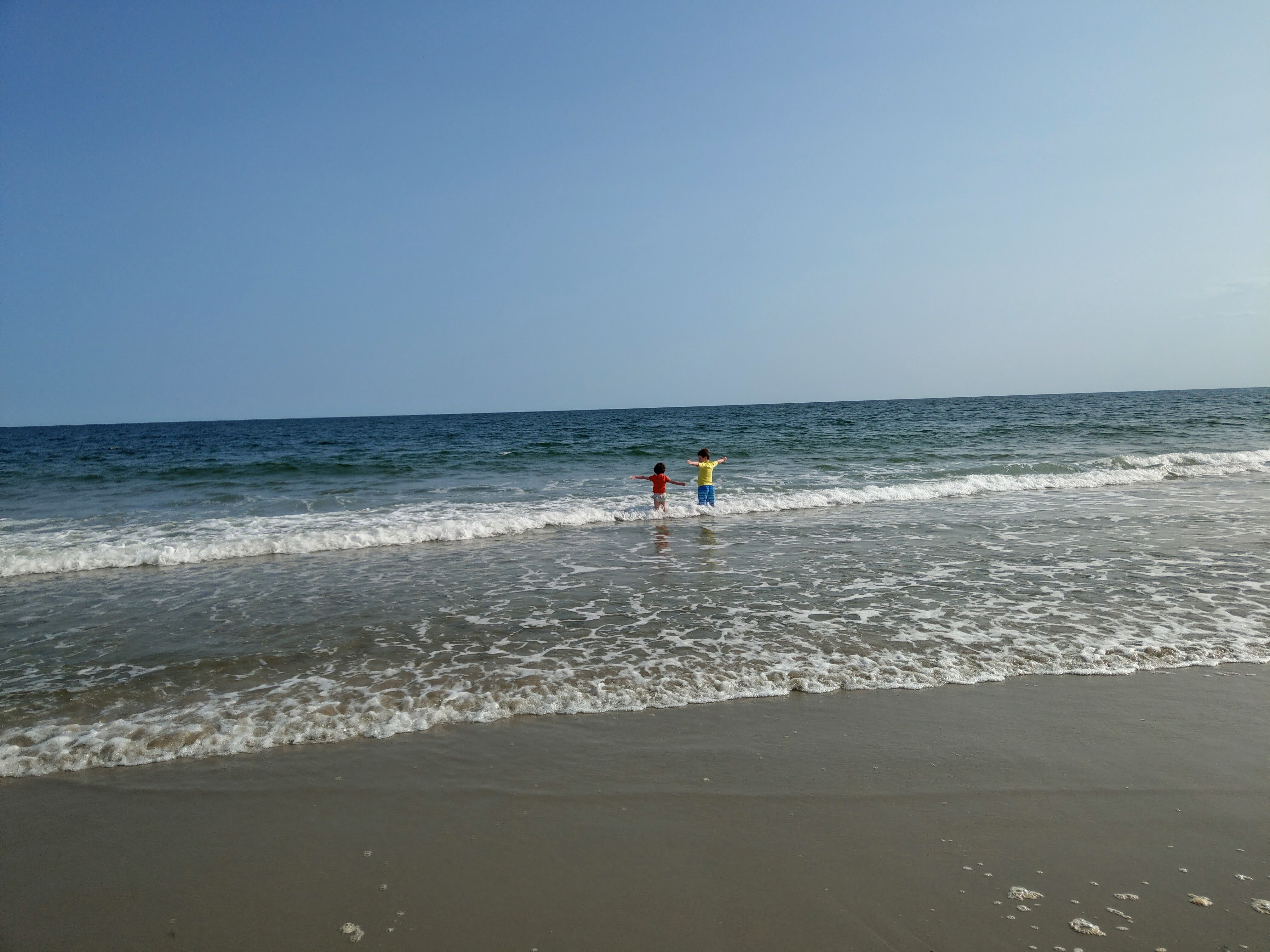
The sound.
I saved this one for last because it’s the area where the phone both enrages and delights me.
Let’s get this out of the way: It does not have a headphone jack.
I always thought this would be a deal breaker for me, the thing that solidified my alienation from the iPhone. I still think it’s stupid and needless to omit the headphone jack, and it will prove, I have no doubt, a pain in the ass for the length of my ownership of this phone. No headphone jack is a strike against it. Yes, it does include a USB-C adapter dongle for wired headphones, but still. (And third party adapters won’t work because of HTC’s proprietary DAC technology. Double-grumble.)
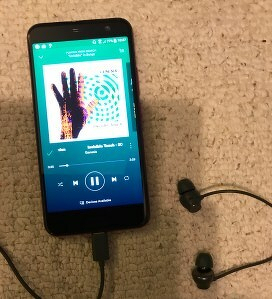 But also included with the phone is a pair of USB-C earbuds. But not cheap EarPod type earbuds (though I think EarPods sound fine for what they are), but truly great sounding earbuds that – get this – have active noise cancellation built in. Now, this is not Bose-level noise cancelling. I think it’s fairer to call it “noise dampening,” but it nonetheless makes for a fantastic listening experience. Ambient noise mostly melts away and the music has the space and depth it needs to shine. I still think I like the sound of my Zero Audio Carbo Tenore earbuds better, but not enough to make me miss them when I have the U11’s included headphones.
(There’s always a lot of attention paid to HTC phones’ hardware speakers and how loud and full they sound for teeny tiny phone speakers. And they’re fine, but I don’t think they’re anything to get excited about.)
The bottom line.
As I said at the beginning, I was pretty sure I was going to like this phone, and while I may be engaging in some post-purchase confirmation bias, fine. The fact remains that not only did I wind up being happy with it, but it delighted me far more than I expected.
The tech press has been pretty unanimous in its warning to consumers to refrain from buying any new phones until the big release season is over. I’m sure the next Pixel and iPhone are going to be stellar, and that the Galaxy Note 8 is a technological wonder to behold. I would simply add to that warning, “unless you plan to buy the HTC U11.” As much as I’ll gaze in a awe at the devices to come, I’ll be happy to do so from afar, cradling my weird and wonderful U11.
And it’s red.
If you’re so inclined, please support my work through Patreon.
These Horrible Epiphanies
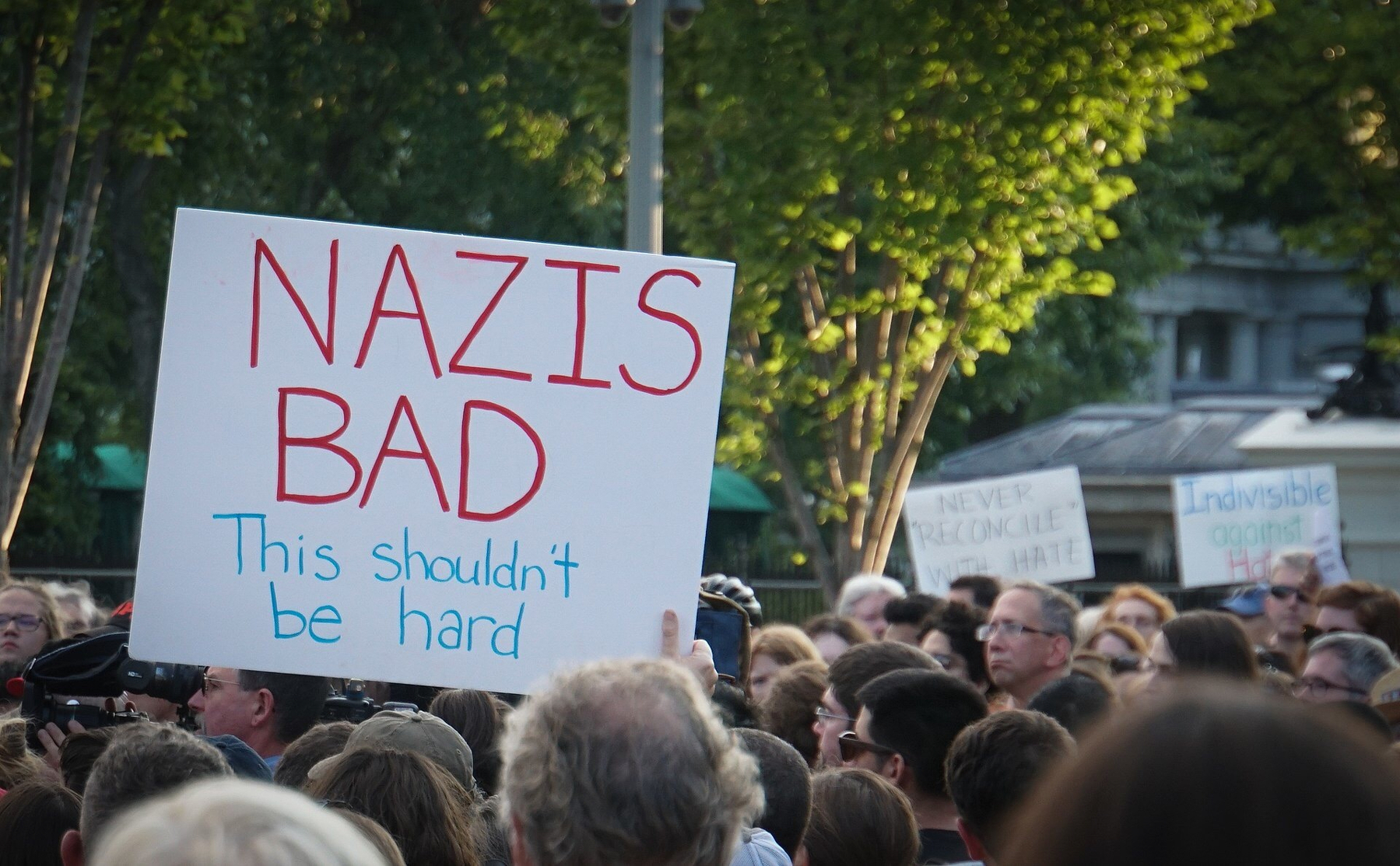
A couple of weeks ago, when the President of the United States went off script and out of his way to defend the white supremacists in Charlottesville and invent fantasy left-wing marauders, I experienced a palpable panic, a panic that surpassed that of election night. Yes, literally almost everything about this presidency has been morally reprehensible and existentially frightening, but the sights and sounds of the president defending the motivations and violent actions of Nazis pushed me over a psychological line I didn’t know existed.
Yes, we always knew that Donald Trump is a racist and a bigot, but I think many of us took it as a kind of casual, passionless, bigotry of ignorance. Few of us who weren’t regularly on the receiving end of his hostility considered that Trump ever actively thought about how much he disliked non-whites or that racial minorities were something to be scorned because of their race. (We don’t presume he actively thinks about anything other than himself.) Many of us assumed, I think, that it was thoughtless. “The criminals” were killing people in Chicago, “the illegals” were committing violent acts and taking jobs, “terrorists” were sneaking into America, “elites” were keeping us from saying “merry Christmas,” the “politically correct” were policing language to the point of censorship, and “real Americans” suffered as a result of it all. The fact that the members of his selected out-groups tended to be black, Latinx, Muslim, Jewish, or LGBTQ, and that the people he claimed to represent were almost entirely white, was (to him) coincidental and beside the point. He was a bigot who didn’t know he was a bigot.
But then he made up the “many sides” excuse for the white supremacist violence in Charlottesville. His overdue, scripted condemnation of the Nazis and KKK was lifeless and grudging. He asserted that many of those marching along with the Nazis and Klansmen were “very fine people.” And he didn’t just toss out the thought or quickly muse on the possibility that there might have been a shred of merit to the Nazi violence. He forcefully, gleefully, and repeatedly insisted on it.
So I panicked. I experienced a literal fight-or-flight biological response to this conclusion I could not escape, that the President of the United States was a defender of Nazis. And as Chris Rock pointed out, “If 10 guys think it’s ok to hang with 1 Nazi then they just became 11 Nazis.” The sentence that rotated through my consciousness like a news ticker marquee was, “The president’s a Nazi. The president’s a Nazi.” Over and over again. My heart rate accelerated, and some part of my brain began constructing plans to spirit away my family and hide them from imminent danger. “The president’s a Nazi.” I felt trapped.
While not at peace, I’ve of course come out of my panicked reverie. And as I’ve thought through the events of the past few weeks, I’ve come to realize that the panic was in a way unwarranted, but not because I was wrong about the situation, per se. It was unwarranted because Trump’s hostile and shameless racism is nothing new. Not new for Trump, and not new for the society in which we live.
I was helped to a dose of perspective from my Point of Inquiry interview with James Croft. He’s now a leader at the Ethical Society of St. Louis, but I knew him before from his appearances at CFI events and his excellent writing. Not only did I suspect he’d have a helpful secular humanist perspective on current events, but I knew that he’d had first-hand activist experience, having begun his work in St. Louis just weeks before the uprising and military-style crackdown in Ferguson. As a fellow nontheistic, well-meaning, smarty-pants white guy, I hoped he could help me process these horrible epiphanies.
James reminded me that “the system” as it is constituted is not only unfair to racial minorities and other oppressed communities, it’s outright hostile, designed from the ground up for the benefit of one particular group, of which he and I happen to be a part, and to grind down all others. Resentment, blame, and violence against minorities is baked into our society, and even someone with my liberal cred, who considers himself to be among those who “get it,” was blind to far too much of it. It is a problem that is staggering in its proportions and implications, so much so that to downplay it in one’s own mind is almost a form of self care, where denial is the only thing keeping you from, yes, panicking about how bad shit really is.
But then the president defends Nazis, and you can’t deny it anymore. And you – well, I – panic.
It’s not even that simple, of course. Ferguson, though it exemplified the degree to which the white establishment will go to contain, vilify, and terrorize resistant minorities, also amplified the injustice in action, broadcasting it, such that it could not be ignored and could not be denied except by the most cynical. People like me, who know so little about what these communities endure, now knew a little more.
Charlottesville was different. Rather than begin a new conversation about race and injustice through the courageous actions of the oppressed, it made explicit the intention of injustice that the police crackdown on Ferguson only illustrated. It spoke it out loud. It was a defiant declaration of racial hate and resentment, cynically and absurdly couched in the parlance of victimhood.
And those who turned out to march with torches in Charlottesville were just a tiny sample of the legions of (mostly) men across the country whose animosity is actively being stoked by Trump and his cult members. The Charlottesville Nazis were just a single spurt of molten rock, a volcanic warning shot, indicating that just barely below the surface there is an ocean of volatile magma, ready to erupt across vast territory, incinerating the landscape, poisoning the air, and blotting out the Sun.
Trump’s election was one of those eruptions. The cult that has formed around him is the lava flow that won’t cool, and won’t allow anything else to grow.
If we pretend it will all be worked out, that things aren’t really so bad, that America isn’t really so hateful, we simply won’t get through this. It’s about far more than the violation of political norms. We have to recognize that what put Trump in power will still be there after he’s gone (whether by election, forced removal, resignation, or natural causes). In all likelihood, that force will be more dangerous, more established in the mainstream, and certainly more emboldened. They will be part of those beloved political norms.
This is why we should panic. But once the panic has passed, we have to acknowledge how people like me have benefited from the oppression of others, and embrace our moral imperative to reject injustice, to listen, and learn how to be allies. Not just in hashtags and profile pics, but in word and deed.
* * *
If you appreciate my work, please consider supporting it through Patreon.
Photo by Ted Eytan • CC BY-SA 2.0
Autistic Alienation: Not as Simple as Intense Introversion
One thing about Asperger’s/autism that I think is hard for neurotypicals to understand, and is also hard for me to come to terms with, is that as an autistic person, my attitude toward socialization isn’t merely binary. The introversion instinct is incredibly strong, and it’s true that I can’t heal, rest, or reengergize without relative solitude. But that doesn’t mean I therefore never want human contact.
It gets even more complicated than that, though. If it were as simple as “I like to socialize a lot less than most people, but I do want to socialize a little,” that’d be relatively easy to manage. You just keep social interaction to a manageable level, whatever it happens to be For the individual. But here’s the thing: even human interaction that an aspie might affirmatively seek out is still fraught with discomfort, self-doubt, anxiety, and pain. It’s still exhausting, and sometimes dispiriting, unless it's particularly fulfilling in some way.
So when an introverted aspie is avoiding other members of his or her species, they may also be experiencing, at an atavistic, lizard-brain level, a longing for human contact, to feel assured that one still “belongs” in the tribe. And even when that validation is achieved in the most positive and affirming of scenarios, it’s still incredibly difficult.
This is the picture: Imagine a human being whose brain has developed differently than almost everyone they know. They may be incredibly intelligent or talented in some way or other (or maybe not!), and have a great deal of thoughts and feelings they desperately want to express and share. But the agony of submitting oneself to the evaluation of normal people, even in the most banal and benign circumstances, is often too much to bear, or at least too uncomfortable to make it worth the effort. When they do take the leap and try to mix in normal society, the energy drain is rapid, the stress is damaging, and the tiniest faux pas (real and imagined) is burned into their memories as scarring humiliation. So this human being, full of life and solitary, feels lonely, while determined to remain alone. Until the loneliness becomes too much, such that a new attempt is made.
I miss having a set of friends that I was comfortable with, that I could develop routines with, and rely on for that base-level validation that I was in the right species, that I had a tribe from which I was in no danger of being ejected. I have had that. A lifetime ago.
I don’t have that now, and most of my experiences after my life in professional theatre has been characterized by anxiety over being banished from whatever tribe to which I submitted myself, or else having no tribe at all, and cautiously yearning for one. (And not knowing that I was autistic in the first place.)
It’s not just that we want to be alone. But it’s the only way we know we can safely be.