pav.alxndr
Memére

When I first visited Maine with my then-bride-to-be, Memére filled me in on a lot of the family history, though she probably had little idea who I was as she talked. She was my wife Jessica’s grandmother, but she was suffering from Alzheimer’s, so it took her a little longer to understand what the hell this new person in her life was doing talking to her in her home.
Memére opened her home to us, a couple of years after Jess and I were married, when two assailants beat me near to death in the streets of Washington, D.C., and we had decided to suddenly pick up and leave to start a new life with our baby boy in Maine. That would not have been possible had Memére not let us live in her home, all three of us, for what became a half a year. She likely had less of an idea of what she was agreeing to than one might like, given how her Alzheimer’s was advancing, but the whole clan was behind our planned migration. And Memére was great about it.
Lorraine Boutet died last night at the age of 88, finally through with the battle with reality that her brain had been putting her through for years. She actually stuck around in that state a lot longer than anyone thought she could. Really, longer than I thought any human could, but it just shows how hearty she was. (Her obituary, written by her granddaughter Jess, is here.)
Memére was nothing if not tough. Well, the word I’ve heard most charitably used by her daughters is “stern.” I never knew her before the Alzheimer’s, but even as I’ve known her, she’s never been one to suffer fools or tolerate a lot of bullshit. It should be noted, though, that she lit up when the little kids were around. She found my two young children absolutely delightful, even when she was in the darkest depths of her Alzheimer’s. The kids could always get her to smile, wider than I ever saw her any other time.
Though stern, she loved her family deeply, but showed it by taking care of business and keeping everything together. When that was no longer her role, when it couldn’t be her role, it was hard for her and hard for us to watch her scramble to feel useful.
One moment that stands out to me is when she couldn’t identify our coffee maker that we’d brought with us to Maine, so she disassembled it, washed every component as if they were dishes, and then put all of it into the recycling bin. She didn’t quite know what was going on, but absolutely had to be taking care of things, whether what she was doing made any sense or not.
This is of course a memory of her very late in life. What she was like in her prime I know only from stories, but in a different way I also know it from the character of her progeny. I’m honored every day to be a member-by-marriage of this remarkable family that Lorraine Boutet once managed, cared for, and set an example for. And nearly every day amazed by their generosity of spirit, which is perhaps the greatest compliment I can give anyone. Memére did that. The refrain I heard several times as people spoke of her, and to her in her hospice bed, was, “You did good, Mem.”
And when my own new, little family was in its greatest time of need, even though (as she herself put it) she didn’t quite have all her marbles, she took care of us, too. She has always had, and will always have, my gratitude for that. You did good, Mem.
Dr. Oz, Disinfected by Sunshine
I was a guest on HuffPost Live this afternoon, joining a panel to discuss the whole Dr. Oz imbroglio, and something struck me that I wound up mentioning at the end of the segment. I pointed out that we’ve suddenly found ourselves at a point in media and culture in which crap pseudoscience and the denial of reality are starting to get called out. Think about it. Dr. Oz, a TV doctor whose influence and popularity are probably unmatched by any similar figure in modern history, is being taken to task for promoting “miracle” weight loss “cures,” garbage “natural” remedies meant to do everything from improve your sleep to stopping cancer, and other, even more brazen examples of pseudoscience like homeopathy and psychics. He’s “America’s doctor,” sporting the Oprah Seal of Infallibility™, and millions of Americans swear by his every utterance. Nonetheless, not only are major news outlets tracking and exposing his nonsense, but he was even hauled before a Senate committee and given the business by Claire McCaskill. (I got a little media hit for that one, too.) That’s a huge deal.
Earlier this week, the FDA held public hearings on the marketing and regulation of homeopathy, a branch of pseudoscience that is so blatantly fantastical that even calling it “pseudoscience” gives it way, way too much credit. And yet billions of dollars are spent on homeopathic products, and its adherents insist on its medicinal properties, despite its complete disconnection from, like, physics. It took some doing, but now by holding these hearings, whatever their result, the FDA is implying to the public that “there’s something fishy here,” something worth holding hearings about. My colleague Michael De Dora was even invited to give testimony near the beginning of the hearings (here’s video in some weird Adobe format), and articles are popping up left and right that quote what he said. (He also did two great public radio interviews.) More and more Americans are hearing the message that homeopathy, that branch of medicine that you heard was “natural” and “alternative” is actually a bunch of junk.
And of course this year we saw the fall of the anti-vaxxer, as a series of measles outbreaks, particularly in Disneyland, led to a serious backlash against the celebrity-championed war on immune systems. Even the pandering GOP politicians trying to make common cause with the anti-vax movement are finding themselves looking ridiculous, as the political press corps does a collective facepalm.
All of this has been taking place in just the last few months, and the seeds of it have been germinating for a few years now. Part of the reason, I think, is that more reality-accepting young journalists are on the ascent, and the current trend for reporting is the “wonkblog” or “data-driven news site,” where raw facts make more good, clickable web copy. I’m seeing it not just at Ezra Klein’s and Nate Silver’s sites, but sites as diverse as Boing Boing (quirky culture), The Verge (tech lifestyle), io9 (science fiction and fantasy), Raw Story (left-wing outrage-posts) and many others. My friend Ed Beck suggested that it really all began with Phil Plait’s move to Slate from Discovery in 2012, and he might well be on to something there.
Organizations like mine, the Center for Inquiry, have been a key part of this shift, I believe, as every day we chip away at bad assumptions, lazy thinking, and credulousness. Bit by bit, we make the case for the acceptance of science – science the process, as well as its products – and the critical examination of extraordinary claims. The ideas that vaccines cause autism, that water retains a “memory” of a substance it no longer contains, or that magic beans can burn your fat or kill your cancer, are all claims that require that kind of critical, skeptical eye.
Only today have I allowed myself the luxury to step back and think, holy shit, I think we might be getting somewhere. Don’t get me wrong, we’ve moved that sisyphean boulder only a couple milimeters, but even just having gotten that far, I’m telling you, the view is better.
Here's my HuffPost appearance, with a bunch of smart people.
http://embed.live.huffingtonpost.com/HPLEmbedPlayer/?segmentId=5536ae8f78c90ab06900012a&autoPlay=false
(Note: On the Dr. Oz thing in particular, you have to read the work of Michael Specter and Julia Belluz.)
Now I Wire Me Up to Sleep
You know how when you’ve had a good night’s sleep, you wake up the next morning rested, refreshed, and ready to start your day? Well, I don’t. In fact, I have never felt this way. Regardless of how many hours of sleep I get, whether I remember dreaming or not, or whether or not I’ve snored, had to go to the bathroom, been interrupted by my kids, or had nothing happen whatsoever, I awake every morning feeling crappy, exhausted, tight, cramped, and less than pleased to be alive. For years, I presumed this is how everyone felt. You know, getting up sucks.
I used to be an incurable insomniac. Most of my life, I’ve been a severe night owl, unable to sleep at a decent hour even if I wanted to, even if I was very tired. My brain, unable to shut itself down with worries, anxieties, and maybe a hope or wish or two, would churn and churn, keeping my lying awake.
This started changing when I moved from a career in theatre to one in politics and the nonprofit do-gooder world – getting up at 4am every morning to begin The Note at ABC News or getting to the Hillary Clinton campaign headquarters in time to monitor six morning news shows at once are sure-fire ways to make one too exhausted to indulge in insomnia. By the time I had kids who daily woke us up at ungodly hours, insomnia stopped being a problem. I still stay up kind of late (having a battle with sleep), later than my wife certainly, but once I’m sleepy, that’s it, I fall asleep.
But again, regardless of the duration of that sleep, I feel like garbage every morning. My wife and my doctor agreed, it was time for me to get a sleep study done.
For those who don’t know what this entails, it’s where you sleep in a room for a night, monitored by a technician, who uses various wires to track your various biological readings, and also just watches you as you do whatever it is you do while sleeping; tossing and turning, snoring, etc. Fine, I thought, at least it’d be a night of peace to myself.
At first, however, my insurance company wouldn’t approve a full study. Instead, they merely approved an at-home test where I stuck some tubes to my nose and a pulse monitor on my finger to see if I stopped breathing overnight. I didn’t stop breathing. Nothing else learned, of course.
So after being pressed by my sleep specialist, the insurer capitulated and agreed to cover the full in-lab study. It would still be very expensive for us, going toward our deductible, and I was ready to nix the whole thing, but my wife Jess insisted that it was worth it. I, too, capitulated.
This all took months, I should note. Because we have the greatest health care system in the world, you see.
I showed up at the clinic at about 9pm with my pajamas, a book, my phone, and other necessaries. The sleep technician was a middle-aged fellow, short (my height), stocky, gray-bearded, and donned in light blue scrubs. He greeted me brusquely at the door, and hurriedly pointed me to my room, which was a kind of cross between an exam room and an inexpensive hotel room. There was the bed, the TV, a sink, towels and toothbrush, and other medical-looking objects I couldn’t identify. I dropped my stuff, and filled out the forms the tech instructed me to.
Turned out the tech was managing several sleep tests at once, and this is the usual way of things. When he finally returned to get me situated, he was actually quite friendly and down to earth.
The long and the short of it was that once I was changed into pajamas with teeth brushed and other bedtime rituals completed, it was time to wire up. Several electrodes were strung about my body underneath my clothes, and some cold, reddish goo (I think he called it "liquid sandpaper"?) was roughly applied to where they’d be stuck. The electrodes pinched quite uncomfortably, but I got used to it after a while.

I should state here that it seemed that one was more or less expected to watch cable TV while all this was going on, because the wiring took quite a while, and there was also a lot of waiting around while the sleep tech attended to other patients. I haven’t had cable in years, and being exposed to its buffet of offal was slightly horrifying. No wonder this civilization’s in the shitter. Anyway, I eventually found, and left on, a block of Law & Order reruns.
The tech came back and began to wire up my head and face. There was the goo, except more of it in order to get the electrodes to stick to my scalp through my hair. I also had the tube-thing placed to my nose again and the pulse monitor on my finger. I was utterly streaming with wires, it was absurd sight to behold. I’d be tethered to a box to which all the wires were connected, which was itself hung next to my pillow by the bed. I’d have a range of movement of a couple of feet or so, enough to move around in my sleep, but not to leave the room. If I’d need to use the bathroom during the night, I’d have to call in the tech to unhook me, and then hook me back in. (I didn’t, thankfully.)
Once wired, the tech left the room and then ran some tests, speaking to me through an intercom, asking me to breath in different ways and move different body parts, probably checking to see that he was able to monitor all he was supposed to. Then, he more or less told me to do what I liked until about 11 or 11:30, and then hit the hay.
I turned off Law & Order, read a little Treasure Island on my phone, and then decided to just get this whole thing started. Off went the phone, and I "went to bed."
Now, I should say that before all of this, other folks I’ve known who’ve had sleep studies told me how the whole experience was overall a pleasant one, that the wires and things didn’t impede sleep, and that the overall atmosphere lent itself to a quick trip to slumber.
Nope!

Remember the old insomnia? It was back, with a vengeance. My brain was on overdrive, crunching on myriad miscellaneous problems, anxieties, and regrets. The electrodes began to feel pinchy again, and the tangle of wires made it very difficult to find a comfortable position, obstructing some of my usual postures. Twice the tech had to come in and replace some that had come off in the midst of my writhings. I was too hot, I was too cold, I was too cramped, and on and on.
I also kept worrying about how my inability to sleep would affect the study, and was constantly aware that every sigh I made, every positional adjustment I attempted, and every snore or sound a made would witnessed and noted by the tech.
I knew I had to get this under control and get at least a modicum of sleep, or this would all be for naught. I decided to choose a favorite album and imagine it playing from start to finish. As best I could, I played in real time Ben Folds’ Rockin’ the Suburbs, all in my head. When I lost track of the songs and drifted to other sleep-impeding thoughts, I’d go back to the album. It helped.
But it wasn’t a cure. I still struggled to get comfortable, to stop thinking, to manage the rat’s nest of wires. It seemed like hours were passing, but of course I couldn’t know for sure. I must have drifted in an out of sleep many times, having no concept of the actual passage of time.
Finally, when the tech came back in to get me up at 5am, I could hardly believe the entire night had passed. I felt truly awful and exhausted. My first words to the tech when he came in were, “Holy crap.” At the very least, I was given some coffee from a Keurig machine. It was awful, but it was coffee. I changed, filled out another couple of forms, and trudged out into the dark morning, where, of course, it was snowing. Again.
I’ll know something about the results of my study in the next few days, I’m told. I hope it reveals something, anything that will improve my well-being and justify the expense and overall unpleasantness of this whole experience.
I’m told that it could be that one thing that could happen is that they may want to try CPAP (continuous positive airway pressure) machine at some point. That would mean another night of sleep-study, but with the CPAP mask added to the mix. We don’t know yet.
I'm so excited I may lose sleep over it.
Oliver and I are Going to Die
Oliver Sacks thinks differently from me. He will be dead soon. He’s handling it much better than I would:
I feel intensely alive, and I want and hope in the time that remains to deepen my friendships, to say farewell to those I love, to write more, to travel if I have the strength, to achieve new levels of understanding and insight.
I am, to the best of my knowledge, no nearer to death than any other reasonably healthy 37-year-old American male, but I almost never feel “intensely alive.” If anything, I am keenly aware (paranoid?), constantly, of the utter void that inevitably awaits, some time…who knows when?
How does Sacks do it? If my end were knowingly near, I can’t conceive of my being in anything short of a panic. The End would be coming, soon. I would be counciled to achieve “acceptance,” but I find the very idea of the end of existence totally un-acceptable, and yet there is no option to reject it. Help! What do I do?
I will say that my perhaps premature mortal wariness urges me toward one way of Sacks’ thinking:
I feel a sudden clear focus and perspective. There is no time for anything inessential. I must focus on myself, my work and my friends. I shall no longer look at “NewsHour” every night. I shall no longer pay any attention to politics or arguments about global warming.
This is not indifference but detachment — I still care deeply about the Middle East, about global warming, about growing inequality, but these are no longer my business; they belong to the future.
I feel this way about all of these things now, as I perceive my ability to have any impact on the wider world to have long, long since past, if I ever had the ability at all. Where I once thrived on all things political, now I can barely stomach even tangential knowledge of what’s going on in politics, government, or world affairs. It is all so dismal. Futile.
But there remains my children, my wife, my creative pursuits. I can narrow my focus to those things and hopefully reap meaning from being alive. But I still feel that panic, that no matter how in-the-moment I manage to be, time simply refuses to stop advancing toward the void. It’s happening right now.
Sacks ends his piece with this expression of gratitude:
Above all, I have been a sentient being, a thinking animal, on this beautiful planet, and that in itself has been an enormous privilege and adventure.
It is, and as of right now, I don’t feel gratitude for having been able to experience it. I feel screwed that it will eventually be ripped away, and I don’t even know when.
Oliver Sacks thinks differently from me. We’ll be dead soon.
Relatedly, there's my post where I explain why fear of death is not the same as fear of not-existing in the past, and there's my post where I'm all flabbergasted by this guy who wants to end his life at 75.
The Tablet Reconsidered: A High Bar for the Middle Space
 The tablet computer as we know it is about to turn 5 years old. Yes, tablet computers in some for or another existed before then, but on January 27, 2010, Steve Jobs introduced the iPad, which truly formed the basis for what we currently understand a tablet to be. Whatever we considered a tablet computer to be before then no longer counted. The iPad line itself is now in its sixth generation of iterations. So now that we’ve had tablets for half a decade, what can we fairly say about their impact and their role in our digital lives? Have they lived up to their promise, and do they continue to justify their existence as a product category unto themselves?
Yesterday, I wrote about how I was considering abandoning the iPad, despite my iPad evangelism of the recent past. As delighted by iPads as I have been, I’ve lately found them to be less useful and less necessary, as other products, namely smartphones and laptops, encroach on their territory.
I thought it might help to go back to the beginning, to the iPad introduction where Steve Jobs laid out the case for Apple’s decision to make the iPad to begin with. (As a side note, man, does going back to those old videos make me miss Steve.) As was his wont, Steve made some pretty bold claims about what role the iPad should play, and how it excelled in comparison to other devices, and all before anyone outside of Apple, Inc. had ever even used one.
“All of us use laptops and smartphones now,” he said, and asked, “Is there room for a third category of device in the middle?” He posed this question obviously as a fan of smartphones and laptops, being the guy who makes iPhones and MacBooks.
“The bar is pretty high,” he said, and he was right. In order to justify their existence, “those devices [in the middle] are going to have to be far better at doing some key tasks.” Among those tasks were:
- Browsing the Web (which he said was a “tall order”)
- Doing email
- Viewing and sharing photos
- Watching video
- Enjoying music
- Playing games
- Reading ebooks
This product would have to be not just adequate at these tasks, but superior to laptops and phones. “Otherwise it has no reason for being,” Steve declared.
It’s interesting to note how definitive this position is. Steve wasn’t saying that the iPad was merely going to be a nice or novel way to do some computing tasks and consume some media, but that it would be better at all of those things than even the very products Apple made at the time.
And for the time of its introduction, and for some time after, it was hard to argue with him. Consider the state of things at the time, even in the best case. The iPhone 3GS, then the most current phone, had a 3.5“ screen – unthinkably small by today’s standards. On the flip side, the smallest laptop screen Apple produced was that of the 13” MacBooks. The MacBook Air as we know it (with the tapered design and all-solid-state storage) didn’t yet exist. MacBooks weighed just under 5 lbs. and their batteries lasted a handful of hours at best. So we have a situation in 2010 in which mobile screens are tiny, and laptops are relatively heavy, short-lived on battery, relatively slow with traditional hard disks, and often hot. The iPhone was super-personal, but limited in functionality in comparison to a MacBook. The MacBook was super-powerful, but too much of a “machine” to feel personal or “fun.”
And for the sake of this discussion, let’s grant Steve’s position at the time that netbooks “aren’t good at anything” and dismiss them as viable options.*
Coming into this environment, the iPad is very compelling. It’s personal, in that you hold it in your hands, sitting back in a chair or what have you, and manipulate the content with your fingers. “It is the best browsing experience you’ve ever had,” Steve said, and repeated variations on “Holding the Internet in your hands; it’s an incredible experience.” And it was! It was also relatively powerful, powerful enough anyway. You could take care of email, and get real work done if needed. “It’s a dream to type on,” said Steve, which I think is arguable at best, but I’ve found it to be a better typing experience than most, I think. Perhaps due to my wee little hands.
He made other claims. He said it was superior for watching TV and movies, which I think was and still is true today.
He said it was the best way to enjoy music, which I think was and is still untrue. There’s no beating a pocketable device for being the central repository of one’s audio content. The iPad is arguably not even superior to a MacBook for music, as a MacBook can sit at a desk attached to a good sound system, where it’s easy to assemble playlists and do other fiddly things with one’s collection. An iPad simply has sub-par speakers and a big screen going to waste on album art. So, sorry, Steve.
He said it was the best way to read e-books, granting that the Apple was “standing on [Amazon’s] shoulders” to do the Kindle one better. I think that claim was a wash at the time, as the iPad did not yet sport a high-res/Retina display, and text on the E-ink Kindles was much nicer to read. Today, it’s also a tough call. The glowing, high-resolution displays of the Kindles Paperwhite and Voyage are wonderful for reading, but a Retina iPad mini is in many ways just as nice, and there’s no way a Kindle can best the iPad at ease of use in user interface. So I don’t think this match-up has been sufficiently settled.
One claim I think we can say is settled is the idea that the iPad boasts “the best interface we’ve ever seen” for productivity apps, which at the time were the first iOS iWork apps. Maybe they were the best interface for tablet productivity apps, but that bar was so low that it was probably underground. But then as now, despite the many strides Apple and developers have made in the productivity space, the iPad still can’t come close to matching the laptop. I considered for novelty’s sake writing this piece on my iPad, but I couldn’t bare the thought of doing longform writing, editing, and formatting on it. So here I am on my MacBook Pro.
That said, I decided to do my writing at the local Starbucks (my “satellite office”), and since I hadn’t charged my Mac in a while, I had to make sure I brought my AC cable and found a seat near an electrical outlet. With the iPad, there would have been a much better chance that I wouldn’t have even had to think about whether the battery would last.
It’s not 2010 anymore, of course. In five short years, the landscape has changed enormously. iPads have evolved and improved to be almost unbelievably thin and powerful, and now come in two distinct screen sizes.
Other manufacturers, who once rushed out laughable “competitors” to the iPad now make all manner of quality hardware, from the inexpensive-but-dead-simple Amazon Fires, the svelte and slick Nexus 7 and nVidia Shield, to the high-end, ultra-high-resolution Samsung Galaxy Tab S line. The biggest problem faced by these devices is the simple fact that the Android software ecosystem is still pretty lame for tablet-optimized apps, and that often these manufacturers make overly-complicated interfaces in order to squeeze in unnecessary “features.” (Not the case for Amazon or Google/Nexus of course.) iPads remain almost indisputably superior, but they are no longer the only good choice, and the gap narrows more and more all the time.
But the real challenge to the iPad and to tablets generally is that the space in the middle that Steve Jobs talked about in 2010 has shrunk. A lot.
Let’s look at laptops. Again, in 2010, good laptops (meaning MacBooks) were 5-pound hunks of metal that needed power and heat dissipation and had slow spinning-disk hard drives. Today, MacBooks are light, svelte, have incredible battery life (with MacBook Airs well outlasting iPads), and game-changingly fast solid state drives for storage. Even MacBook Pros are lighter, thinner, and longer-lasting than ever before, coming close to the iPad in battery life. A full-size iPad has a 9.7-inch screen, but one can also buy a MacBook Air with an 11-inch display with a similar footprint, and if you match storage capacities between devices, the prices are only about $100 apart.
If I need to run out to, say, Starbucks and want to get some work done, is it really more convenient to bring an iPad than a MacBook Air? The MacBook will have a far-better keyboard, and have vastly superior functionality for things like working with multiple apps in multiple windows, and text editing and formatting (and simple things like copying and pasting).
But what if you’re hitting the coffee shop in order to kick back and relax, browse the web and read a book? Well, the iPad is great for that, and if you need to do some work, it can be done reliably. So is that the trump card for the iPad? As I’ve written many times before, the iPad for me is a “choose-to-use” device, the thing you reach for when the work you have to do is done, which usually happens on a PC or a phone. And in this scenario, sure, the iPad absolutely beats the laptop.
Of course we now have to look at the state of the smartphone. In 2010, phones were mostly small. The iPhone 5 with its 4-inch display was more than two years away, and even that is considered small by today’s standards, and the current new line of iPhones’ smallest screen size is 4.7 inches (though the 5S and 5C are still being sold as new by Apple).
But that’s just the tip of the iceberg. Big phones are now the norm in the Android space, and Android commands the largest chunk of smartphone market share. Anything under 5 inches is now considered “compact” or “mini” in Android-world. The most highly-regarded Android phones of the last couple of years, the 2014 Moto X, the HTC Ones M7 and M8 the Samsung Galaxies S4 and S5, and the Nexus 5, are all over 5-inches. (The 2013 Moto X was 4.7 inches, and it was regarded as adorably small.)
[Note: As I write at this moment, my battery on my MacBook is at 18% and I need to dig out my cable and plug into the wall. So there’s that.]
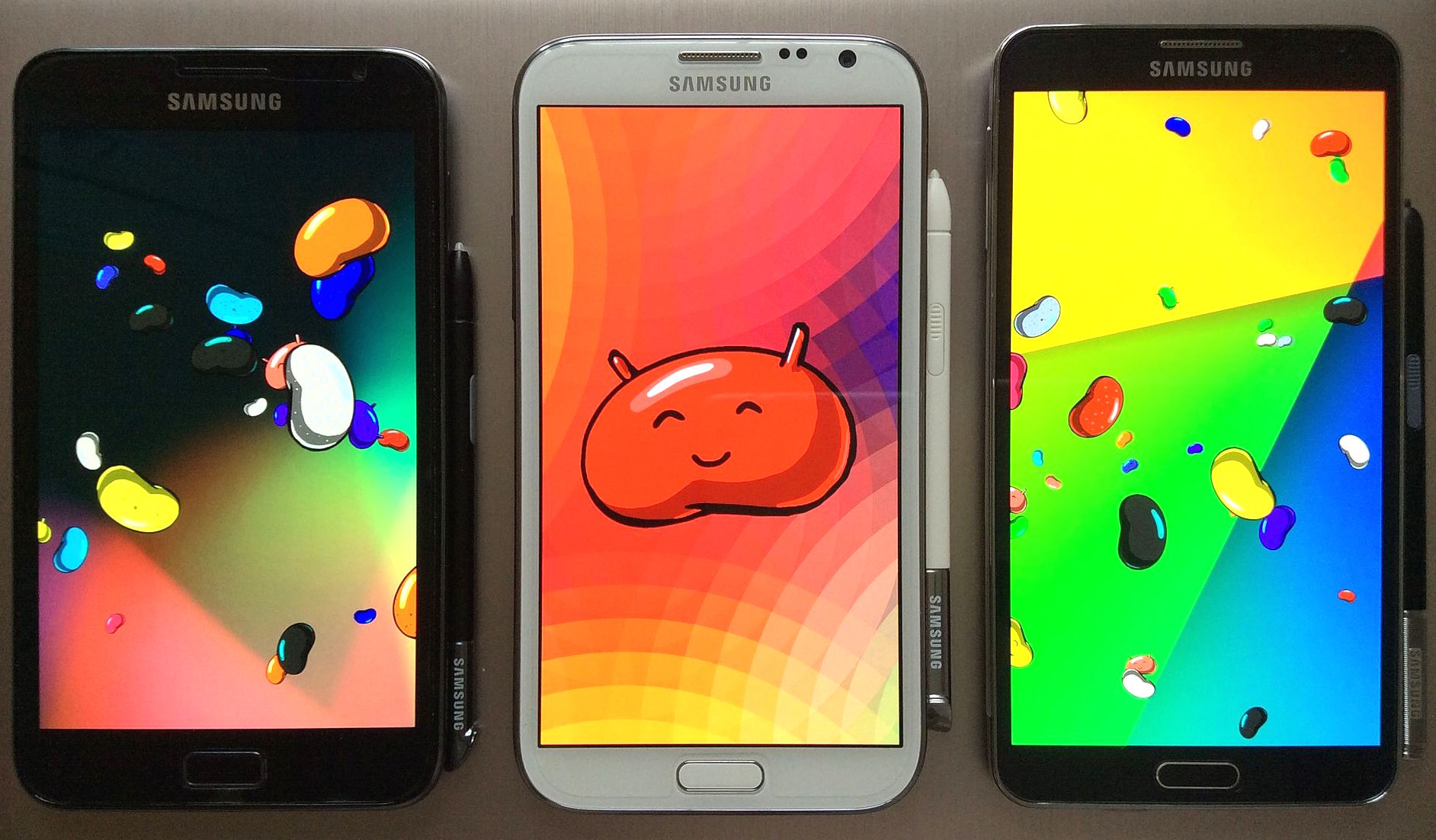
And this doesn’t even get into the world of phablets, loosely characterized by having displays of 5.5 inches or more. Even Apple now produces a phablet in the iPhone 6 Plus (5.5“), and its fans are zealous ones, and the Samsung Galaxy Note 4 (5.7”) is nearly universally adored, both for their large, high-resolution displays, and for one other big benefit: They obviate the need for tablets for many people. In particular, I hear anecdotal tales of people forgetting about their iPad minis, and I include myself in that. And then of course there’s the Nexus 6 at 5.96 inches.
With my excellent new LG G3 (5.5") my iPad mini 2, at 7.9 inches, was rendered almost entirely redundant. I sold it, and assumed that I’d still require a tablet in my life, and certainly I’d still want some iOS device, so I got a used iPad Air. But I found I still wasn’t using it much, despite the fact that it remains superior in some ways to the phone and the laptop. But maybe not in enough ways.
Last year I wrote in defense of the iPad as a writing device, comparing it to smartphones as cameras, adapting the adage that the best camera is the one you have with you. The iPad was there, and sufficiently capable to make it a great device to write with right now when the thought strikes. It is with you, isn’t it?
But my iPad stopped being with me all the time, and if I have to seek it out to write, I might as well seek out the better writing device, my MacBook.
What about the other areas in which Steve Jobs said the iPad was superior? Web browsing stands out, certainly, as there really is nothing like having an entire web page in your hands, one that you control with your fingertips. But it’s not so much better than doing the same thing with a large phone. It’s better, but not enough that it means I’m going to stop what I’m doing and seek out my iPad.
Book reading? Nope, the phablet is better. Ultra-light, a large enough screen comparable to a mass market paperback, and ultra-high-resolution, crisp text. The iPad is a great e-reader, but the large phone with a high-res screen is perhaps the best one, maybe even better than the best Kindle.
Games? I’ll give this one to the iPad, certainly, at least for the games I like. Scrabble, Monument Valley, Robot Unicorn Attack 2, Tiny Wings, Bejeweled Blitz, Crossy Road – these games are much better on the larger display of an iPad. Other games it’s more of a wash, like Threes.
For me, as an evangelical enthusiast of gadgets like these, there is an element of sentimentality attached to the iPad and tablets. Though I didn’t even own one until the iPad 3 in 2012, they entrenched themselves into my psyche very quickly (and I suspect of millions of others as well). Whereas in 2007, almost nobody even had a smartphone, out of nowhere we’ve reached a place where it seems like a middle-class person in an economically advanced country is “supposed” to have a PC, a phone, and a tablet. (Kudos to Apple’s marketing for convincing us of this, whether or not it’s true.) I still love my iPad; it’s a beautiful, powerful, fun device. I have a genuine affection for it, and for the brand (again, a bow to Apple marketing). To disavow the use of an iPad, to even consider it, well, feels like a kind of apostasy. Like I’m going to disappoint someone or some higher power. (Stop glaring at me like that.)
Having an Android phone, I would also miss being in both conversations, as it were, because with no iPad, I have no iOS device. It also throws out all the time and money invested in that software ecosystem. But this is my personal issue, not a facet of the broader discussion. My personal decision is not yet made, and these things are always fluid, particularly for me. A change of mind a few weeks after any decision could mean more buying, selling, and trading to reconfigure my setup once again. I’m lucky that such a thing is even feasible, with a little work. And it’s fun.
At the end of the 2010 iPad event, Steve Jobs summed up what he had introduced as “Our most advanced technology in a magical and revolutionary device at an unbelievable price.” But now even price is no longer a marquee aspect of the iPad. At the time, people were shocked it wasn’t $1000. Today, very good tablets can be had for just over $100. iPads remain the best tablets, and really good ones (like the 16GB iPad mini 2) can be had for about $300, which is fair.
But with the encroachment of phones and laptops onto the iPad’s “middle space,” it’s hard to beat the price of zero dollars: No tablet at all.
- - -
Update: I have an addendum post that also takes into account something Steve Jobs didn't: Comics and graphic novels.
* As my friend Tom Loughlin pointed out in the comments of my previous post, Chromebooks occupy an interesting position in all of this, as not-quite full power PCs, but not-quite tablets, but a kind of secondary or “spare” PC for portability, battery life, and kicking around on a budget. They don’t quite qualify for being part of this discussion per se, but one could for the most part transpose Chromebook for MacBook throughout this post, but I also understand that it could for many be seen as an iPad replacement.
The Embassy of Google
 I really like Google+ for the most part (as much as I hate the name), and I find the interactions that I have there to be, on the average, much higher in quality than those I have over Facebook or Twitter. Part of that I know is because there just aren’t all that many people there, so there’s less noise in my individual feed, and those who are there are going to be, well, at least a little more like me: tech-enthusiast, early adopter, cultural geeks. I come across very little abuse or vitriol, and see almost none of the social signaling that is so prevalent, even defining, of the other platforms; the constant wearing one’s obviously-correct politics on one’s sleeve to show that one is on The Right Side of Things. On the whole, it’s calm, thoughtful discussion or commentary a given topic.
So why is that? Well, truth be told, it’s not that the political discussion I see on Google+ is somehow superior, but that it’s not really there at all. There’s not much in the way of social signaling of ideologies because that’s simply not what surfaces, and it’s not what I’ve chosen to have surfaced. Instead, I see a lot about tech and a bit about nerd culture. Perhaps if I followed (or in the G+ parlance, “circled”) more explicitly political individuals and groups I might see more of the eye-roll inducing things I find on Twitter, but I haven’t, so I don’t.
And thinking about it more, Google+ isn’t even really just about tech generally, but a particularly geeky view of tech. In other words, it’s a lot about things related to Google, at least at a secondary or tertiary level. It’s no coincidence that I became much more interested in Google+ when I first started using Android devices, lost interest in it when I moved back into an all-Apple ecosystem, and came back to it when I got back into Android. Google+ on Android is a fantastic place to read and talk about Google and Android.*
On This Week in Google on the TWiT network this week, Danny Sullivan of the site Search Engine Land made an astute observation, almost as a throwaway comment, but it stuck with me. He said:
Google+ is the Apple Store for Google.
Let me unpack why this is such an interesting thought.
I used to work at an Apple Store, and while there it became clear to me that while I’m sure Apple makes untold bazillions just off the in-person retail transactions that take place at its stores, these places serve a grander purpose.
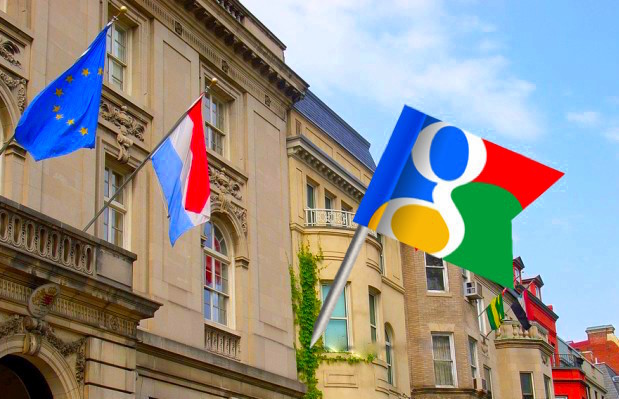
Apple Stores are really Apple Embassies. Apple places these outposts in locations where human beings are already primed to spend money (malls, shopping districts, etc.), and in these locations they not only sell products but make the case for Apple as a whole. The employees are ambassadors and diplomats for Apple the quasi-nation-state, conducting negotiations, solving diplomatic crises, and establishing and building on relationships. I would bet you that the way Apple Stores have represented and delivered the message of the Apple brand has resulted in more revenue and growth than the raw sales of products that take place in those same stores. I can’t prove it, but I bet it’s true.
Google+ serves a similar purpose for Google, though unintentionally. It’s a meeting place for those who use and appreciate what Google does and its surrounding services and technologies. It creates a forum and meeting place that represents Google’s design aesthetic and preferred modes of communication, just as the Apple Stores do for Apple. It’s a walled garden, one that doesn’t interact particularly well with outside platforms, which is similar to Apple in a way, and actually an exception for Google generally, which usually makes a point of undergirding everything it possibly can across all of technology. And as for it being not a “real” place, it still works: Apple is about physical products, so it makes sense that its embassy is a brick-and-mortar retail location. It makes equal sense that Google, a software/cloud company, would have its embassy exist virtually, in a browser, in the cloud.
And while Apple likes its customers to give it a lot of money for its products, and is thus represented by a store, Google likes to give away its product, and instead consume its users data: opinions, interests, routines, etc., and so there is no monetary side to Google+.
So perhaps what might be best for Google+ is for its parent company to accept that it will never be a Facebook competitor, but that it does potentially serve an extremely valuable service as the Apple Store of Google. Perhaps it might have Google employees inhabit it specifically for the purpose of being available to users, maybe attach company-run tech support exchanges for help with Android, search, and other aspects of Google’s massive online existence. Perhaps the Play Store could be more directly integrated to the Google+ experience so that users could seemlessly purchase new content while its being discussed (or “plus–1’d”). If Google decides to embrace Google+ as its embassy, it might thrive in a whole new, and potentially more valuable way than they ever intended.
* I think it’s important to note that Google+ is also full of noise. Android-centric feeds and communities are chock full of pointless screenshots of home screens and launcher themes, there’s a lot of poorly-written garbage, and a lot of complaining about battery life and whether one’s Nexus device has gotten the latest software update with morally acceptable speed.
The Martians' Singularity: Thoughts on "The War of the Worlds"
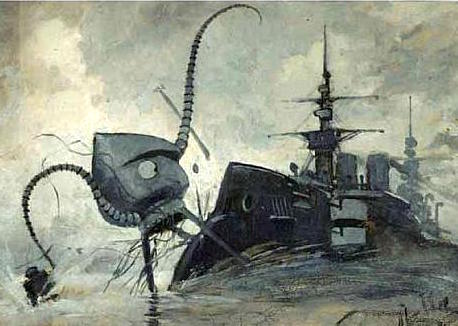 I’ve just read H.G. Wells’ original The War of the Worlds, and it was nothing like I expected. I have a completely unfounded prejudice about some of this classic sci-fi literature, wherein I presume it to be either vapid pulp or unnecessarily stuffy. (Frankenstein suffered a bit from the latter, I thought. Come on, Victor, get yourself together.) But just as I was delighted by my first reading of Jekyll and Hyde, I found War of the Worlds to be incredibly rich, suspenseful, and insightful.
Prophetic, even, as I suppose the best speculative fiction must often be. This blog’s fascination is with the intersection of technology and human life as it is lived, and in this book Wells gives us a glimpse of the future, where the Martians stand in for the marriage of human beings and machinery. Indeed, in a strange way Wells seems to be foreshadowing the Singularity, the moment that some believe is inevitable, when computing power becomes so great we fully merge with our machines, uploading our consciousness to the cloud for a kind of immortality.
Wells’ Martians were just about there. Of course, Wells had no concept of computers as we know them, but his Martians have an utter reliance on mechanization. It may be that they were physically adept on Mars itself, but on Earth the Martians, left to their own physical devices, were stultified by terrestrial gravity, and were almost totally dependent on their machines. But even if their bodies were better suited to Mars, Wells makes clear that their bodies had developed (“evolved” may not be quite correct since we don’t know whether natural selection was involved) to be physically limited to bare essentials: a powerful brain and nervous system along with grasping appendages, and almost nothing else. The machines handled the rest.
Wells’ narrator explains it this way:
[H]ere in the Martians we have beyond dispute the actual accomplishment of … a suppression of the animal side of the organism by the intelligence. To me it is quite credible that the Martians may be descended from beings not unlike ourselves, by a gradual development of brain and hands (the latter giving rise to the two bunches of delicate tentacles at last) at the expense of the rest of the body. Without the body the brain would, of course, become a mere selfish intelligence, without any of the emotional substratum of the human being.
So before we ever hear tales of heartless machines like HAL or emotion-starved androids like Data, here we have Wells giving us a near-perfect biological analogue: Intelligent creatures whose reliance on technology has allowed them, perhaps encouraged them, to jettison inefficient emotion. So really, the Martians are as close to the Singularity as anyone in the 19th century could have possibly invented.
What may be even more remarkable is how Wells refuses to cast the Martians as total villains. Yes, their aim is clearly to unfeelingly harvest Earth and humanity for their own consumption, but Wells ascribes no malice. The narrator, remember, has witnessed more of the horror of what the Martians are capable of than almost anyone alive, and yet he warns against judging them “too harshly,” because “we must remember what ruthless and utter destruction our own species has wrought” upon indigenous human cultures and animal species. “Are we such apostles of mercy as to complain if the Martians warred in the same spirit?”
What will the singularitarians and transhumanists think if our machines outpace us and, rather than bonding with us, decide to erradicate and harvest us just like Wells’ Martians? Will we be capable of making that kind of leap of perspective to understand our enemies?
There is a lesson, of course. The superior Martians, as ruthlessly efficient as they were, could not imagine that their undoing might come from beings too small to be seen by the naked eye, trusting in their superior firepower, and failing to fully grasp Earth’s biological nuance. What might we be neglecting as we bound toward the future during our own present technological revolution? What metaphorical (or literal) microbes are we overlooking?
But The War of the Worlds is not technophobic, for though it does present a powerful case for humility in the use of technology, it also admires it. The narrator makes several references to how humanity adopted much of the Martian technology all to its benefit after the invasion had failed. He speaks with esteem and awe of what the Martians had accomplished, and how they had developed genuinely meaningul efficiencies, not just in machinery, but in their own biology. For all the horror they brought, there is so much the Martians got right.
H.G. Wells may not have been a Ray Kurzweil of yesteryear, but I think he did at least intuit that humanity and technology were converging, even as far back as the 1800s. We may find that we achieve as a species much of what Wells’ invaders had, and may also be wise enough to avoid their fatal level of hubris. If Wells’ story proves prophetic, to paraphrase Carl Sagan, those Martians were us.
Jekyll and Hyde: Forefathers of Internet Trolls
 There is a degree of serendipity to my first reading of The Strange Case of Dr. Jekyll and Mr. Hyde. I downloaded it to my iPad mostly on a whim, thinking it might be a good idea to dip into some of the 19th-century science fiction to which I am almost entirely unread, save for Frankenstein. (Next up, War of the Worlds!) I expected, similarly to Frankenstein, a book-length recounting of Dr. Jekyll’s agony as he is compelled to rent himself in two. I presumed it’d be chapter after chapter of his turning into Hyde, doing bad things, turning back to himself, and feeling shitty about it, and the moral would be something to do with how dangerous it is to mess with the science of life.
Not at all! You know this, of course, if you’ve read it yourself. (And if you haven’t, spoilers ahoy.) But what a refreshing surprise it was that the very premise of the crisis, a man who has learned to transform into a kind of bizarro version of himself, isn’t even revealed until quite near the end, when Jekyll himself is already dead. It was quite a wonderful book. (And it helped that it was short, as I’m a painfully slow reader, and even I finished it in a single sitting.)
To the serendipitous part. There was something about the specificity of what Jekyll identifies about his Hyde side that screamed contemporary relevance to me. In his closing letter, Jekyll reveals how he was surprised to find that his division of personalities was asymmetrical; there was no even split between Good Jekyll and Bad Jekyll. Rather, changing into Hyde was a way to release all the nascent ugliness within him, and changing back, he found he remained his whole self. Hyde was the monster within Jekyll, but there was no pure angel to balance. Hyde is always part of Jekyll, even when contained.
Here’s how he puts it. When he turned into Hyde…
…my virtue slumbered; my evil, kept awake by ambition, was alert and swift to seize the occasion; and the thing that was projected was Edward Hyde. Hence, although I had now two characters as well as two appearances, one was wholly evil, and the other was still the old Henry Jekyll, that incongruous compound of whose reformation and improvement I had already learned to despair. The movement was thus wholly toward the worse.
Reading this, it immediately occurred to me that Edward Hyde is a 19th-century version of the Internet troll. Ostensibly normal people, whose moral compasses seem more or less calibrated, when introduced to the power and anonymity of the Internet often unleash the absolute worst sides of themselves.
In the most egregious cases, we have trolls who threaten and harass and cause real-world damage. What are these people like in their day-to-day lives, in person? I doubt that most of them would be immediately identifiable as the monsters they become online.
But even for the most well-meaning among us, including myself, the immediacy of the social web can make it too easy for us to slip into hostility, arrogance, and hubris, at degrees we’d blush at if given a moment to pause and consider.
There is a little troll in all of us. There is a little Hyde in all of us.
Henry Jekyll was an entirely upstanding and moral man in his daily life, but he found a way to create a Victorian-era avatar, and project his inner troll into physical world to satisfy his darkest impulses, and add kindling to his baseless rage. In his confession, he notes how Hyde began his independent existence as small and emaciated, having been largely denied sustenance within the whole of Jekyll. But now free, he could nourish himself and grow stronger by acting on his aggression and hate.
That’s right, Jekyll fed the troll. And look what happened: Confusion, fear, chaos, and death.
And what might the future hold? Perhaps Robert Louis Stevenson saw it, and we’re already living it. Jekyll also writes in his confession:
With every day, and from both sides of my intelligence, the moral and the intellectual, I thus drew steadily nearer to that truth, by whose partial discovery I have been doomed to such a dreadful shipwreck: that man is not truly one, but truly two. I say two, because the state of my own knowledge does not pass beyond that point. Others will follow, others will outstrip me on the same lines; and I hazard the guess that man will be ultimately known for a mere polity of multifarious, incongruous and independent denizens.
We are not bound by the limits of Jekyll’s story, where a chemical concoction manifests only one additional “self.” On the Internet, it is trivially simple for one person to contain – and project – multitudes.
We have always had Hydes among us, I think, but the Internet has made them more visible, and better able to organize and combine their loathsome efforts, under cloaks of obscurity. In the midst of things like “Gamergate” and the non-stop torrent of rage and abuse to which the social media landscape plays host, it seems to me that there might never have been a time when this book was more relevant. The case of Dr. Jekyll and Mr. Hyde suddenly doesn’t seem so strange. Indeed, it feels very familiar.
Image by Shutterstock.
The Quest for Peace, Through Headphones
 I am told that I am poor at being “in the moment,” and I confess it to be the case. I am nothing if not riddled with anxieties, large and small. At my worst, I am engulfed in worries, drenched in waves of stomach-sickening dread, doubt, and guilt. But normally, just going about my day, I maintain a manageable baseline of unease; the quiet hum of preoccupation with Other Things always resonating, if just barely. I am told this is bad for my health, to say the least.
I come by it all honestly, with anxious genes from my forebears, and traumatic life experiences from childhood and adulthood that have primed my lizard brain to needlessly rev itself while idle, overeager to burst into full fight-or-flight mode at the least cause, be it from a sense of physical danger to thoughts and fears of a more existential, personal, or mundane nature.
But while my limbic system is asserting itself, life is happening. There’s my wonderful family (who, in fairness, trigger not a small amount of anxiety themselves), music to be carried away by, books to be lost in, the lovely natural world that surrounds me here in Maine, Earl Gray tea, writing, bicycle rides, cool autumn air, my guitar, and even dumb video games and TV shows. To enjoy these things, I need to be there for them. I need to be “present.” Usually, I am not.
Being in the moment, being present, having a feeling of mindfulness; these things are enormous challenges for me. Elusive, to say the least, even when sincerely pursued. Being present, letting go of worries and preoccupations, takes up such time, time I could be spending being worried and preoccupied. There are all those Other Things!
The thing is, though, the worry and the preoccupation and the anxiety, it’s killing me. It’s ruining my sleep, shredding my nervous system, bruising my heart, pock-marking my brain, dampening my intellect, deadening my creativity, atrophying my muscles, and robbing me of genuine connection with my wife and kids, who I love deeply. I suffer from depression and I struggle with post-traumatic stress disorder, but it’s also true that I could improve things by leaps and bounds if I could just manage to make room in my life – in my mind – for one simple thing.
Peace.
All this is to say that this is why I went on a weird and frustrating quest over the past few weeks trying to find a nice pair of headphones.
You see, even though I’m a musician and songwriter, actually listening to music, escaping into it, was something I’d lost the knack for sometime in my late 20s. As the Internet and podcasts and Other Things ascended, becoming absorbed in an album became a rare thing for me. I suppose this happens with a lot of people at this age; music is something we obsess over (and spend way too much money on) as teenagers and college students, and then more or less abandon as we become Regular Adults, save for occasional trips of nostalgia.
There’s another odd sore point for me, in that listening to good music comes with the baggage of opportunities missed. I once firmly believed that I would become a singer-songwriter by trade, and make a life of writing, recording, and performing music. Now that this is clearly not going to happen, it becomes more diffiult to enjoy much of the music I used to, or ought to, for it recalls thoughts of a youth spent, talent squandered, and lessons not taken. At times I get wrapped up in fantasies of what might have been, which, for when I was young and hopeful, was an exciting dream about a future, and as an adult is now a sad yearning for what can now never be.
Nonetheless, in the here and now, it seemed to me that music might be a good way to claim some peace for myself. Goodness knows, we have such easy access to so goddamn much of it, that there’s almost infinite choice. I have music in my iTunes library that I’ve owned for over a decade and probably never even pushed “play” on. But music, and audio more generally, seemed like a good way to ease into the pursuit of peace. When I sit to read a book, as Other Things go on around me, I could put on a pair of headphones, play some instrumental music, and escape into the world the author has laid out for me. (What more often happens is I that get distracted or fall asleep.) I could listen to guided meditations and affirmations to start rewiring some of the bad connections and memorizations encrusted in my addled brain. This wouldn’t be a way to be in the moment with people or nature, per se, but it would be a start, a first step toward letting the Other Things go, just for a little while, in favor of peace.
To do this, I’d of course need a decent pair of headphones, right? You can’t achieve inner peace with crummy earbuds, right?
Once upon a time, I’d had a kind-of-nice pair of over-ear headphones. Bose OE2’s, which sounded nice and warm, and were more or less comfortable, though cheaply built and easily broken. Before my quest for peace, I’d decided they were not being utilized enough to justify holding on to, so I sold them. (I also had sold my Kindle Paperwhite, since I was reading so much on my iPad mini – a choice I now regret for related peace-pursuit reasons.)
Now, I actually think Apple’s EarPods are quite nice for what they are, and we have at least two pairs of them in the house. I know there’s a kind of geek-cultural agreement that these are risible peaces of junk, but I have found them rather comfortable and sufficiently nice-sounding to serve most of my listening needs over the past couple of years.
But I didn’t think they’d suffice for finding peace. One needed comfortable over-ear headphones for that. I mean, everyone knows this, right? For true peace, you can’t have a little nugget in your ear canal vibrating the air and your skull. What you need is a couple of cushions lovingly embracing your ears, with earphones that produce a soundscape rich with detail. That’s the only way to peace, of course.
This was the tenet I had subconsciously agreed to, anyway. So I started researching and looking for deals. I was excited to find Logitech’s UE 4000 headphones go on some crazy discount to under $20, so I snapped them up, and at first thought they were a true epiphanic discovery. It wasn’t too long, though, that I realized they were painfully uncomfortable, with a kind of mushy, heavy sound. Dissatisfied and needing to find an alternative, my hunting instinct was triggered. It was time to shop for serious.
Let me say something about this. This is a thing with me, when there is an Important Purchase to be made, something takes over and I become obsessed with the process, consumed with researching possibilities, combing the Internet for bargains, digging through enthusiasts’ message boards, and gathering opinion. I used to only do this on those rare occasions when a new computer was to be bought, but that became a lot easier once I switched to Macs in 2004. But headphones were a new way for my meticulous shopping beast to howl at the moon.
Thinking on it now, how could it not? Headphones are the perfect snare for me: they are of near-infinite variety, there are models and makes that are widely agreed by certain communities to be superior, but dizzying nuance exists not just between price points and types and manufacturers and brands, but within those brands and individual models. And then there are factors that can affect one’s decision such as the quality of the production or compression of the music in question; the source player, be it a computer, an iPod, or a hi-fi system; the earpads, be they stock or purchased separately, made from all manner of materials; one’s surrounding environs; and even that maddening myth (is it just a myth?) of headphone “burn-in.” Audiophiles can give wine aficionados a run for their money, which they need a hell of a lot of.
And it’s not as though I live anywhere near a place that sells decent headphones, and has sufficient models on display for testing out in person. Yes, Apple Stores and other such places have headphones to sample, but they almost exclusively make available cans that are far out of my price range, which was really anything over $100 (technically, there is plenty below $100 that is out of my range, but as we can see rationality was lacking throughout this quest). I was limited almost entirely to what I could actually get delivered to my house. That meant actually buying them.
I won’t bore you with the shipment-by-shipment details, but suffice it to say I spent a great deal of time on websites like Head-Fi.org, r/headphones, and deep within the lowest levels of Amazon customer reviews. And by this time I have to assume that there is a red flag over my name, or perhaps a bullseye target over my picture, at Amazon’s returns department.
My primary experience was with three models: Sony’s MDR–7506, Audio-Technica’s ATH-M40x, and Sennheiser’s HD 380 Pro.
I began with the MDR–7506, which The Wirecutter has long named its top choice, and has been a staple of Those in the Know since they were introduced in 1991. I was at first surprised by how neutral they were, with no Beats-like thumping bass or Bose warmth. But I was quickly shocked by the level of detail I could suddenly percieve. I could hear the slightest taps of Erin McKeown’s fingernails on “Queen of Quiet,” and the bass crescendos in Pantera’s “Walk” sounded like they were physically coming toward me. But they were also rather uncomfortable. After a few minutes, parts of my earlobes would begin to ache. I tried a few minor hacks with the earpads to mitigate this, but the discomfort was undeniable.
Surely, I thought, the M40x’s would be perfect. Everyone (and by that I mean a lot of tech geeks) knows the M50x is some paragon of headphone perfection, and the M40x would just be a small step down in, well, some tech spec or other. They were big, rugged, puffy-looking, and extremely well-regarded.
But to my ears, they were claustrophobic where the Sonys were expansive. The sound was meaty, focused, tight, and powerful, but somehow scrunched. I doubted my own perceptions, thinking that I might even be wanting the “wrong thing,” for how could I not like these? But on top of the sound, they too were too painful to wear for long stretches. Replacing the earpads with something softer only made the sound feel empty, drained. Off they went.
The Sennheisers were very strange to me. Rather than pressing against the ears, they completely surround them, so your lobes never make contact with the hardware. I thought that might be just the ticket for my enormous ears, but the clamping sensation on my skull was off-putting, and the sound felt slightly tinny. Bass came through strongly, but mids were weak, as though being heard, well, in a can.
During this process, I began to doubt my senses. Could I even distinguish between crummy and high-end headphones? Was any of this even worth it? One night (yes it was late) I tried comparing the EarPods to one of the contender models, and found I couldn’t tell the difference anymore. I was going a little bit crazy.
I was feeling anxiety over the time and effort and money being put into this quest. I felt guilt. I felt worry.
At one point, I returned to the Sonys. Something indeed had been lost. The vast expanse of soundstage I had perceived from my initial experiences no longer struck me. Had I simply become acclimated to better headphones generally since my first time around the block with them? Or was there really nothing special there to begin with?
Despite the wash of “wow-ness” being gone, I found I still appreciated the “true” sound they produced. Not perfect, as some vocals sometimes came through a little recessed for my taste, but they still came across as superior to the others I’d gone through. I tried out a couple of different kinds of earpads that didn’t change the sound too drastically, but made them far more comfortable.
You can clearly see what happened here.
This all began with a sincere attempt to be more in the moment, to have a taste of relaxed mindfulness, to let go of immediate anxieties and remove myself from the frenetic stresses of work, parenthood, the news, battles on Twitter, and the like. But the process became its own source of stress. I simply had to find, if not the “perfect” solution, the solution that maximized the resources I had available to me, by way of money, time, and access to the objects themselves.
But I realized I was never going to achieve some kind of zen state by way of the headphones themselves. (If there is a doorway to the sublime to be found through headphones, it is likely well beyond my price range, so I may never truly know what it is to live with a pair of $400 cans, alas.) I finally understood that I could just pick a pair that was good enough, and move on to what started all of this. The quest for peace.
As I write this, I am donning my new Sony MDR–7506’s. I have a pair of Auray Ultra Deep earpads on them, which give a little more isolation and bass, and are far easier on my ears than the stock pads. I am still choosing between those and a pair of Beyerdynamic velour earpads, which are much softer, but a little less isolated, if barely. So I suppose this leg of the quest is not entirely over. But it’s manageable. It is not suffused with anxiety, just a twinge of guilt over the additional $20 spent on whichever pads I stick with.
I can stop worrying now about all the Other Headphones that I might test out. The next step, the first real step, begins now. It begins with writing this essay, with enjoying music through the good-enough headphones I’ve settled on. It begins with knowing that my family is here in my house with me, safe and tucked in for the night, and feeling my connection to them even as they’re not in the same room with me. It begins with being in this moment right here, right now, and then it begins again with the next moment. And I can be in those moments with nice headphones, with crummy earbuds, or even, when I’m ready, with blessed, blessed silence.
Note: Full credit to Iyaz Akhtar for first having the idea for using the Superman-related phrase “quest for peace” in the sense it’s used here. In fact, he has a whole show about it.
Over My Dead Body
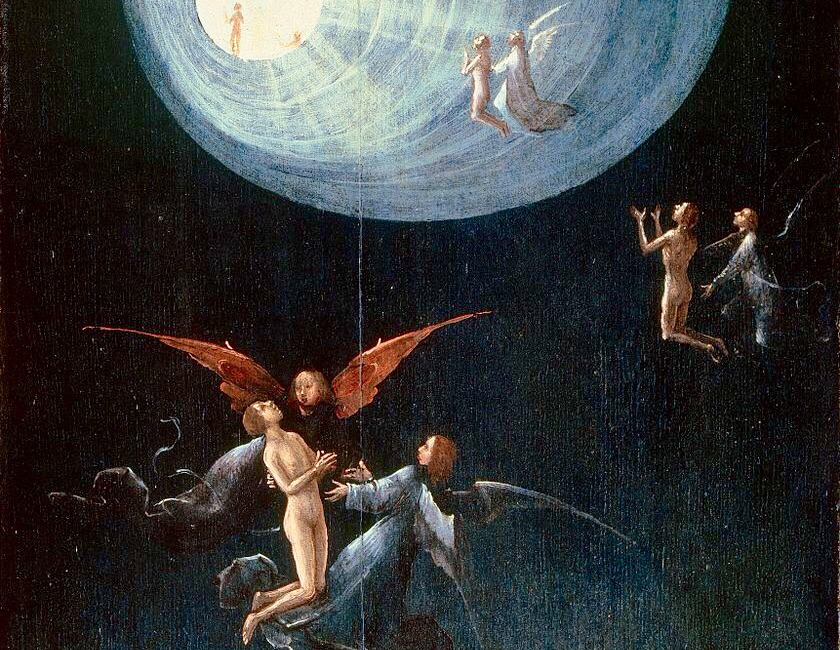 A college girlfriend of mine used to pride herself on being kind of pro-death. She wasn’t goth, per se, but she was certainly contrarian, and when we’d get into existential discussions (far too often for my late teenaged self who was more interested in physical explorations), she’d tell me that she wasn’t afraid of death.
Well, I am, I’d tell her. The idea that everything ends, and you don’t even have the benefit of being aware that it’s over, it’s all too horrifying and confounding for me. No thank you.
She’d one-up herself. “I’m looking forward to it! I can’t wait to see what happens.”
Suffice it to say, she was not a scientific skeptic, and tried to convince me of the existence of spirits and past lives and the like (which she did with some brief success, eager to please her as I was). Death purportedly didn’t spook her because she was convinced that she herself would be a spook.
As an adult, it’s now clear to me that there was more going on there than some college-age rebellion. It’s of course rational to accept death as an inevitable event, and to make peace with that acceptance. It’s another to declare one’s enthusiasm for it. There was a pain she harbored that my 18-year-old self could not have comprehended.
I was reminded of this when I read a piece at The Atlantic by Ezekiel J. Emanuel in which he declares his intention to stop trying to stay alive at the age of 75. The long and the short of it is that he feels that his probable physical and mental deterioration will cause him to be too much of a burden on his loved ones, and insufficiently vigorous for his own tastes. (“It is much more difficult for older people to learn new languages,” he informs us. Well, why go on indeed?) Therefore at age 75 he will stop seeing doctors, forego treatment of disease, and more or less embrace his (at that point) accelerated decay.
I found something unsettling about it, even offensive. I admit that this was almost certainly in large part due to my own fear of death, which, I’m telling you, is visceral, intense, and probably worthy of medication. But I was also put off by the idea that deterioration must equal devaluation. Being able to do and experience less than one used to is somehow pitiable in Emanuel’s eyes. So pointless as to not even be worth existing for.
In particular the way he talks about his father’s aging grated on me. He used it as an example of the terrible fate that awaits us all, noting how his father became “sluggish” and less “vibrant” after a heart attack. I found myself thinking, “Jeez, dude, cut your dad a break.”
My fear of death stems in large part from my atheism and skepticism. I know there is no God, no heaven, no afterlife, no reincarnation, no spirit world (in the practical use of the word “know,” as in, “I know there are no real Klingons”). I know that this life is literally all we have. This experience of being ourselves is 100% of what it is to exist, and that even much or most of that experience is illusory. Without the awareness of being alive, right now, we have literally nothing else. Once it’s over, we’re not even extended the courtesy of having a moment to digest all of it. (“Whoa, that life was crazy. I wonder what happens now.”) Nope. It’s on, and then it’s off.
During the “on” portion, the experience is inconsistent. We’ll start out brand-new and energetic and vigorous, and then we’ll develop, and we’ll age. Illness, accidents, psychological baggage, and plain-old wear-and-tear will take their toll and we will be able to do less. Our brains may process less and at a slower clip. We may get to the point where we can hardly do anything, where most of our lives are physically agonizing, or where we have no idea what the hell is going on (not in the usual, banal sense in which I have no idea what’s going on).
But you know what? It’s not nothing! It’s not the void of death! We can still squeeze out what tiny droplets of joy, love, enrichment, pleasure, even mere awareness that our collapsing meat sacks will allow us to. Perhaps the balance is tilted more toward the side of pain, of torpor, of confusion. And we all may have our own ideas about the point at which those things become too much, when ending existence is a superior choice to experiencing its punishments any longer. Fine.
But I would never put an arbitrary number on it, and predispose myself to speeding up my own demise because I crossed some threshold my younger and more arrogant self put in place. And I could never see myself looking forward to it, wishing for it to come to answer some tough philosophical questions.
Because it will definitely come. There’s no avoiding that. Morbid curiosity will be sated. The scales will tilt to the point of falling over. I see no reason to place my thumb on them now.
Stuck in the Middle with You: The Awkward Sidelines of Skepto-Atheism's Internal Battles
 Mommy and daddy are fighting, and they’re ruining Christmas. This is pretty much how I feel most days when I glance at my Twitter feed or peruse the blogs of the skepto-atheosphere. People I like and respect making each other miserable, attacking each other, and each more or less defining the other as either a monster or a bucket of spit.
Despite my best intentions, I fear that I often come off as “above it all,” in the snootiest sense of that term, as I tend to avoid mixing up with myriad debates and wars. First and foremost, this has to do with my job, where it would boot little for me or my organization for me to paint myself, and then by perceived association my employers, with one particular faction’s colors. I have not always succeeded in avoiding doing so, but it’s what I try to do.
Another major factor is my own aversion to conflict. My self-loathing is deep enough that being on the receiving end of attacks, or even perceiving myself to have dropped in the estimation of someone I like, is enough to send me back into therapy. (I actually am back in therapy but that’s unrelated to this little rhetorical flourish.) Few are the hills I feel are worth dying on. So unless the issue in question is of such significance to me that I feel I have to get over my anxiety, I tend to stay out. One example is my recent post on violence against women portrayed in video games, which I was terrified to post, and I kept in a draft state well after it was finished, and even then I didn’t tweet the link or post it to Facebook, just so I could delay any blowback.
But perhaps the most galling part of this is when the war of words is, as I mentioned before, between people I like and respect, people who I believe to be on the same side in almost all things, to have more overlapping goals than opposing, and to be coming from equally principled and well-meaning points of view. And regardless of where I personally come down on a given issue, I can recognize the validity and wisdom in aspects of those positions I don’t agree with. Like I was taught in retail, I begin by assuming positive intent.
(Let us also assume I'm not talking about plainly malicious trolls, and give me the benefit of the doubt that I would not consider genuine harassers who mean harm among my friends, or among those I respect. Okay?)
The current kerfuffle over Ayaan Hirsi Ali is one good example. I have my own opinion about it, friends and colleagues of mine have opposing opinions, and the argument over those opinions immediately became not only personal but all-encompassing. Someone who holds the opposite of one’s own opinion on the issue is not only wrong, but probably an awful person all around, and therefore deserving of awful treatment.
Name any issue about which our community has argued, and this template will probably apply. So what’s one to do?
No really. What should I do?
Here’s what I have done. I haven’t always been weirdly silent. Again, my staying on the sidelines is often necessary for reasons that are bigger than me. Other times, I feel compelled to speak despite the discomfort. In some of those occasions when people I like and respect are locked in Twitter or blog combat, and I note that one of the combatants is going over the line and causing genuine distress, even if I agree with them on the issue, I will contact them privately to ask for a change in their behavior, to mitigate their wrath or gleeful pillorying of their opponent. I try to remind all involved, privately, that we’re all coming from the same place of wanting freedom and equality, even if we don’t agree what that looks like. I try to remind all involved that the person they’re arguing with is a flawed human, with feelings. I think once in a while it helps.
It makes keeping these friendships challenging. When holding the wrong opinion (on what to the outside world might seem a niche concern) is all that stands between me and total outcast status, getting involved at any level in these arguments fails any cost-benefit analysis for me. Worse is when those I do agree with are being dicks about it, where I want to defend one side intellectually, and the other personally. And those differences are excruciatingly difficult to parse, particularly on Twitter, but on any medium.
There’s no solution proffered by this post (sorry!). If anything, I think I just want to convey that there are many moving and changing parts to all of our arguments, and it’s too easy to turn respectful disagreements into the casting of others as villains and sops. I think, and this is an opinion, that to truly hold to the principles of skepticism and rationalism as well as humanism and compassion, is to recognize these nuances, and to make an effort to perceive the moving parts for what they are. It’s to resist the urge to demolish, and to consider the humanity of those with whom you argue.
I mean, really, we can’t all be monsters.
Let's Agree to Disagree with Those Other People: The Stifling of Meaningful Dissent Online

A recent study from Pew that’s getting a lot of attention suggests that social media use is contributing to a dynamic in which people are afraid to express opinions that might dissent from what appears to be the majority consensus both on and offline. It appears as though Facebook, Twitter, and other social media lead people to be afraid to disagree out loud both on these platforms and in real life.
The pushback against this that I’ve heard amounts to some version of this: “That can’t be true, people are arguing all the time online!” This anecdotal observation means, I suppose, that the study is bunk.
But I don’t think so. Believe me, I understand that there is a lot of disagreeing and arguing and dissenting online. But I think it’s largely between networks of people as opposed to within them. Perhaps the most obvious example from my own skepto-atheist experience is the nightly volley of tweets between atheists and religious believers, where each side is batting debate points back and forth over the answer to Life, the Universe, and Everything.
But these aren’t friends or amiable acquaintances having a thoughtful disagreement. These are people who are more or less strangers to each other, shelling one another with 140 characters’ worth of theological (or atheological) rhetoric.
No one in these debates need muster the courage to stand against the prevailing opinion of the crowd, as everyone knows where everyone stands before the argument even begins. The same can be said for much of what passes for “debate” online. Liberals versus conservatives is an easy example. If progressive activist X gets into a Twitter tit-for-tat with religious right crusader Y, it’s not an act of bravery on either participants’ part, but a chance to showboat. And that's fine.
Someone who has a disagreement within their own circles, though, does face a tougher situation than they might have in the days before social media omnipresence (and near-omniscience). If someone has a different political point of view on a certain issue from most of their friends, it can take a little steeling of the spine to bring it up, and for most of recent history, this could be confined to a conversation among friends at a party or over drinks. If there was blowback or discomfort, the blast radius was limited to a few folks and in an isolated occasion.
Today, however, say something that doesn’t jibe with your circle’s line of thinking on a touchy subject, and you can expect all hell to rain down upon you from friends, friends-of-friends, and anyone else whose social Venn diagram even slightly butts up against theirs. Depending on the subject and the opinion in question, the reaction can be intense, hostile, overwhelming, and ultimately silencing. I know this phenomenon has made me rather hesitant, which is part of what made it so difficult to post my previous article, as it dissented with what many of my friends believed (apparently very strongly). As of this writing I still haven’t even tweeted out the link myself.
And where it really gets interesting is how this spills over into meatspace. Give it a moment’s thought, and you can see how the stultification of dissent online can effect one’s in-person interactions. Everyone you know in real life is probably also connected to you online, and will more or less instantly become aware of any meaningful disagreements on sensitive issues, as well as aware of the torrent of pushback one receives online as a result. Your real-life friends, in other words, will both know you think differently about something and see how you’re being pilloried for it. This, I can imagine, makes both parties – the dissenter and the members of their networks – dubious about the wisdom of opening one’s mouth. Plus, any dissent aired solely in meatspace can quickly find its way online by way of someone else’s reporting of it.
At the same time, the social rewards of being part of a cohesive group with a strongly-held, identical opinion on an issue are also apparent. You are safe within your own camp to lob snark, sarcasm, talking points, or missives of righteousness to the opposing camp (which is equally cohesive) or at some other poor sucker who was damn fool enough to disagree with his of her friends. If they still are friends, because of course they now hold the wrong opinion about a Very Important Issue.
Freddie deBoer recently noted how this phenomenon spoils online discourse, not just in debate, but in all manner of expression:
The elite internet is never worse– never– than when the people who create it decide that so-and-so is just the worst. When everybody suddenly decides that someone is a schmuck, it leads to the most tiresome and self-aggrandizing forms of groupthink imaginable.
So yes, there is plenty of argument online. But actually relatively little open disagreement. The disagreement most people who sneer at this study are observing is really just agreement on the position that those other people (or that one poor dumb bastard) on the other side are wrong.
It’s people, astride very tall horses, agreeing at other people.
The Collision: Enforced Religion Meets the Internet
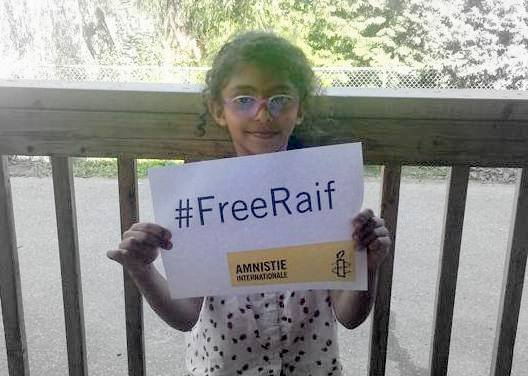 Every human being alive today, provided they have access to even the most rudimentary computing hardware, is now a broadcasting platform. Compared to generations past, even for the least electronically visible among us, we have many times the reach for any thought or opinion we care to express. And we rarely have full control over who hears what we say.
The consequences for the expression of religious belief (or lack thereof) have been enormous. To my mind, the collision of the democratized Internet with the innate restrictions of certain faith traditions is the most significant development in the world of religion today. Never in human history have supernaturally based belief systems, so specific in their proscriptions for behavior and thought, been so open to scrutiny and criticism, and on such a mass scale.
And it is a collision, because the free expression of dissenting ideas are anathema to dogma, particularly state-enforced dogma. Incidents of heretics and religious dissenters are not unique to our era of course, but never has it been so easy to broadcast one’s dissent, for religious authorities to become aware of said dissent, and for the rest of the world to be awoken to how those dissenters are being persecuted. They are no longer isolated to villages or insular nations. A heretical tweet can land one in jail, but one’s next tweet can then rally a movement to demand your freedom.
This collision has sparked a global crisis, a crackdown on free expression from serial offenders such as Saudi Arabia and Pakistan, to countries that fancy themselves democracies like Turkey, Russia, and even Greece. Often these prohibitions against religious dissent are given names like “hurting religious sentiments” or “insulting religion,” but they all fall under the rubric of blasphemy laws.
It is remarkably easy to commit blasphemy today. Some victims of persecution have been willing agitators, intentionally trying to bring about change within their own societies, such as Saudi Arabia’s Raif Badawi, who began a website for the discussion of liberal opinion; or Alber Saber, the Egyptian secular activist arrested in 2012 for allegedly sharing links to the video “The Innocence of Muslims,” which sparked enraged protests and violence across the Islamic world. But on the other hand, we also have people like Alexander Aan, an Indonesian civil servant who has begun quietly expressing atheistic opinions on Facebook, and soon faced the violent wrath of an angry mob and several months in prison as a result.
In other words, one need not seek out controversy to find it, and one need not look to publicly commit blasphemy to find oneself in existential danger as a result of expressing dissenting beliefs. A casual Facebook conversation or tweet can land one in just as much peril as being an intentional rabble-rouser online.
The silver lining to this is how easily the rest of us can become aware of this crisis, and each instance of it. Alexander Aan began his travails alone, but soon found that he had won the support of countless allies around the world, including leading human rights organizations, such as the one that employs me, the Center for Inquiry. These newfound allies, friends he could never have known he had without the same technology that allowed him to be placed in danger in the first place, rallied to his cause and leveled a degree of political pressure to Indonesian authorities that they could not have anticipated when the first locked Alex up.
And for Raif Badawi – along with his fellow dissenter, Saudi human rights activist Waleed Abu Al-Khair, who also sits in prison for blasphemy-related offenses – their cause has likewise brought to bear the combined efforts of activists, human rights organizations, and even casual users of social media to push back against their persecution. Their case was recently brought before the UN’s Human Rights Commission by my organization, which was an important enough step in itself. But when delegates of the Saudi government manically tried to silence our own representative, Josephine Macintosh, as she delivered her rebuke of Saudi’s human rights abuses, the video of the altercation went viral, exposing to tens of thousands of individuals the extent of Saudi Arabia’s crimes, the plights of Badawi and Al-khair, and the fact that a growing movement was working so hard to push back.
But without Twitter and Facebook and other online media, we in the West might never know any of this. We might go on wholly unaware and uninterested in the challenges faced by atheists and other religious dissenters around the world. Miriam Ibrahim, originally of Sudan, is a Christian woman who was sentenced to death for refusing to convert to Islam, but the outcry for her right to follow the faith of her choosing was heard at first exclusively online, and largely from atheists and secularists. The sheer volume of attention brought to her cause online led to breathless “mainstream” media coverage, which in turn brought the heat of the world’s gaze upon Sudan, who eventually released her. She is no agitator. She didn’t have a blasphemous blog or tweet religious satire. She, simply and quietly, refused to violate her conscience, and the online world turned up the volume on her behalf.
Religious belief, whatever good can be ascribed to it, nearly always brings with it the expectation of conformity of thought and deed, lest one earn the wrath of the creator of the universe. The Internet is, among other things, an engine for sifting, parsing, and critiquing information and opinion. The collision of these two phenomena in this early part of the 21st century is one whose shockwaves will be felt for generations to come.
Editors' Note: This article is part of the Public Square 2014 Summer Series: Conversations on Religious Trends. Read other perspectives from the Patheos community here.
You can learn much more about blasphemy laws and the fight for free expression at CFI’s Campaign for Free Expression.
Ferguson as Portrayed by Facebook and Twitter: Algorithms Have Consequences
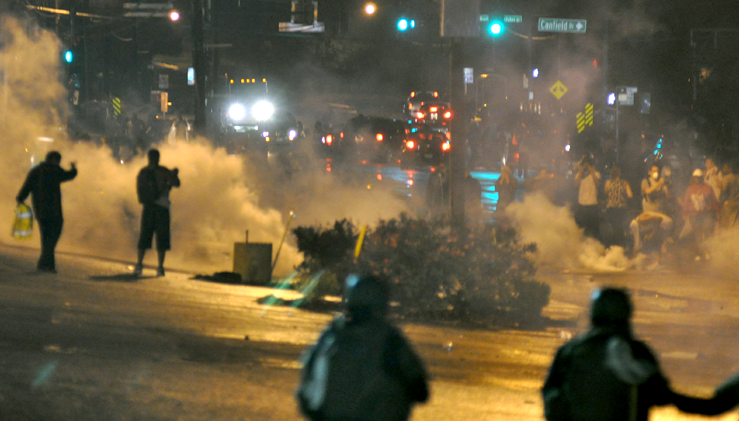 If Facebook’s algorithm is a brain, then Twitter is a stream of conscience. The Facebook brain decides what will and will not show up in your newsfeed based on an unknown array of factors, a major category of which is who has paid for extra attention (“promoted posts”). Twitter, on the other hand, is a firehose. If you follow 1000 people, you’ll see more or less whatever they tweet, at the time they tweet it, at the time you decide to look.
As insidious as it feels, the Facebook brain serves a function by curating what would otherwise be a deluge of information. For those with hundreds or thousands of “friends,” seeing everything anyone posts as it happens would be a disaster. Everyone is there, everyone is posting, and no one wants to consume every bit of that.
Twitter is used by fewer people, often by those more savvy in social media communication (though I’m sure that’s debatable), the content is intentionally limited in scope to 140 characters including links and/or images, and the expectation of following is different than with Facebook. On Facebook, we “follow” anyone we know, family of all ages and interests, old acquaintances, and anyone else we come across in real life or online. On Twitter, it’s generally accepted that we can follow whomever we please, and as few as we please, and there need be no existing social connection. I can only friend someone who agrees to it on Facebook (though I can follow many more), but I can follow anyone I like on Twitter whose account is not private.
So the Facebook brain curates for you, the Twitter firehose is curated by you.
Over the past few days, we have learned that there are significant social implications to these differences. Zeynep Tufekci has written a powerful and much talked about piece at Medium centered on the startling idea that net neutrality, and the larger ideal of the unfiltered Internet, are human rights issues, illustrated by the two platforms’ “coverage” (for lack of a better word) of the wrenching events in Ferguson, Missouri. She says that transparent and uncensored Internet communication “is a free speech issue; and an issue of the voiceless being heard, on their own terms.”
Her experience of the situation in Ferguson, as seen on Twitter and Facebook, mirrored my own:
[The events in Ferguson] unfolded in real time on my social media feed which was pretty soon taken over by the topic — and yes, it’s a function of who I follow but I follow across the political spectrum, on purpose, and also globally. Egyptians and Turks were tweeting tear gas advice. Journalists with national profiles started going live on TV. And yes, there were people from the left and the right who expressed outrage.
… I switched to non net-neutral Internet to see what was up. I mostly have a similar a composition of friends on Facebook as I do on Twitter.
Nada, zip, nada.
No Ferguson on Facebook last night. I scrolled. Refreshed.
Okay, so one platform has a lot about an unfolding news event, the other doesn’t. Eventually, Facebook began to reflect some of what was happening elsewhere, and Ferguson information did begin to filter up. But so what? If you want real-time news, you use Twitter. If you want a more generalized and friendly experience, you use Facebook. Here’s the catch, according to Tufekci:
[W]hat if Ferguson had started to bubble, but there was no Twitter to catch on nationally? Would it ever make it through the algorithmic filtering on Facebook? Maybe, but with no transparency to the decisions, I cannot be sure.
Would Ferguson be buried in algorithmic censorship?
Without Twitter, we get no Ferguson. The mainstream outlets have only lately decided that Ferguson, a situation in which a militarized police force is laying nightly violent siege to a U.S. town of peaceful noncombatants, is worth their attention, and this is largely because the story has gotten passionate, relentless coverage by reporters and civilians alike on Twitter.
Remember, Tufekci and I both follow many of the same people on both platforms, and neither of us saw any news of Ferguson surface there until long after the story had already broken through to mainstream attention on Twitter. What about folks who don’t use Twitter? Or don’t have Facebook friends who pay attention? What if that overlap was so low that Ferguson remained a concern solely of Twitter users?
And now think about what would have happened if there was no Twitter. Or if Twitter adopted a Facebook algorithmic model, and imposed its own curation brain on content. Would we as a country be talking about the siege on Ferguson now? If so, might we be talking about it solely in terms of how these poor, wholesome cops were threatened by looting hoodlums, and never hear the voices of the real protesters, the real residents of Ferguson, whose homes were being fired into and children were being tear-gassed?
As I suggested on Twitter last night, “Maybe the rest of the country would pay attention if the protesters dumped ice buckets on their heads. Probably help with the tear gas.” Tufekci writes, “Algorithms have consequences.” I’ve been writing a lot about how platforms like Facebook and Twitter serve to define our personal identities. With the Facebook brain as a sole source, the people of Ferguson may have had none at all. With the Twitter firehose, we began to know them.
Robin Williams and the False Promise of Success
 I have no idea why he did it. I have no special insight into whatever darkness weighed on the heart of Robin Williams. I haven’t even seen a Robin Williams movie since Man of the Year, which was terrible. But he’s someone I absolutely idolized as a young comedic performer, someone whose career I would have done anything to emulate. He was an early example for me of a performer who was utterly beloved entirely for his performances, for his talent and energy, for the laughs and pathos he was capable of bringing about, as opposed to his looks or some veneer of “cool.”
And while I can’t know what haunted him, I can relate to him both as a comic actor and as someone who struggles with depression. I think, in the immediate shock of the news of his apparent suicide, that Williams’ death gives the lie to the idea that I, and I'd suppose that millions of others who also live with depression, tell themselves: That if we can just reach a certain level of success, if we can just cross this undefinable threshold of validation, our hangups and sadness will be cured.
I know I think this. I don’t think it intellectually, of course, but it’s there. Something deep in my own mind, where I can’t yet correct it, believes this.
Robin Williams embodied a dream I once had of who I would become. He had reached the pinnacle of that ideal. But it didn’t cure him. Whatever his demons were (and again, I have no idea as to what they were beyond what is common public knowledge), they could not be erased by popularity, acclaim, awards, a guaranteed place in our cultural pantheon, or the laughter and tears of millions – billions? – of people.
I was in the audience for his Inside the Actors Studio appearance during my brief time at that school, and it was one of those evenings where he could do no wrong. He had this huge room of self-obsessed actors (many of whom probably already considered him yesterday’s news) howling with laughter, absolutely adoring him for his sharp and quick mind, and for his humanity. Because while he was cracking us up, between the frenetic barrages of wit and energy, he would pause, and he would reveal a little bit of his true self, showing us how vulnerable he really was.
Success won’t cure us by itself. That’s not what’s wrong. We have to find another way. I’m sure he tried. I wish he’d succeeded.
Of Muggles and Mutants: Sci-fi's Concern for "Better" Humans

I’ve moments ago finished The Bone Season, a novel by Samantha Shannon that I quite enjoyed, about a near-future world in which “clairvoyants,” those born with an ability to interact with the spirit world, are considered riffraff at best and plague-carrying criminals at worst. The layers of the world are rather quickly shown to be numerous, with a number of possible answers to the question of who is really in control (and it does get complicated). For this post, I’m primarily interested in how an aspect of the book’s premise compares to that of some other fictional universes. So be warned, ahead be great spoilers.
(Not for nothin’, but I was very glad that the protagonist was an ass-kicking young woman, and not the standard “chosen one” male messiah we usually get. Paige Mahoney is powerful, but she’s not fulfilling any prophecies, just discovering, and struggling with, the extent of her considerable abilities.)
The idea of a special subgroup of humans being singled out by the less-special majority is not a new concept. The mind immediately jumps to X-Men, in which mutants with superpowers are mistrusted and feared, but there is still a semblance of struggle to integrate mutants with the rest of society. I think it’s safe to say that as the audience, though, we are generally expected to see the mutants as “better” than non-mutants. They are humans-plus.
Another version is the world of Harry Potter, where witches and wizards aren’t persecuted because they’re not known, other than to a handful of people. Magical folk, again, are presented as “better” than non-magical people who don’t get the benefit of amazing powers or insight into a universe beyond their graps. They even get a kid of abysmal name, “muggles.” Again, wizards and witches are humans-plus.
Unlike with X-Men or The Bone Season, we don’t get to see what might happen if the magical and muggle worlds were to try to integrate. But I think it’s not too hard to imagine that the non-magical world would be scared shitless to know that a race of superpowerful sorcerers who could defy the very laws of physics with magic wands were now part of society. Just as “normals” are afraid of mutants in X-Men, and afraid of clairvoyants in The Bone Season.
I don’t know enough about X-Men lore to say exactly how non-mutants are presented and treated generally, but Harry Potter’s good guys at least make a point of standing up for the right of muggles to live without the threat of Voldemort, and for the equality “half-bloods.” The wizards and witches are humans-plus, but they still care about us.
The characters of The Bone Season seem to care little for normals. Our only exposure to non-clairvoyants is negative, be they agents of the fascistic government or one of the few passerby characters who have little to say or do beyond being a threat. Once the main story gets moving, essentially all of the action takes place in the Rephaim’s cordoned-off city, so “muggles” become quickly irrelevant. Though treated like dirt by both pan-dimensional beings and regular old humans, the reader is expected to see the clairvoyants as, largely, superior to normals.
So why am I hung up on the presentation of normals in these worlds? Perhaps I have some kind of paranoia that the creators of these worlds see either themselves or some other group in the real world as being analogous to these humans-plus. There would be some subset of people in real society who have an ability or an insight that the masses do not possess, and are as a result either reviled and persecuted, or at least forced into total secrecy.
Who would that be? Intellectuals or academics? Certainly we have our “ivory tower” universities that are in a way analogous to the wizarding world, at least in as much that what goes on and is discussed in them seems weird and troubling to many on the outside. That almost makes it a good Harry Potter analogy, except that unlike Hogwarts, everyone knows that Harvard is there. This is more of akin to Neil Stephenson’s Anathem, in which an agreement is struck between the academic world and the rest of society that the academics should generally keep to themselves in their monasteries. So maybe it’s supposed to be artists and other creative types? Certainly the real world suffers through times and places in which academics and the arts are seen as too subversive and dangerous to be allowed to flourish.
People of particular religious worldviews could easily see themselves in the role of the humans-plus in these stories, for what is it to follow a religion but to suppose one has a special understanding of Life, the Universe, and Everything that the rest of the heretics and infidels of the world do not? (Unless of course you’re a progressive religious believer, in which case you believe every faith is an equally valid path to God, etcetera, etcetera.)
Yes, atheists easily fit this mold, too, perhaps better than those of any supernatural worldview, for our stance – atheism itself – is based on the idea that everyone else is doing it wrong. (Which, it happens, is probably true.) And if my time as a professional skepto-atheist has shown me anything, it’s that our crowd is particularly adept at feeling superior to believers, so much so that we often have to turn that smugness on each other just to vent some of the excess pride.
But I honestly don’t know. If these stories were simply allegories to help us shed new light on how we treat those different from us, such as racial, religious, or other minorities, that would be one thing. But instead the persecuted (or secreted) minorities are born “better” than their persecutors. They are not just “different” by way of look or language or origin, but enhanced.
So the metaphor then becomes one focused on how society treats those who are in some form or other “superior” to the majority. That’s uncomfortable for me to say the least. And I’m frankly not too worried about how we might treat humans-plus. I think the way we treat “the least of these” is probably a more important story to tell.
I just don’t quite know how you make that into a compelling sci-fi adventure. But I’ll bet someone has.
Abuse on Twitter: Humans Can't Always Just "Brush it Off"
 People being assholes online is hardly new, though awful people using Twitter as a kind of heat-seeking missile to hurt people has only lately begun to rise to the level of a mainstream conversation.
There seem to be three legs to this stool: The responsibilities of the perpetrators of Twitter abuse, what the target of the abuse is obliged to either tolerate or resist, and what Twitter itself ought to be doing.
For leg 1, the people who use Twitter (or any medium) to hurt people's feelings, to scare them, to threaten them, the answer is clear, and we need not dwell on it. They should drop dead.
Let us assume, though, that they will disagree with me and continue to both live and use Twitter as a vessel for their vileness. We have left legs two and three.
To get at leg 2, I recommend a conversation had on this topic on This Week in Google between hosts Gina Trapani, Jeff Jarvis, and Leo Laporte. Jarvis and Laporte, both of whom I admire very much, while sensitive to what (mostly) women endure online, seem focused on the idea of ignoring the abuse, blocking bad actors and not letting the harassment get to you, lest the bad guys win. (The exceptions Laporte makes are for actual threats of violence that warrant real-world intervention, and the kind of abuse that can harm his business, but that's a different thing.)
It takes Trapani, however, to ground the conversation where I think it belongs, in the minds and perceptions of those who are not public figures, who have not signed up to be in the spotlight, and are human.
In the abstract, on paper, it sounds entirely reasonable to recommend simply brushing off the vitriolic spewings of idiots on Twitter. But as Trapani explains from her own experience when she first became a visible figure online, the utter onslaught of criticism, the "nitpicking" of every facet of her existence, was completely overwhelming. Again, she knows that she chose to be in this spotlight, and was able, over time, to become more or less inured to the attacks. But think of the countless (mostly) women on Twitter, especially now that the service is mainstream and not a geek/niche platform, who suffer the same level of abuse that a public figure might. Now tell me they should just brush it off.
Because we are humans, you see. It's not enough to say we ought simply process the data and coldly weigh the costs and benefits of every action and then act for the optimal outcome. "Too much abuse? Block, put it out of your mind, and decide not to be affected." It simply doesn't work that way for human beings with feelings and memories and psychological baggage and hearts. When we're attacked, either in person or through bits, we feel it, physiologically. We experience real emotions like fear, self-loathing, and depression. Whether the abuse is "genuine" or a real-world physical threat is beside the point. We're not the computers.
I've felt fear from the Internet, and it's the same feeling as fear in meatspace. And I'm not a real target, not like so many (mostly) women are. I can't imagine turning that fear up by several orders of magnitude, just so I can be free to tweet.
So what ought the targets do? They ought to have a service that does a hell of a lot more to both be safe and feel safe.
This is leg 3: What Twitter ought to do about all this. Trapani and Jarvis both note that there simply must be algorithmic things that Twitter can implement to at least begin to create a safer online space. But to get a more concrete idea, I recommend a post by Danilo Campos titled, appropriately, "The Least Twitter Could Do." He has some concrete ideas about the steps Twitter could take, such as allowing users to set an auto-block threshold for users with few followers, or blocking any account that a certain number of one's friends have blocked. Campos says these are only "band-aids," but they'd be something. And it's not clear to me at all that Twitter has taken this seriously yet.
Hey, I get it, they're Silicon Valley, libertarian, information-wants-to-be-free types. But again, we're talking about people, not machines, not startup manifestos or mission statements. Twitter's got its infrastructure, its platform, its cultural power, and lots of engineering talent and money. It now just needs to give enough of a damn.
After the Attack, the Work
I’m not sure if this was a “secret,” if I intentionally haven’t written about this because it was too personal, or what. Well. The thing is, since I was beaten to a bloody pulp by a couple of thugs outside my home Metro stop back in DC over two years ago, I’d been in therapy to deal with the psychological aftermath. I was diagnosed with post-traumatic stress disorder and depression, and I underwent two years of treatment using a therapy known as EMDR (eye movement desensitization and reprocessing), working to heal some of the damage that was not visible on my face, head, and body. And today was my last day.
So I’m cured! I am now officially devoid of any psychological problems. I am the very picture of mental health. I have the perfect psyche.
Well, no, but I’ve come a long way, and if I haven’t written about therapy before, I figure a good way to mark the occasion is to talk about it in this public forum. Or maybe it’s not, and this is a bad idea. Maybe I’m looking for something of a back-pat from the interwebs, and maybe I just need to, as it were, say it out loud to make it real.
When I started therapy two years ago, I was a wreck. My wife and I had decided to leave DC rather suddenly after the attack, figuring that we’d be better off in Maine, surrounded by my wife’s family (which is an awesome family), living in an environment far less hostile than DC, and giving our then-infant son a better place to grow up.
But of course, we arrived with little in the way of plans. We lived with relatives for a time, and I scrambled for employment (I had been working for the Secular Coalition for America at the time of the attack, but was already on my way out). It was a long time before I felt together enough to work, or to even look for work, and the pickings were rather slim. My work experience, my advanced degree in political management, none of it mattered much now that I was far away from Washington. I had to take what I could get.
So during my first session with my therapist, the cast had just come off my arm, we were broke, I was unemployed, my wife was still looking for permanent employment, we were living with one of my in-laws, and I was in such a dark, ugly place that I began to see my very existence as a detriment to the well-being of my wife and son. I had nightmares and would sink into reveries of sadness and guilt, or from out of nowhere would experience a sense of panic, feeling a need to physically run away from…toward…I didn’t know. Sad, scared, ashamed, paranoid, embarrassed, weary, resigned, terrified.
Therapy, if you’re doing it right, will get to work on the problem you came in for, yes, but will also address whatever might surround the event in question, other things in my life and mind that gave the attack the meaning that I would come to give it. I think we did it right. The work we did in therapy certainly targeted the assault – heavily – but managed to clean out a lot of other cruft that had built up over the years, over the decades. The attack was an extremely traumatic event, of course, but it had been colored by myriad other events from my past, a sickly array of self-conceptions and assumptions that I had spent a lifetime inculcating myself with, being miseducated about by the world around me. We targeted that stuff, too.
We didn’t fix it all, but we shrunk it. We got me to perceive those things as closer to their actual size, to their actual power. I didn’t lose all my misperceptions about myself or how others see me, but I learned to at least acknowledge that they may not all be true. Guys, I’m telling you, that’s huge.
You know what? I got bored with the memory of the attack. What was once a horror movie I would replay in my head over and over with new feelings of terror and dread with each mental reenactment, eventually became a sad rerun of a show that I was tired of seeing. That, I’m telling you, is huge.
So I’m not “cured.” I don’t think I ever will be, and quite frankly, I don’t want to forget. I don’t want to lose what will now forever be a part of my story, a part of who I am. What the work helped accomplish was making the attack no longer define who I am. And it began the work of not letting all the darkness that came before it define who I am – the years of mockery, bullying, and harassment all through middle and high school, the professional failures and life mistakes made in adulthood, my hangups and neuroses. Not exclusively define me, anyway. They will all always be a part of me, but I learned that they’re not all that I am.
You know what I think was the big tip-off that it was time to wrap things up? When my therapist realized that the things that troubled me, that the things that consumed me, were, well, predictable. Banal. My toddler is behaving badly. Work is stressful. Money is always tight. But that’s stuff everyone deals with. And that’s what was consuming me. Not self-doubt. Not a tar pit of guilt and shame. Not terror and fear. Just, you know, the life of a grownup with kids. It’s, well, normal.
I never thought I could ever describe anything about myself that way. I’ll take it.
- * *
(For previous writings on this topic, you can read posts under this tag.)
The Attack
On the evening of October 26, I was returning home from my second day of training at my new part-time job. I was in the midst of a transition; in my last week at my desk job as a communications manager at a nonprofit and moving to working weekends and some nights so I could be a stay-at-home daddy. On this day, a Tuesday, I had worked a normal day at my old job, and gone straight to train at my new job.
I traveled home by Metro to the Stadium-Armory stop, arriving around 11:00 PM. As I ascended the escalator from the station, I could hear a lot of activity at the bus stop at the top of the stairs. A lot of people were being loud and rowdy, a lot of laughing and shouting. It made me nervous, not so much because I was afraid of being harmed, but I had a kind of flashback-to-middle-school feeling, that a group of rowdy young people would choose me as a target for mockery. It’s an old instinct that I’ve never been able to shake.
I moved briskly past the group and began the walk to my home. I felt more and more vulnerable, so I quickened my pace. I had my backpack on my back and hung my hooded sweatshirt by the hood on my head, not wearing it but simply letting it dangle off my head.
Only a handful of paces from the Metro stop, I heard a pair of very fast footfalls behind me, and before I even had a chance to wonder why someone would be running, before I had a chance to be frightened by it, I had been struck a powerful and painful blow to my head. I was being attacked.
Two people had snuck up behind me, run at me, and began beating me, severely, brutally, mostly about my head and face. They shouted things at me, peppered with curses of various kinds, but I couldn’t make out specific sentences or commands because of the blows to my head. I began to make out something about giving them my items (I had my iPhone and wallet on me), and tried to aquiesce. But even as I attempted to speak, just to shout “okay” in order to let them know they could have my items, they kept hitting me.
At one point, I managed to stagger to a standing position, I presumed to give them my wallet and phone. But no, the moment I stood, they continued to hit me. As I was knocked down a second time, and fell upon the palms of my hands, my wallet, phone, and keys simply fell out of my pockets and on to the ground. I was given a few more blows, and my attackers grabbed my items and ran off. I never saw their faces. I presume that was intentional.
I was seized with desperation to get home. I was in pain, yes, but my head was ringing, and I felt wetness all over me. I tried to stand, and could not even make it to a crouch, and fell again to my palms. I tried again, got a little closer to standing, but my legs were not ready, and I fell again. On my third attempt, I managed to stand and “walk,” but it wasn’t much of a walk. I blundered a few steps, and careened into a fence off to my left, collapsing again. Finally, I stood and managed to begin walking home, slow but determined, moaning, dizzy, and wet. All I knew was that my nose was bleeding.
It was late. After laboring up the steps to the front of our house, I pathetically slapped the door and called out for my wife, in a voice that sounded more like a ghostly version of myself, a half-moan, half-sob. My hand smeared blood on the white door as I struck it.
Luckily, Jessica awoke fairly quickly and opened the door. Of course, she was terrified by what she saw. She would later tell me that I resembled something out of a horror movie; I was covered in blood, my face mashed and distorted. I think I groaned something akin to “I was mugged.” I stumbled into the living room and sat on the floor, moaning as the pain began to make itself known, and the reality of what had happened began to sink in. Fear was taking hold.
My baby boy Toby was still blessedly asleep in his room upstairs.
Jessica wasted no time and called 911, then rushed to our neighbor’s door. She awakened them (and their collection of big, loud dogs) and asked one of them to come to our house to tend to Toby once the ambulance arrived to cart us away. Jessica at some point after that contacted our friends Ryan and Brooke, who we knew far better than our most excellent neighbors, and had cared for Toby before, and asked them to come and relieve our neighbors and take over Toby-sitting duties. They did not let us down.
Paramedics arrived, as did police but I never saw them. I was put on a stretcher, and put on the ambulance, but Jess was not. I started asking after Toby, not knowing what had been arranged, and one paramedic filled me in. They removed my wedding ring, they scissored my pants and shirt looking for wounds — I later learned that they thought I might have been stabbed (I was not). I asked if I was going to be okay, and, oddly, they would not tell me. I think that’s because they didn’t know.
The ambulance began to pull away with Jess still outside. This was because she was taking care of other important business; flagging down police, Ryan and Brooke, and somewhat miraculously, identifying the attackers.
It seems that police were close enough to the scene when Jess called 911 that they were able to pick out two people who seemed “not right.” As soon as the police’s lights were put on them, they dropped a phone, wallet, and keys and ran — though to no avail, as the police caught them. Jess was brought over to the scene of the attack — secretly — to confirm that the items they dropped were indeed mine. So, yes, folks, if you can believe it, they caught the attackers and I got my stuff back that night. (Just a couple of days ago, I found out that my attackers plead guilty to felony assault with significant injury and felony robbery, and will be sentenced in February.)
Meanwhile, at the hospital, I was being treated. It was chaos from my perspective; I rarely had any good idea of what was being done to me, though a few things I do recall; x-rays, a CT scan, and most painful of all, stitches in my head. At my more lucid moments, I tried to make jokes, and then I would panic or confess to being terrified of what was happening to me. The hospital staff, on the whole, was wonderful and kind.
Jess got to the hospital and spent hours waiting to be able to see me, contacting friends and relatives, and talking with detectives.
Eventually, Jess was allowed to see me. It was the first time she’d seen me since I had been carted away hours before. As she entered the trauma unit where I lay, I said to her, “I have an idea: why don’t we move?”
I’ve recounted in previous posts some of the physical damage I took, but to be specific, my head and face were quite mashed up. I had a fracture in my right orbital bone (the bone just below my eye, the top of my cheek), a gash in my scalp, and the right side of my face was swollen to an absurd degree. My right eye was mostly closed and the eyeball was half-covered in red. I could not close my jaw or open it very wide (and still can’t), and a facial nerve was damaged in the attack, causing some of my upper teeth to go numb (and they still are). In general, my entire head and face, but particularly my scalp and mask area (eyes and nose) were covered in painful bruises.
From the several falls, my hands and wrists were damaged. The muscles in my hands and fingers were shocked and hurt for weeks with sharp pain. Two bones in both my wrists impacted into cartilage as well; for some reason my left wrist got the worst of that, and is in a cast today. The right wrist is also damaged, though not as badly, though I had already been undergoing weeks of physical therapy for tendonitis and carpal tunnel related problems in that wrist before the attack, so all of that work was thrown out the window.
For weeks, I could not chew, I could not lift a glass of water. I could not really be hugged. I could not hold my boy, or let him near my head (as he likes to show affection by smacking me in the face). When I finally allowed myself to look at myself in the mirror, two days after the attack, I was shocked — I looked far worse than I had expected. I was, in general, something of a wreck, as you might imagine. But every day I have gotten a little better.
Obviously, I am psychologically affected. Suffice it to say, I am more afraid, more skittish, less trusting. I feel more vulnerable, and I feel that my family is more vulnerable, then ever in my life. I still relive the attack, the walk home, several times a day. Sometimes it’s clinical, or just a distant narrative. Other times it feels like it’s happening all over again. I find myself locked in morbid fantasies of further similar attacks — what if my boy is with me when I’m attacked? What if I can’t get in touch with anyone? What if they go for my wife? Earlier on the same day of my attack, a rock had been thrown at our door, breaking its glass, while our nanny was with our son. I’m told this is a way of “casing” a house for alarms or dogs. That only adds to my fear.
I have never had a high opinion of my species, and the attack served to exemplify its worst and best aspects. The two who attacked me made me feel worse about my fellow humans than I ever had before — not to mention the large group of people at the bus stop who watched all of it take place and did nothing to stop it — but the people who came to my aid, both professionally and friends in the moment, reminded me of the heights of goodness of which we’re capable. Both stay with me, the low and the high.
I have been blessed with support. People have helped us with babysitting, with expenses, with meals, you name it. Our family, friends, neighbors, and even people we’ve never met came out swinging the second they were needed, and there are too many to name. I am so grateful for these people.
I don’t feel “lucky” as many have said I should. It usually goes something like “You’re lucky you survived” or “You’re lucky they didn’t have a knife” or something like that. I understand the sentiment, but no, I’m not lucky. If I’m “lucky they didn’t have a knife,” that assumes a world in which the zero-point, the point of normalcy, is to be severely beaten by two anonymous thugs and then stabbed. Only then are you “lucky” not to be stabbed. Though I suppose it’s a good thing that my attackers were caught and convicted, I don’t feel triumphant. I know they will likely only come out of prison worse than when they went in. There is little vindication in this.
But I am glad. I am so deeply glad to be alive. I am so glad I did survive. Yesterday I celebrated my 33rd birthday, alive, intact, mobile, able to slowly gnaw through a pizza, hug my wife, and cuddle my baby boy. We’re moving out of DC this month to live a more peaceful, more fulfilling life in Maine.
I’m optimistic. I’m getting better. I have a long, long way to go, and many more wounds to heal. But I’m so glad to still be around.