
Books: Too Sexy for Words
I love physical books. I also love my Kindle Paperwhite and I also love my iPad. All of them are wonderful objects, and oh yes, they allow me to read. The reading, you see, is the important part.
You wouldn’t know it, though, from the testimonials of some who dismiss ebooks and swear only by physical codices. In her essay in The Guardian, Paula Cocozza gives a slight nod to the pleasures of reading on paper versus screens, which I do not disagree with, but much of the column is a celebration of the physical book, not for its contents, but for its physical properties and how they can be creatively embellished upon:
Once upon a time, people bought books because they liked reading. Now they buy books because they like books. “All these people are really thinking about how the books are – not just what’s in them, but what they’re like as objects,” says Jennifer Cownie, who runs the beautiful Bookifer website and the Cownifer Instagram, which match books to decorative papers, and who bought a Kindle but hated it. Summerhayes thinks that “people have books in their house as pieces of art … Everyone wants sexy-looking books,” she says.Do they? And if they do, well, so what? People want sexy-looking everything!
This obviously doesn’t speak to the superiority of books over ebooks as means to reading. It’s a display of fetishism for a product, the reduction of the book from medium to fashion item. If overly expensive smartphones are gaudy status symbols, then what do you call artsy displays of shelved volumes that are never actually opened?
I’ve actually come to appreciate physical books more than ever lately as I have tried very hard to steer my attention away from the constant stress and panic of social media. Kindles are actually great for that all on their own, since they can’t do much of anything other than display, notate, research, or purchase book content. (Oh, and they’re self-illuminating, which is a huge leg up on mere paper.) But there is that one additional step of removal from the online swarm that one can achieve with a physical book that is often deeply refreshing, and I am finding at times necessary. I am re-learning to treasure that.
And as much as I do appreciate a book’s physical properties (yes I am one of those “I love the smell of old books” weirdos), I don’t concern myself with books as art objects or accessories. My positive associations with books as objects, the reason I like the smell of paper, dust, and glue, has almost entirely to do with what’s inside them, how the words affect me, and how the experience of reading saves me from the world.
It’s fine to argue that physical books are better than ebooks. But if all you’re talking about is which makes for a better subject for photographic projects, you’re missing the whole point.
# # #
Because you like me so much, please consider supporting my work financially through Patreon.
Immeasurable
I have lately discovered in myself a kind of sympathy with a certain flavor of religious belief and practice, which, when approached from a very particular angle, I find relatable, even laudable. To be clear, I don’t mean religion in the sense of unquestioning belief in absurd cosmological claims or even magical thinking about some silly “universal spirit” or what have you. This has more to do with things like yearning, reverence, discipline, peace, and one other thing.
That other thing, interestingly, is part and parcel with the very ideals I work to promote in my professional life advancing reason and secularism: Doubt.
It’s kind of a funny thing. I live a life positively drenched in doubt. My self-doubt is, of course, the stuff of legend, and it spills over into grave doubts about all manner of external things, from the intentions of others to the sustainability of human civilization. I’m just not so sure about any of it. No, that’s too flip. I deeply distrust all of it. Everything. It’s, as they say, crippling.
At the same time, I have a mind that strives for certainty. This is to be expected from someone with Asperger’s (which I only became aware of a few months ago), and true to the stereotype I grasp for recognizable patterns and hard-and-fast explanations for everything. Perhaps this was a primary factor as to why I found the secular-skeptic movement so appealing: Well at least I know those people are wrong!
This need for the concrete is, I think, a major reason as to why I soured on the arts about a decade ago. I didn’t feel like its benefits to humanity were sufficiently tangible. At the time I was making these considerations, things were very dark in American politics (which looks rosy compared to today), and I felt that all hands were needed on deck to fight back and make the world a better place. I did still believe that performing Shakespeare had the power to do some good, but that the effect I could have was too small, too localized. I needed to expand my do-gooder blast radius.
Politics, I thought, would bring concrete solutions, eventually. Successes there would do more than lift the spirits of a few upper-class theatre-goers; they would improve society as a whole, helping people who needed it, as opposed to just those who could afford a ticket to a play.
But I think I was missing something, something I couldn’t be expected to understand at that time in my life, at that age. I’m not sure I understand it now, but I do think I undervalued what I was doing at the time. But I couldn’t quantify it, I couldn’t see it. I doubted it.
I couldn’t live with that doubt. The irony of course is that I now utterly doubt the ability of politics and advocacy to make lasting positive change, given, you know, how things have shaken out.
But aside from the abysmal state of things in that particular arena, it remains that political advocacy is largely mechanical. Yes, of course, there is as much poetry as prose involved in the whole mess of politics and government, but all of that poetry is meant, in the end, to get some dials adjusted on the machinery of government; to get particular gears of society to move or speed up, and get others to slow or stop. Meaning can be measured.
I couldn’t measure what made a performance of Othello or As You Like It meaningful, just as I can’t measure the meaning of the songs I write and record, or even the meaning of these words. I have metrics for attention paid, surely, in clicks, downloads, listens, views, likes, shares, tweets, and all that. But there is no measuring the impact, no quantifying to what degree the world has gotten better as a result, if at all. Indeed, I have so little understanding of this that I often doubt the things I do have any meaning at all.
In the quantifiable world, the readings on the gauge are very grim. The wrong gears are moving, the right gears are being removed from the inner workings, and the dials are pointed in all the wrong directions. It is dark. And I realize this darkness is due to an emptiness, a void. It’s not a lack of good ideas or good campaign strategies. It’s a void in the human heart, a vacuum instead of open air. It is dark.
The thing about darkness, though, is that little lights become really freaking important. I’m directing a production of Into the Woods with the local university, and it might be great, or we might just eke out a passable showing by the skin of our teeth. But that’s not really the point. The point is that this group of young people are throwing their hearts and minds and energies into telling this beautiful story with this beautiful music that is full of joy and pain and fear and yearning. Whatever happens, I am certain that this show will be a little light in the dark. It already is. Before it’s even been performed, it’s already made the world a better place, made all those who have been a part of it, myself included, better people.
I can’t measure that. But only in this time of darkness do I realize how badly we need it anyway. How bad we’ve always needed it, and always will.
Here’s a thing I read recently by Dougald Hine that helped focus my thinking about this:
Art can teach us to live with uncertainty, to let go of our dreams of control. And art can hold open a space of ambiguity, refusing the binary choices with which we are often presented – not least, the choice between forced optimism and simple despair.If religion, for you, is something that is not about theological certainties or following the revealed will of the creator of the universe, but like art is about yearning, reverence, discipline, peace, and doubt, then I think I am beginning to understand that. I can’t take at all seriously any claims about some mystical being or force that has willed us into existence and interconnectedness. But I am interested in a way of thinking that yearns for this connection, that reveres the vastness of our knowledge and ignorance, that partakes in a discipline to explore and strive for this connection, that seeks and achieves moments of bliss, harmony, and peace in this practice, and that doubts every bit of it, so as to power the continuation of the cycle. Maybe that’s what faith is supposed to be about, or what it ought to be about anyway, having faith that there’s something to strive for. Against all evidence.These are strange answers. For anyone in search of solutions, they will sound unsatisfying. But I don’t think it’s possible to endure the knowledge of the crises we face, unless you are able to draw on this other kind of knowledge and practice, whether you find it in art or religion or any other domain in which people have taken the liminal seriously, generation after generation. Because the role of ritual is not just to get you into the liminal, but to give you a chance of finding your way back.
This is what the arts, the humanities, are for. Not only their products, but the practice, the making, the discipline. That’s what’s holy about one more goddamned performance of a show I’ve been doing for a year. The ritual. This is what I think I missed all those years ago, or was not yet capable of understanding. It’s what I think I misunderstood about certain key aspects of religion, and what I suspect the vast majority of religious people misunderstand, or neglect, as well.
My Aspie brain struggles painfully with this. “Why bother” is the mantra of my subconscious mind whenever I even consider undertaking some effort in writing, music, or what have you, especially given that I am not making my living this way anymore. “To what end?” asks my brain. “What good will it do, for you or anyone else?”
Daunting, invigorating, and frustrating, the only response is that it is, in every sense of the word, immeasurable.
Upsight
It might just be that there’s nowhere else for me to be. I’m just here. I’m in this place, at this time, with these people, and under these circumstances.
I have so many ideas about a better, more fulfilling, less strained situation that I might have wound up in, or that I imagine I would like to find myself in, but they are only ideas. Each, if realized, would necessarily bring with it innumerable stresses, strains, frustrations, and regrets, begetting yet more ideation about further alternate scenarios. Or maybe they wouldn’t. There’s actually no way to know.
But I do know that I am here, right now. Here and now is full of problems and pain and regrets and anxieties and miseries and dread. Here and now is also just fine. Here and now also has its joys and releases and creations and surprises and fulfillments and upsights.
And even if it didn’t, even if it doesn’t, it’s still the only here and now available to me. This is when and where I am.
I think that might be okay.
I am who I am, the amalgamation of almost 40 years of experiences—those had, avoided, and missed. I made a lot of choices, and sometimes chose not to choose. Those choices have now been made, and they’re done. Those choices, experiences, both had and not had, led to me, right now, right here, writing this.
And there’s no other way it could be. There were infinite opportunities in the past at which different choices could have been made so that something else might have been, but no longer. I am this person with these flaws and these talents and these thoughts and these inclinations and these loves and these hates and these fears and these hopes and these traumas and these disorders, in this body with its shape and color and weight and usefulness and potential and injuries and atrophies and scars and conditions and strength and genes and state of decay. I have literally nothing else to work with, nor could it be any other way. Maybe it might have been some other ways, perhaps fewer than infinite, but they are, all of them, irrelevant now.
This is where and when and who I ended up. And this is where and when and who I start with now.
I still think that might be okay.
Emulating Abed
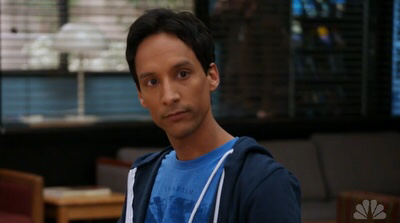 Abed Nadir from the show Community is, apparently, supposed to have Asperger’s syndrome, though it’s never stated explicitly in the show (I’m only on season 2 so maybe there’s more coming). As a newly-minted Aspie, I can’t help but look to his portrayal as a means to better understand myself. Of course I know that this is a highly fictionalized portrayal of an Aspie, and that the show itself exists in a kind of magical reality in which Abed is not only different but almost superhuman in some ways.
But along with being an oddball with Asperger’s, he’s also beloved. Not just in spite of, but because of his quirks, he’s adored by fans and the characters in his world. I can’t help but envy that.
One of Abed’s marquee quirks is his obsession with movies, and his desire to reenact them. Though fully secure with himself (as he even tells his friends in the first season), he nonetheless sees life through the lens of well, lenses. Movie camera lenses. In his mind, he frequently hops in and out of the personas and scenes of films.
I wonder if this isn’t itself a clue to the Aspie mind. As I grew up, and became increasingly alienated from my peers and the culture at large, I looked to the screen to instruct me on how to be. Since no one ever enrolled me in a course in “how to be a person in the world,” I had to look to the television to fill me in. How did people actually talk to each other? What did they wear? What did they value? What did they feel hostile toward? What kinds of people did they avoid or hate? What did they do with their hair? How did they stand or sit? What was funny to them? What quirky traits could be accepted or loved by others, and which ones would they reject? TV, and popular culture, was all I had to go on. I studied it when I should have been studying my schoolwork.
I think I may have had this tendency to look for role models on TV and in popular culture even before the feelings of alienation set in. This is where the overlap with Abed comes in. Because maybe if I’d never felt so utterly rejected by the normals, I’d have continued to model the behavior of fictional characters, but benignly, as a pastime that could inform creative endeavors.
So let’s look back. Let’s pop into the mind of Paul at different stages in his life to see who he considered modeling himself after and why. Maybe we…well, maybe I can learn something from the exercise.
Charlie Brown
I was not unhappy in my single-digit years, but I knew I was different. I knew I was good-different in more ways than I was bad-different, a state of mind I can barely imagine now. I knew I was smart and funny, but I also thought about things like death and futility and longing and why we bother doing the things we do. I also thought of myself as something of a screw-up, even though I can’t remember why I thought that. I mean, what had I had a chance to screw up when I was 7? I think I lost at a lot of games. And, well, anything involving sports.
Anyway, Charlie’s angst rang very true to me. His despair was like an echo of something I didn’t know I’d already been hearing in my own mind. He couldn’t quite understand why the people around him did what they did, and neither did I. I think at that age I assumed I’d eventually understand other people, and that Charlie would too.
Alex P. Keaton
Around the age of 9 or so, I decided that I would contradict by parents’ politics and declare myself a Republican, all because Alex P. Keaton on Family Ties was. Alex’s values were orthogonal to those of his family, but he was also intellectually superior and had a cutting wit. I admired that deeply, and being as short as Michael J. Fox, I appreciated this example of a loved lead male character who stood out for his brains. And his quirks. So I could be a Republican and a hyperintellectual. Wrong on both counts.
Judge Harry Stone
Harry couldn’t stop performing. He didn’t really belong on the bench, as he explained in the first episode. Technically qualified, he was the bottom of the barrel for judges, and his behavior baffled all those around him. Card tricks, dumb jokes, and a glorification of the past all served to alienate Harry from the already-bizarre world of Night Court, and yet as the show went on, his quirks went from an annoyance to a source of nurturing, his goofiness was an indication that you were safe in this place. In a crazy world, the crazy – and good – man was king.
I was funny. Right? I was smart. Wasn’t I? I was misunderstood, but given time I thought people could come around and find my oddness reassuring. I could don the hat, make the jokes, and maybe even learn to love Mel Torme.
Data
An aspirational ideation. I knew I wasn’t and could never be as intellectually and physically superior as Data the android was, but like me, he found the behavior of those around him impossible to intuit. When he tried to ape their behavior, the results were comical, and would have embarrassed anyone who was capable of feeling embarrassment.
But he wasn’t! He just kept trying! He had no feelings!
In middle and high school, the time this show was in full swing, I would have loved to have had no feelings. I couldn’t emulate Data, but only wish to be him.
Comedians
I realized that my only chance to survive middle school and high school would be through humor when my rip-off of Dana Carvey’s George Bush impression garnered laughs even from bullies and popular kids. I obviously wasn’t an athlete, nor was I sufficiently proficient in academics to ever be considered one of the “smart kids.” I could be the funny one, though.
A great deal of my pop culture study was devoted to comedians, who won approval through the inducement of laughter. I could do all of Carvey’s impressions, which came in handy. In the meantime, I absorbed every ounce of wry standup that I could, from Dennis Miller to George Carlin to David Letterman. Yes, even Seinfeld. They stood outside the world and revealed its absurdities. I stood outside the world, so I could do the same, right?
But to emulate those comedians that I watched at all hours of the night, every night, I’d need to display a level of confidence that, while probably also faked by many of those comics, I could never, ever muster. Yes, I’d develop my comedic skills, but I’d never be able to live them.
Garp, etc.
After college I got into John Irving novels. I don’t relate to wrestling, the German language, or bears, but I do relate to men who seek to be writers and have trouble making sense of their relationships to other people. I tried to imagine myself in those roles, in the life of Garp, John Wheelwright, or, even more strongly, Fred Trumper (lord, does that name not work anymore). While I certainly didn’t want to experience the tragedies that seemed to rain down on some of his characters, I did aspire to the lives of the mind they had achieved, all the while aware that they didn’t quite belong in the worlds they inhabited, due to their own failings, passions, and, yes, quirks. They were outsiders, but managed to thrive on the inside nonetheless.
Sam Seaborn, Josh Lyman, Toby Ziegler
As my thoughts moved from theatre to politics in my middle to late 20s, I saw much to envy in the fictional working lives of the characters of The West Wing. In Sam, I emulated his intense earnestness and desire to communicate that earnestness through prose. In Josh, I emulated his ability to find novel solutions to bizarre situations, despite his bafflement and his obliviousness to the effects of his own behavior. In Toby, I emulated his concision, his brusqueness, and the intentional concentration of his wit, experience, and intelligence.
But in Toby I also shared his weariness, his impatience for niceties and for the extraneous. (His advice to Will to eschew pop culture references, because they gave a speech “a shelf life of twelve minutes,” truly struck a chord with me.) And what hit me in the gut the hardest were the words of his ex-wife with whom he longed to reunite. “You’re just too sad for me, Toby.” I was too sad, too.
Blackadder, House, Sherlock
Unapologetic jerks have always held a special attraction for me in the idolization game. Not because they were jerks, per se, but because they were almost entirely uninterested in how their behavior, which included the cold analysis of the normal people around them doing ridiculous normal-person things, impacted their standing with others. If something needed saying, they’d say it. Or even if it didn’t need saying, because, well, fuck it!
Blackadder almost doesn’t count here, because he was a conniver, and an amoral one. But his verbal evisceration of those in his way (despite his failures to overcome them) was liberating to me in its own way, even though I never attempted to mimic him.
House and Sherlock, however, have been hinted to be Aspies themselves, their incredible intellects a kind of superpower that has allowed them to thrive among the normals despite the pain they cause. With all three of these characters, I envied – I envy – their shamelessness, as in, their total lack of shame for who they are. It’s not even conscious. They obviously didn’t “decide” to disavow the approval of others, it just simply isn’t a factor in their view of themselves. Forget being a clever jerk. Heck, forget being clever at all. I’d just like to have that superpower of shamelessness.
Odo
This is less about someone I wish to be like, and more about a character I suddenly understand and feel for in a striking new way.
Though he takes a humanoid form as best he can, no one thinks Odo, the changeling, really looks like them. He doesn’t understand humanoid behavior, but he does try to map it out in order to follow others’ motivations and how they lead to actions. He is impatient with the things that humanoids seem to find fulfilling and important, which to him seem pointless and wasteful. He comes off as mean when he doesn’t intend to. He craves companionship, but knows he can’t have it. And when it all comes down to it, when he’s tired of pretending to be one of the “solids,” he must – absolutely must – return to his bucket. He must resume his true liquid form, stop pretending, find total solitude, and rest.
Odo wasn’t someone I related to when Deep Space Nine first aired. But he is now.
Kirk Gleason, Abed Nadir
This brings us to today. I’ve previously written about Kirk from Gilmore Girls, how I so admire not his weirdness, per se, but his ownership of his weirdness. Do the people of Stars Hollow find Kirk a bother? Do they think he’s terribly strange? Do they find many of his actions troubling, annoying, or even destructive? Hell yes. But he doesn’t care. And he seems to fit in all the more for not caring.
Abed cares, but about the right things. He isn’t normal, and he knows it. His abnormality doesn’t bother him, nor does it bother him that people don’t get him, just as he doesn’t get them. He isn’t bothered until something about him hurts his friends or pushes them away. Then he adjusts. But not from a place of shame, but as an acknowledgement that his quirks aren’t always compatible with all the people he cares about. His adjustments are out of love, not out of shame.
“I’ve got self-esteem falling out of my butt,” says Abed. “That’s why I was willing to change for you guys. When you really know who you are and what you like about yourself, changing for other people isn’t such a big deal.”
I’m not as smart as Abed. I’m also not as overtly weird as Abed. And Abed isn’t real. But dammit, Abed, I want to live like that. Maybe one day I can be more like Abed when I grow up.
The End of the Innocence, the Wolf at the Door
 I don’t want to glorify the recent past, and certainly not the crimes, both legal and moral, of the George W. Bush administration. It is difficult to overstate the damage done by that regime, the horrors of which persist in the form of various gaping, oozing wounds around the globe. Their manipulation, circumvention, and neglect of the various strands of government power were unforgivable.
And yet as we await the inauguration of Donald Trump, there is something halcyon about the years between 2001 and 2008. How could that be? With the Bush years, we saw the cynically power-mad invasion of a bystander nation, the bizarre theocratic and apocalyptic delusions of Christianists, the government sanction of torture and the wriggling out of international agreements against inhumane practices, the pillaging and demolition of the world financial system, the jaw-dropping disinterest in the destruction of New Orleans, the refusal to act on the planetary threat of climate change, and the million little ways that rights were eroded, facts were downplayed, crises were ignored, and nativist paranoias were stoked for political benefit.
And yet I’d reinstate Bush, Cheney, and the whole crew of bastards all over again if it meant we could avoid a Trump presidency. Why? Rather hyperbolic, don’t you think?
Here is where, perhaps, I am guilty of tinting my spectacles with a rosy hue. Because it seems to me that, most of the time, when norms, laws, or basic moral tenets were violated, it was done within the framework of a system that, even when abused, remained more or less intractable. In order to torture, the lawyers had to twist themselves into knots to legally justify it. When Iraq was invaded for absolutely no reason based in reality, diplomatic boxes were checked and approval was granted by great deliberative bodies. Even the failed schemes of the era were done within this framework: Bush and his allies wanted so badly to privatize Social Security, but even with their near total control of the federal government, could not muster the political force to make it happen.
They bent some of the beams and they loosened many of the rivets, but the framework held. It held so well that they were able to be defeated electorally, by congressional Democrats in 2006 (though it was to be disturbingly short-lived), and by Barack Obama in 2008 and 2012.
But this framework is imaginary, of course. And I don’t just mean that it’s a metaphor. I mean that the system itself is imaginary, a social construction, in the same way that money is. “We hold these truths to be self-evident” and all that. We collectively decide that we’re all going to abide by these rules, live within the framework. We might skirt this rule, bend that one, and others break altogether. We may break rules entirely and may lie about what we’ve done. But in all of those cases, we all acknowledge that the rules are there. The Constitution, the law, and even the unwritten norms of a democratic republic. Crimes, abuses, and neglect all happen within the framework that we all pretend is there.
Donald Trump, I fear, does not acknowledge the framework. He seems to refuse to accept its legitimacy, he makes little pretense of playing along. He may even be intellectually unable to grasp it, and in that way, he is not unlike an embodiment of the state of nature. We humans take very seriously the sovereignty of our homes, and take it for granted that our fences and walls and property lines clearly delineate our inviolable domains, but other species do not. They can’t possibly understand these concepts, and if they could, they’d certainly not take them seriously or feel beholden to them.
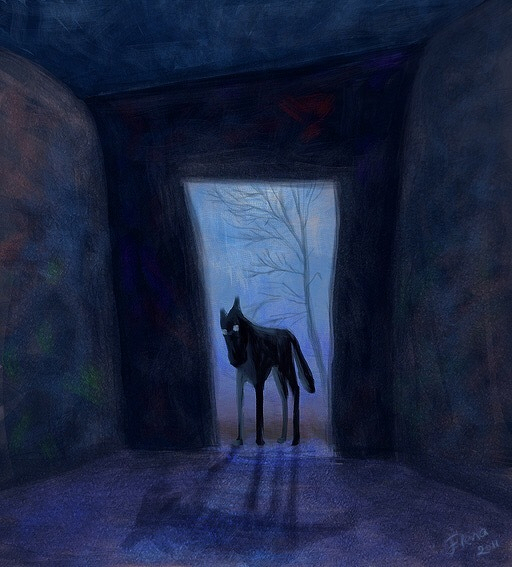
The social construction of our system of government, our framework, is like a home, and Trump is a wolf at the door. The wolf doesn’t know or care that you might “own” the plot of land upon which your house sits. If he can get in, he won’t feel any compunction to respect the integrity of the house, nor the lives of the people inside.
Warnings about the potentially dire consequences of a Trump presidency are not new, of course. Alarms are sounding all over the place. But even so, I read and hear a great deal of very smart, experienced people saying that Trump and his ascendant marauders will find it rather difficult to enact the kind of sweeping, draconian changes they seek. The public will have to be sold on much of it, they say. Major projects will have to be funded. The vast, sprawling federal bureaucracy will not be so easy to turn on a dime to pursue ends counter to their very reasons for being. The military will outright refuse to execute some of the more horrific orders that Trump has promised to issue.
I am not so confident. Remember back to the Bush administration, where at the very least efforts were made to justify offenses within the structure of the framework. The politicking, the legal gymnastics, the feigned diplomacy, all of it at least acknowledged there was a system to abuse. Even for those who considered the rule of law subservient to the authority of their religion were at least subject to a different framework, the even-more-imaginary dictates of their God.
My fear is that a Trump administration will not respect this imaginary framework. They will act without feeling the need to justify through legal interpretation or moral imperative. They will simply act. The Republican Party has shown itself, conclusively, to be acquiescent to Trump, and they will now control all three branches of federal power. If they choose to reject the framework, there is literally nothing they can’t do. The Democrats in Congress might have an investigation? Ignore it. Accused of breaking the law? We are the law. The public is unhappy? Lie to them. Scare them. Or don’t. What can they do? Vote you out? Elections are as meaningless now as everything else.
I fear that future generations will look back on this time of transition as the end of an innocence, when we humans thought we had built a stable, robust political and social system that existed only in our heads. How naive we were, to think that we could head off utter disaster because some rules we’d written down somewhere would serve as a bulwark against those with voracious appetites for power and wealth. That we could get the wolf to leave our doorstep by pushing a strongly-worded note through the mail slot.
Don’t you know you’re not allowed to eat the people in this house, Mister Wolf? Don’t you know it’s against the rules? Now don’t make me come out there and explain these rules to you.
Oh, alright, if I must. But you have to promise me you won’t eat me while I’m talking to you.
Please consider supporting my work through Patreon. Image by ElenaTurtle (CC BY-NC-ND 3.0).
This Situation is Awkward, and I Can't Stand Being In It
I don’t know how to react to it, and I’m worried that I may not feel enough at the time to make the right sorts of expressions on my face. How am I supposed to look? Am I supposed to tear up? Eugh. The situation is awkward, and I can’t stand being in it.This is the nearly daily experience of having Asperger’s syndrome, which I was diagnosed with this past August at the age of 38. Shortly after finding out, I read a book called Asperger’s on the Inside by Michelle Vines, a woman who around the same age discovered that the difficulties she had wrestled with her whole life were also attributable to Asperger’s. A friend of mine recommended her as a potential source for perspective after she was a guest on my organization’s podcast Point of Inquiry, and I must say, so many of Vines’ experiences and challenges mirror my own.
Not all, of course. On the whole, I’d say Vines is more interested in assertively establishing friendships and social groups than I am. In her efforts to do so, yes, there are some truly eye-opening similarities between us, but I, so often being burned by the social world, have opted out. She took a different approach, seeing her social struggles as a problem to solve, a puzzle. I wish I had more of an attitude like that.
Rather than go into a deep review of her book, which as you can imagine I mostly enjoyed (though I thought some of the attempts at humor were a little forced), I’d simply highlight some passages that were meaningful to me and reflect on them. This isn’t by any means exhaustive, but a selection of highlights that I felt I had something to say about.
On Aspie emotions:
Another example [of the challenges Aspies face] is the intense difficulties we Aspies can have with emotional regulation, which I’ve experienced firsthand. Emotional regulation is a technical term I’ve seen in online articles—sorry to feed you technobabble. In simple terms, it means that when we feel an extreme emotion, such as sadness, we can stay in that emotionally extreme state for a long time with little ability to make the feelings go away.This is definitely true for me. Often this manifests just as you’d expect; as panic, intense anxiety, or overwhelming depression (or all of the above).
Sometimes it expresses itself far more deeply within me, which is often interpreted as my holding something resembling a grudge, “dwelling,” or rudely closing off entirely. But the reality is that sometimes the feelings are so powerful or painful, the cognitive effort required to just stay afloat means I have to shut off everything external, and present a kind of low, blank disposition toward others. It’s almost as though I’m booting into “safe mode” so I can devote all my processing power to working through my overwhelming feelings. I’m sure it looks weird.
On appearing normal:
So, as you may have guessed, I, like many Aspies, was not born with an interest in fashion and clothing, or at least it wasn’t there when I was young. In my childhood and early teen years, I remember being teased occasionally on free dress days for wearing the odd daggy[19] thing my mum bought me. No one told me that you don’t tuck your T-shirt into your jeans! What’s wrong with black shoes and white trousers? Or the fluorescent-pink parachute tracksuit that my mum got me for my birthday?Oh how I wished I’d had some guidance on this kind of basic social blending knowledge, just an early seed of understanding that other people would care so goddamn much about this kind of thing, and that in order to get through the day with one obstacle fewer, it’d be wise to just check these boxes.
But no one told me. No one told me what to wear, and I didn’t care in the least, and was in fact barely aware of what I was wearing, so people made fun of my clothes. No one told me what to do with one’s hair, so it got too long and out of control, and people made fun of my hair. In southern New Jersey – which is largely populated by olive-skinned, beach-loving people of Italian descent – having a tan was considered table stakes for presentability. But I abhorred the sun, the heat, and the overall beach culture, and my genes had given me extremely pale skin that burns very easily, so I was made fun of for that all the time as well.
Also, I’m rather short, but I guess there was nothing I could do about that, though my grandmother used to tell me I failed to become tall because I refused to hang upside-down by my knees on the jungle gym. So I blamed myself for being short, too.
On communicating one’s challenges:
I started going through possible ways she and my father-in-law could respond [to my difficulties with people]. Was I going to get a talk on how I was “viewing everything wrong” or how I “need to change X and just get in there and do Y and stop overthinking it”? I guess I expect these sorts of comments, because they’re the usual reaction I get from people when I make little hints that something might be hard for me. People so often downplay my issues. “Everyone else deals with Z, so you should be fine dealing with Z too.” “Nobody likes working, but we all do it.” So that’s what I waited to hear.Asperger’s or not, this is a common refrain whenever I’ve discussed my difficulties in school, in jobs, or anywhere else. “Everyone feels that way sometimes.” The implication is, of course, that since everyone else deals with it, and yet here I am particularly aggrieved by it, there’s something wrong with me, I’m especially weak or lazy or overly sensitive for no good reason. I’m having trouble, and it’s my own fault for being effected by it.
But no, everyone doesn’t feel like this. Not like I do.
It’s interesting that I made the automatic assumption that I need to debate to justify my views and people won’t naturally respect my opinions and feelings. Being me and explaining myself has typically been so exasperating.Preach. This is a big reason why I think I overshare on my blog and on Twitter; it’s where I can, at my own speed, work through my thoughts and feelings and communicate in far more precise way. This isn’t to say that it’s always successful. But it’s better than most other means of communicating for me.
On processing information:
I am astoundingly bad with directions. I have just the worst time navigating through and orienting myself in space. This not only applies to things like how to drive from one location to another, but to things like depth perception, where parallel parking induces sweats, or playing video games (especially first-person perspective games) where I am constantly confused about my location in relation to everything else going on.
And when directions are explained to me verbally, my brain simply can’t process them. I try, I try very hard. I understand the meaning of the words being said to me, but it’s almost as though my brain immediately garbles the words so that as a whole, they are just gibberish. Even just being given a short list of basic instructions or tasks is a big mental load for me, and I have to concentrate intensely, repeat things out loud, and almost rehearse the actions in my head to be sure they actually make sense to me. Imagine how frustrating that is for my wife, who before this Asperger’s business couldn’t help but assume I just wasn’t listening.
Here’s Vines on this topic:
Sometimes, we just can’t function with so much sensory and verbal input and real-time speed. Or if the topic is not of interest, it may be hard for us to keep our focus on it in the face of other input. And I particularly wanted to bring it up in this chapter because, for such a long time, I really thought it was some sort of memory glitch that I had, and I used to kick myself for how bad I was at grasping and remembering the little details that people would tell me about themselves. I must be selfish, right? To never be able to remember the details of other people’s lives? Everyone else cares enough about other people to remember that stuff. What was wrong with me? It took me a long time to figure that one out—and a lot of guilt, I might add. So, when does this so-called memory issue affect me? Well, unfortunately, I can be pretty bad with directions.Yep. And I’m also the same with details of others’ lives. I care about other people, of course, but I also frankly suffer from an acute lack of curiosity about those details. So they never, ever stick.
On being outdoors:
How many times have people said to me, “It’s a beautiful sunny day,” or, “I hope the sun will be out tomorrow,” and I’ve privately thought, “I really hope not! I hope for a pleasant, overcast day. Please give me miserable weather! The kind that makes me relax and feel at peace.” I know that other people love frolicking out in the sun and enjoying the brightness of summer, but for me, having that direct sun on me drains my energy and has always made me, subconsciously, that little bit tenser.Yes, yes, yes, yes, yes. See my essay on the seasons from a couple of years ago, long before I knew anything about my Asperger’s.
On coping in the workplace:
I’ve had some jobs I’ve deeply, deeply hated. I know, everyone has. But while these jobs caused me unspeakable anxiety, stress, and depression, I’ve often found that I couldn’t communicate to others why I was so unhappy. When asked, “What didn’t you like about your job?” I’d find myself almost inventing reasons, or exaggerating small grievances, because I couldn’t find a way to express what was really wrong. Here’s a window into that from Vines’ own work experiences:
Within a month of starting, I began to dread going to work. On the train heading in, I would have dreams about the train crashing and sending me to hospital or the city being bombed (preferably overnight while empty of people!). I became depressed and numb Monday to Friday and spent most of Sunday crying, feeling ill because I had to go to work again the next day. I was in no way “okay.”This all rings very true. In face, the Sunday evening stress sessions became so common that my wife gave them a name: The SNAS (pronounced “snazz”): Sunday Night Anxiety Show.
When I mentioned it to people, I frequently got nonchalant replies such as, “Yeah, nobody likes working, but we all have to do it.” So after a while, I learnt to stop complaining. At the time, I had no idea that I had Asperger’s. And while I always had the sense that it must be worse for me than for other people, I couldn’t justify that feeling. …Take special note of that last thought, about dealing with unfamiliar people, and then consider that I have spent most of my post-theatre career as a PR director. Yeah, great move, right?Every place I worked, I had an overwhelming desire to get out of there. I had trouble focusing on the work and interacting with people at the same time. I would feel frustrated or angry inside and often felt like snapping at people (although I didn’t). I dreaded having to do tasks that involved dealing with unfamiliar people. It exhausted me.
The paragraph continues:
I disliked having to figure out how to do new things. Most of the time, I was given new things constantly, and I really had to force myself to start them. I had trouble remembering verbal instructions and needed to write things down. … In hindsight, perhaps I didn’t do and say the right things to project the best image of myself and promote myself to others. I needed to do things my way and plan my own time. Being micromanaged by others was too stressful. I felt sick and started to hate going to work. All I could conclude was that the common factor was me.There is a terrible fear I have of being scrutinized by coworkers or bosses. Like Vines, I want them to trust I will get the job done, but I can’t bear to have my methods or practices judged. Why? Because I always assume I’m doing it wrong, getting away with something.
Dr. Loveland, who diagnosed me, explained that these workplace experiences I describe weren’t uncommon for people with Asperger’s and that she’d heard stories like mine before. She explained to me that that “sick” feeling I talked of was the result of bottling up frustration and anxiety all day, every day. Built up over time, I suppose it manifests physiologically, causing me stomach upset, low weight, and a general feeling of being unwell.And this is why I spent my aforementioned post-theatre career in a state of sub-optimal health, to say the least. It got so bad when I worked for the 2008 Hillary Clinton presidential campaign, with the 15-hour days of intense stress, scrutiny, and pressure while packed in a giant room with people (many of whom were themselves very intense), I fell apart. It resulted in a trip to the emergency room, a scare that I might have brain cancer (I didn’t), neurological problems that manifested in my limbs and fingers, and a full-body muscle spasm or tic that I have to this day.
Had I known I had Asperger’s then, I never would have taken that job. Or I would have at least found another way to do it.
On talking to people:
I don’t usually want to, unless I have a specific reason to be curious about them, or I have some kind of investment in them, like a close friend or family member. So I don’t talk a lot around people I don’t know well, unless of course I’m the only one there, or I feel there’s an expectation, and then I blather like an imbecile.
And as I mentioned earlier, a big part of the problem is that no matter how much I try, no matter how much I know I should, I simply can’t muster any curiosity about other people. And that’s not a good start for making small talk.
Which I hate.
Here’s Vines on that:
We find [small talk] mind numbing, lacking in content, and tiresome, because we’re mainly tuning into the details and not focusing on the social or emotional purpose of the conversation, probably in the same way that typical people can find our conversation intense, overly technical, detailed, and exhausting. For me, it’s hard to come up with anything to say in a conversation that, on the whole, seems lacking in purpose.I have frustrated many a significant-other over this. “Why were you so quiet?” and “Why didn’t you ask anybody any questions?” Well, because I didn’t have any questions. I didn’t realize there was a kind of social ritual being played out.
So one tactic I might use to fill verbal space is to talk about my own take on a topic, or my own experience, and I find that this very often falls rather flat. Again, turns out it’s because I haven’t tuned into what the whole ritual is about.
As an Aspie it feels natural to respond to a conversation by relating our experiences, especially when the topic is emotional. We’re basically saying, “I know how you feel/what you are experiencing because I’ve had a feeling/experience like that myself.” To us, it’s a display that we’re actually connecting to a person’s feelings and are bonding with them. However, typical people don’t need to have had a similar experience to feel what a friend might be feeling, and they don’t need to relate that experience to show they understand. Changing the topic this way on occasion is fine, but when we do it frequently, all a typical person hears is, “me me me.”Alas.
On self acceptance:
I am not close to being in the place Vines has achieved. But I aspire.
What I really feel the need to say here is that there is nothing wrong with me. I’m just different. And any difficulties I have are the result of trying to live in a world where everyone around me is so different from me, not because I myself am faulty. I think Tony Attwood hit the nail on the head when he said, “People don’t suffer from Asperger’s Syndrome. They suffer from other people.” I’m not “wrong.” I’m everything I’m supposed to be and more. But both the social world and the business world that I live in aren’t set up for someone like me. I’m the proverbial square peg trying to fit in a round hole, and I can’t function effectively like this. I have so much potential to be useful, creative, even ingenious. The world just has to find a way to utilize me better. …The world isn’t set up for me. And I can’t make the world change for me. But maybe I can stop attacking myself over the dissonance I perceive. I play my song, you play yours. I hope I can.…
It doesn’t matter what label you carry or what cause you stand for. If you approach the world with an assured attitude and pride in who you are, other people will love and respect you for it. It’s only when you hide things about yourself that you convey that something is wrong or shameful about you that needs to be hidden.
If you like my work, please consider supporting it through Patreon.
Impact Without Agency: On the Peculiar Character of 2016
The skeptic in me – the one whose rationality was inspired by Carl Sagan, the one that must force himself to be politic when talk of God, psychic abililities, or superstitions come up, the one whose actual job is to be the voice of an entire skeptics’ organization – knows, for certain, that there is no curse attached to the calendar year 2016. There is nothing special about this particular trip around the Sun for our planet, nor is there any negative “energy” or force particular to this year that makes it any more or less eventful or tragic. 2016 has no magic power for killing celebrities.
I know that tens of thousands of people die every day. (And as my podcast co-host Brian Hogg is wont to remind us, the real tragedy there is that we never know that any of them ever existed.) And celebrities also die. That they seem to be dropping at a higher rate this year is attributable to any number of banal things.
Terrible national and global events happen in every year. Is it’s not political upheaval in one country its a natural disaster in another. Usually it’s both. 2016 may seem more tumultuous simply because this time it’s happening to us in the United States, you know, the Only Country That Really Matters™.
And of course, we all lead lives of varying degrees of drama, triumph, and misery. We all go through major life changes, endure challenges, learn new things about ourselves, and all the while the people we love do too. In some years more, in some years less.
And yet.
I had been thinking about writing about this subject – the “cursed” 2016, the Year of the Dumpster Fire – for some time, but I kept holding off, guessing that something might yet still happen, some big kick in the face, punch in the gut, or other metaphorical impact with a body part. I or a family member might find our lives upended, another beloved public figure might unexpectedly drop dead, another world event might Change Everything once again.
Of course, “2016” didn’t kill Carrie Fisher. Or George Michael. Or Prince or Bowie or Rickman. 2016 didn’t elect Donald Trump, or push the North Carolina state government to reject democracy. 2016 didn’t set loose the horrors of Syria or the attacks in Berlin, Nice, Orlando, or anywhere else. I know this.
But I also think it’s okay to recognize that these things did all happen during this year. Arbitrary and invented as it may be, the calendar is how we human beings conceptualize the passage of time and how we understand our history. So whether or not there is any preexisting or preordained “meaning” to the gathering of events between one January and another, we can’t help but experience it as a whole, of a piece. 2016, whether it’s logical or not, has a particular character to it.
For me, the year has been truly extraordinary, with highs, lows, and major discoveries that I’m just beginning to comprehend. Just off the top of my head: I found out that I’m autistic and my brother was diagnosed with fucking eye cancer (and then dozens of people pitched in to help him pay for medical expenses).
(I also went through far fewer phones than last year, only two tablets, and one pair of headphones. Take that, 2015!)
And while 2016 isn’t cursed, events do cascade to initiate other events. For example, it now seems clear that the madness of the GOP presidential primaries, both horrifying and hilarious at the time, could not be contained within the strict confines of a singular political party’s zealots. The fire raged into the general electorate, and Donald Trump wound up being elected by technicality. It didn’t happen “because it’s 2016,” but it did happen in 2016 because events that also happened to take place in temporal proximity set its eventuality in motion.
There are still four days left in 2016 as I write this. I can’t help but feel genuine anxiety about what yet may come during that time. And if some new earth shattering event occurs on January 1, 2017, it simply won’t feel like it’s part of the same whole. It will be its own era, a new volume to the chronicles. But it will also be irrevocably knocked askew by the events of 2016.
Not because a vaguely-sentient 2016 made them happen. But because they did happen in 2016. And it’s okay to take that in, to feel it in your chest. You don’t have to ascribe agency to the year to acknowledge its impact. It’s okay to think of that particular arrangement of four numerals, then pause for a moment, and feel a sense of dreadful awe.
If you like my work, please consider supporting it through Patreon.
In a Dark, Confusing World: Carl Sagan, 20 Years Gone
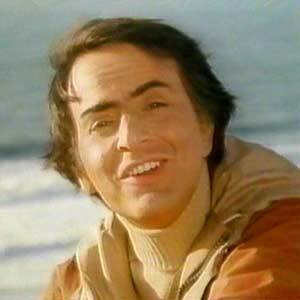 Ten years ago today I wrote a piece about the impact Carl Sagan had on my life, commemorating what was then the tenth anniversary of his death.
Today, obviously, Carl Sagan is 20 years gone, so I’ve dusted off the original piece to see if it still holds up. It does. Every word of it remains true. (Except I might today not talk about being “excited” to live in the world, but, you know, I grow more curmudgeonly and Asperger-y as I age.)
So, to mark two decades of being Carl-less, here’s “Why Paul Was Sad That Day,” written December 20, 2006. I’ll have additional thoughts at the end of the original piece.
*
I don't remember where I was when I first heard that Carl Sagan had passed away, but I do remember where I was later that night. I was in college, hanging out at my friend's apartment. A few close friends were there, and I brought up the news item of Dr. Sagan's death.“Carl Sagan died today,” I said, sadly.
“Who’s Carl Sagan?” was the reply.
I was totally surprised, because I assumed everyone knew who he was. I didn’t expect that most people had read a bunch of his books, or had seen Cosmos (recently, anyway), but surely he was famous enough to warrant recognition by my friends at least. I mean, Johnny Carson had imitated him! “Billions and billions!” Come on people!
I tried to convey to them why it was so bad that we had lost this important man, and while my friends played along and humored me, I really couldn’t get my message across. I would have to grieve a little more privately. It was too lonely to be openly morose about the death of a man who, to everyone I was with, was no more than some guy that nerds worship for space or something. Maybe now, ten years later, I can have another go at it.
When Cosmos first aired, I was too young to understand any of it, at age three or four. It wasn’t long after, though, maybe only a couple of years, that my dad played me the series, recorded on videotape (on Beta, no less). He knew I was interested in space, but only inasmuch as it was a location where Star Wars took place and the Transformers came from. Would I sit still for a lengthy PBS series on the real thing?
Not only did I love the series as a child, but I would continue to love it as I grew up. Having the entire series on videotape was a tremendous blessing, as I would watch it in its entirety every couple of years for most of my childhood, well into college. In our house, Carl Sagan was a huge celebrity, frequently cited (and imitated). We would be delighted to see him appear on other shows, or be referenced or made fun of by comics. But what was it that was so great about him?
Carl Sagan was a gifted storyteller. Even to a fifth grader, the story of evolution, the birth of the solar system, the building of DNA, or the death of a star were all as fascinating as any fictitious story about monsters or aliens. While these things were no doubt of passing interest to me as long as I can remember, Carl Sagan made them thrilling.
As I got older, and read his books, I realized that he was about more than appreciating how cool outer space was. My appreciation for his work deepened tenfold when I heard his call to rationality. His dismissal of superstition and shortsightedness was influential to me even in the early part of my life, but it was upon reading The Demon-Haunted World that I had a framework to discuss it. I had a means to verbalize and visualize what had always been to me simply an abstraction, wanting to be logical and thoughtful. Carl Sagan shifted, in my mind, from a celebrity to a role model.
With Dr. Sagan, you didn’t need to layer on any supernatural hocus-pocus for the world to inspire and overwhelm. Biology, chemistry, and physics were plenty astounding on their own. And it wasn’t for science’s sake, or even for wonder’s sake. It was for our sake. Sagan knew that to understand our Universe, and to marvel at life on our planet, was to cherish it, and to work to preserve it. And by preserving it, we preserve ourselves. If there’s anything I think Carl Sagan wanted, it was for humans to survive into the millennia, so we can get a fair shot at growing, evolving, and unlocking more of the Universe’s secrets. He essentially wanted us to stay alive, and not to stay put.
 I have been a professional actor and musician for many years, and I am now moving into the world of professional politics. I am not, and probably never will be, a scientist. But if Carl Sagan’s goal was to open the wonders of science and the value of reason to non-scientists, I am his poster boy. I think Sagan’s purpose was not necessarily to make scientists, but to sow an appreciation and enthusiasm for the Universe as it actually is. Even though my career and career-to-be are not strictly about the workings of the world at the quantum level, the appreciation for those things that Sagan has fostered in me has made me excited to live in this world and inspired me to understand it and work toward its welfare.
Today, I read the works of folks like Richard Dawkins, Tim Ferris, and Brian Greene, and I devour their words and delight in the struggle to wrap my brain around concepts like branes, supersymmetry, and Bussard collectors. The problem is that I never would have taken the plunge into the world these scientists inhabit if Carl Sagan had not opened the door for me in the first place. I fear that without someone like him today, someone who can ignite the imagination as he could, far too few people will be drawn to science and reason. In a dark, confusing world that seems to be shying further and further away from those very things, I mourn the loss of Carl Sagan anew, on this day, the tenth anniversary of his death. I wish so very much he was still with us, because we need him today more than ever.
And that, my college friends of 1996, is why I was so sad that day.
*
Back to 2016. That last sentiment, that we need Sagan now more than ever, has only become more true. Only yesterday, our Electoral College formalized the election of a man to the presidency who embodies the brazen rejection of everything good Sagan represented. Misinformation is the rule now, not the exception. Conspiracy theory and emotion-fueled irrationality is the coin of the realm. Planetary-level existential threats, the kinds that Sagan would have given all of his energies to working against, are now accelerated.
If there exists an individual or individuals who have the inspirational power that Sagan possessed, I’m not aware of him or her. Many come close. But I’m afraid that they don’t come close enough. I do hope I am wrong.
If you like my work, please consider supporting it through Patreon.
On Trump and Dying
Postulated model for the series of emotions experienced by electorally defeated voters to the imminent inauguration of Donald Trump.
Stage 1
Something must have gone wrong with the voting process. Recounts of close states will reveal that the vote had been tampered with by the Republicans. Or the Russians. Or both. There’s no way America is home to so many racists and fools. It’s just not conceivable. Something is up.
Stage 2
GOD DAMN THOSE RACIST MOTHERFUCKERS. This is all those idiots’ fault! And James Comey and the FBI, those BASTARDS had it in for Hillary from the beginning! But of course that wouldn’t have mattered if it weren’t for those lazy, entitled millennials who COULDN’T BE BOTHERED TO TURN OUT even though the stakes were so high. That’s goddamn BERNIE’S fault! And why the hell did the Clinton campaign ignore Wisconsin and Michigan? ARE THEY COMPLETE IDIOTS?
And WHY is NO ONE just SCREAMING IN THE STREETS about RUSSIA???
Fuck everybody!
Stage 3
Listen, electors. C’mere. Listen. Guys. And ladies. I know you’re not going to let this happen. Come on. Seriously. Let’s talk. Russia messed with us. Trump’s going to ruin everything. You know it, I know it, and you know what? We can do something about that, right now. You all can be goddamned heroes. You Trump electors have to vote for Clinton. After all, she won the popular vote by a huge margin! Almost 3 million votes! Democracy! You should switch sides and vote for Clinton.
Okay, fine, then we should all pick a consensus Republican that we can all feel good about. Let’s talk President Romney. President Kasich. Clinton electors, you can get down with that, right? Better than the alternative, right? Right? You know I’m right.
Fine fine fine. Okay. Listen. We just need enough of you Trump electors to vote for anyone else. Literally anyone else. Okay? Then we’ll throw the election to the House, and then we’ll talk to them. Maybe we can get President Pence. One of you electors, vote for Pence, okay?
Guys?
Stage 4
It’s over. America. It’s over. And it’s our fault. All of us. I could have done more. I could have donated more, I could have knocked on doors. But I didn’t. Neither did you. We’re terrible. We deserve this. America. We stare at our TVs and our phones, we fall for fake news and obvious bullshit, we eat it up. We’re an empire in rapid decline, and we brought it all on ourselves. With our consumerism and our coastal hubris. There’s nothing to be done. Everything is going to fall apart. Why bother even giving a shit? I don’t care anymore.
Stage 5
This is going to be exactly as bad as we think it is. And we have to get through it. Somehow.
Get ready.
If you like my work, please consider supporting it through Patreon.
The Electors' Moral Duty
I am entirely opposed to the Electoral College as a means of choosing the President of the United States. I proudly worked for an organization that had repeal of the Electoral College, replacing it with a national popular vote, as one of its three or four prime reasons for existing.
But that’s what we’ve got right now. While I’m horrified that it has allowed Donald Trump to become the president-elect, I don’t believe that his election is “unfair” just because Hillary Clinton overwhelmingly won the popular vote. Both campaigns ran to win the Electoral College vote, not the popular vote, and Trump succeeded. That’s the game both of them were playing. If it had been a popular vote contest, they absolutely would have run entirely different campaigns, and it’s impossible to say for sure what that outcome would have been (though we can guess). Hillary knows it. Al Gore knew it. Them’s the breaks.
As the electors themselves are about to vote, there is a lot of noise about whether some of them will “defect,” as it were, and that some of those who are pledged to Donald Trump will vote for someone else, or not at all. There are talks of secret discussions, compromise candidates, legal challenges, intelligence briefings, and postponements.
I don’t think anything is actually going to happen. Sure, one or two electors may ultimately vote in contradiction to their pledge, but I do not believe we’re going to see anything that changes the result of the election.
But I do support the efforts to do so, and I hope I am wrong that nothing will change.
It’s not a simple matter. Changing the result of the election will have enormous consequences, the likes of which we can’t yet predict. Put aside the legal and constitutional questions, put aside the totally unprecedented confusion over transitions and appointments that will transpire.
Merely imagine for a moment a scenario in which, by one mechanism or another, Trump is denied the presidency in favor of another candidate, be it Clinton or a GOP compromise candidate. I cannot believe that such a reversal would not spark chaos among the populace. I’m talking actual riots and violence from angry Trump supporters, supporters who are not exactly peaceful and friendly in victory, let alone defeat. People will be hurt, some may be killed, the economy will take a rollercoaster ride, and whatever regime does wind up taking power will be debilitated in myriad ways: choked by a thick cloud of illegitimacy, pilloried by hails of lunatic conspiracy theories and vicious opposition from the far right, and who knows what else. It will be awful.
But it will pass, eventually, and even in the worst imaginings, it will be better than a Donald Trump presidency.
I know I am on record months ago as believing that Trump was preferable to, say, a Cruz or Rubio presidency, but I of course have been thoroughly disabused of this, and I would gladly welcome a President Ted Cruz over what we’re about to endure. More likely, if there was some kind of alteration of the election, we’d be looking at a President Mitt Romney, Mike Pence, or John Kasich. Fine. Great. Welcome to the Oval Office. Nice to have you.
Why is this better than just coping with the status quo and dealing with whatever comes of a Trump administration? Here are some things a Trump presidency will, with near certainty, mean. They require almost no speculation, just common sense:
- Climate change will accelerate beyond the point that humans could do anything to mitigate
- The Supreme Court will lurch far to the right, perhaps for generations
- Putin’s Russia will become far more powerful and audacious
- Social Security, Medicare, Medicaid, and other badly needed social programs will be gutted or destroyed entirely
- The Affordable Care Act will be mutilated or repealed, and millions of Americans will lose their insurance
- American police will become even more militarized, and incarcerations will go way up
- Public education will lose funding in favor of private and religious schools
- The EPA and the FDA will be neutered, if not abolished altogether, or else turned into marketing tools for the industries they are supposed to regulate, putting millions of lives in danger
- The poorest Americans will become poorer
- Minority groups will have their voting rights strangled to the point of de facto disenfranchisement
- The press will be stifled and under constant threat of retaliation from the government
- Nazis, white supremacists, men’s rights advocates, and other blights on humanity will complete their exit from the shadows and become normal parts of American public life and politics
The members of the Electoral College, I feel, have a moral duty to stop this.
I think it’s worth the short-term risk of chaos and the loss of confidence in the Electoral College system. It’s worth these citizens violating their vows to vote as directed by their states. The electors are human beings, Americans who have to live in this country, and on this planet, too. But they are also Americans who by dint of circumstance have the power to save us, and one chance to do it.
They won’t. I’m nearly sure of it. But I really hope they do.
If you like my work, please consider supporting it through Patreon.
P.S.; Here’s an interview Lawrence Lessig just did with the Washington Post, discussing his initiative to confidentially assist any electors who are considering taking action like this.
Hereafter, in a Better World Than This...
This is a song I wrote in 2006 for a production of As You Like It that suddenly felt rather appropriate for this moment. So I thought I’d sing it for you all.
The old world we knew is falling away; It's proven difficult to accept. And I had been feeling like I'd lost my way Before I'd taken my first step.[youtube [www.youtube.com/watch](https://www.youtube.com/watch?v=8JGdnQMuk-M?rel=0])
What We Told Our Kids Today
Our two children, our 6-year-old son and 4-year-old daughter, were very enthusiastic about this election. From the beginning, they’ve shown an enormous amount of genuine curiosity about it, and became quite emotionally invested. Of course, that’s because their parents were too.
We certainly knew that a Hillary Clinton presidency was not a foregone conclusion, and that it would not take some sort of upheaval or miracle for Donald Trump to defy expectations, but like most of the human species, it appeared so unlikely as not to warrant too much worry. So that’s what we shared with our kids. Optimism about the outcome, always grounded in the very real possibility that we were wrong.
They were excited that a woman might be president. We read them biographical children’s books to them about Hillary Clinton, and they truly admire her, as my wife and I do. They were comically hostile to Trump, with my son devising elaborate offensive machines that would batter Trump with multiple frying pans should he ever come to the door seeking our votes. My daughter was more concise, promising to “smack him in da FACE.” I discouraged the more overtly violent fantasies, but it was all in fun. (When I informed my son that Clinton had “kicked Trump’s butt” in the debates, he paused and clarified, “Metaphorically.” Yes, son, metaphorically.)
Among our many agonies on election night, my wife Jessica and I were sick over how to tell the kids what had happened in the morning. Jess was very worried, afraid that our son, who is at a very emotional phase, would panic. If the grownups were in tears, our sensitive kids would be too.
This morning, I snuggled up to my son in his bed, cuddled him close. Thumb in mouth, he rested his half-sleeping head on my chest. I rubbed the close-cut hair on his head, and wished I could lay there with him for hours.
Jessica came into the room, and as our son became more awake, she calmly broke the news in a gentle, measured, loving voice. “Donald Trump won the election.”
Over the course of the morning, here’s the gist of what we told our daughter and son.
We’re all okay.
There is no doubt that the election of Donald Trump is bad news. We absolutely don’t think he should be president. Maybe more importantly, we know that Hillary Clinton would have been an amazing president. We’re pretty sad, and a lot of people are going to be feeling very bad about this for a while.
Donald Trump is a man we disagree with on almost everything, but we in this family are going to be just fine. We won’t at all like a lot of what he does or tries to do, but he’s not going to “come and get us.”
Here’s what we can do now. For all the things we don’t like about the man who will soon be president, we can choose to be better. We can be kinder to the people in our lives, and help the people who need it. We can love each other and always be looking for ways to make our home and our community a better, happier place. It’s actually the most powerful thing we can do.
Remember that not everyone agrees with us. [Note: My son’s first grade class voted unanimously for Clinton in their mock election, but Trump eked out a victory in my daughter’s pre-K class.] When you go to school and when you’re around other people, remember that some of them are happy about this election, and others are very upset. Don’t be mean to the people who voted for Trump, and be gentle with those who didn’t. The idea is to put more love and kindness into the world, not less.
There are many people out there in the country and in the rest of the world who will have a much harder time with Trump as president than we will. We are very lucky in that we will be okay, and our lives will be just about the same. Others will have new troubles, and we need to help them however we can.
That’s more or less what we told them.
For our daughter, we were very clear and optimistic and passionate on one particular point: You can be anything you want to be. You can be president. You can accomplish whatever you set out to do. I think we told her this for our own sake as much as hers. I had brought her into the voting booth with me on Election Day, so she could be there when I voted for who we thought would be the first women President of the United States. Though she didn’t feel this way, I felt that more than anyone else we had let my daughter down.
After we first told our son what happened, as I held him to me in his bed and could not see the first reaction on his face, I worried how the news was hitting him. He lifted his head up, got to a sitting position, and my 6-year-old boy spoke.
“Can I write a letter to Hillary Clinton?”
He wants to write to her to tell her how sorry he is that she lost, that he knows she worked so very hard, and that he doesn’t want her to be upset.
That was his first reaction to the news.
If Jessica and I have succeeded in anything in our lives, it is in that we have brought into the world two human beings with good, loving hearts. They are kind, they are compassionate, they are empathetic. I am so deeply proud of them.
We proceeded through our usual Wednesday morning routine, and though heavy with the weight of what has happened and what is to come, we still had silliness and hugs and jokes as well as the mundane frustrations of getting out the door in the morning. My kids made me laugh, they got on my nerves, my son forgot his backpack so that we had to go back home to get it, and my daughter agreed to become president one day, before going to pet the preschool class’s bunny.
This is not a trivial thing. My family and I, along with tens of millions of human beings, have been let down by a huge portion of our fellow citizens. We were betrayed by legions of cynical opportunists, self-righteous purists, the blamelessly uninformed, the willfully ignorant, and the overtly malicious. Not only has a fascistic clown been elected president, but we’ve been denied the leadership of perhaps the most qualified, competent, and skilled president our country could have ever had. There is darkness coming.
But there is also light. My sensitive, curious, imaginative boy and my brilliant, brave, creative girl. They are luminous.
If you like my work, please consider supporting it through Patreon.
The Long Climb Up to Zero
I’m on my way back from CSICon, the skeptics’ conference put on by my organization, which took place in Las Vegas this year. One of the presentations was by Anthony Pratkanis, who introduced us to the phenomenon of “altercasting,” wherein a person can elicit desired behavior from others by adopting, and implicitly assigning, particular social roles. So for example, if he effectively assumes the social role of a teacher, we become students, and will find ourselves carrying out the behaviors that are expected of that role (dutifully taking notes if he suggests it, for example). And the power of this altercasting is such that once we have put ourselves into these social roles, we live up to them. We almost can’t help it. It’s a tool of con artists, as well as a skill that can be used for good.
On my way in to Vegas, I got a message from my wife asking if I knew what day it was. Uh oh, was my first thought. But then she reminded me: the sixth anniversary of the night I was ambushed late at night by two thugs on the street in DC, beaten to a bloody pulp, and sent into a years-long spiral of PTSD and myriad other associated problems. The anniversary date used to have a lot of power over me, almost as though the recurrence of the date would somehow “make it happen again,” which is of course nonsense. In the past couple of years, though, I’ve more or less let the day pass without realizing it, which is a small victory.
The years of therapy that followed this event, which I’m still working through, subsequently unearthed the vast array of phobias, self-loathing, weird hangups, anxieties, traumas, and other psychological baggage I’d been lugging around more or less since childhood. The PTSD diagnosis, it turned out, spanned far more than just one attack. I had been trained to experience existential terror, fight-or-flight amygdala activation, through years of bullying and abuse in my youth. In other words, I was early on placed in the social role of a subhuman target for derision. And with constant reenforcement, I lived up to it. I memorized it.
All this time, readers will know, I had been living with Asperger’s syndrome, and had no idea. I only found this out very recently, at age 38. This means I had been born predisposed to feel like an alien, unable to comprehend the behavior of the beings around me, stunted in my attempts to reach out or communicate, and often punished for it. The Asperger’s also contributed to a litany of other ways in which I experienced the world differently from neurotypical folks, so a great deal of my fears and limitations (social, intellectual, physical) were textbook aspects of the autism.
I felt like an alien for a reason, because I really was different. The misfortune of growing up in a bullying environment led me down the path of believing myself to be a bad alien, a bum unit out of the factory, a lemon, sent into this breathing world scarce half made up. To use Pratkanis’s concept, I likely altercast my social role as an unworthy to others as much or more than it was altercast upon me by others.
When one is of this mind, I’ve learned, one sort of expects to be called out, to periodically pay some kind of penance for one’s difference, for pretending to be a normal member of the species. Not so fast! We see you. In adulthood, you can go for longer stretches of time without being overtly chastised for trying to pass as human, but the dread of being revealed is ever-present. For me, it was a constant exercise of over-analysis of my behavior, my physical comportment, my speech, the direction of my gaze, my gestures, as well as kind of running apology for my quirks, oddities, and deficiencies. It’s as if to display a running advertisement to the rest of the world that says, “I know I’m not like you, I get it, and I’m sorry.”
The attack six years ago felt like one of those moments of being caught, unmasked. Ostensibly those assailants were beating me up to get my wallet and phone, but to me, they were punishing me for existing. Not so fast. We see you. In the moment of the beatings, it felt like I was finally going to be killed for it, and that didn’t seem too strange to me. I had it coming.
I now am meant to unlearn all of this. I am supposed to be working to memorize a different story about myself, to assign myself different, affirming social roles.
The Asperger’s diagnosis should be making this task easier. Before the diagnosis, this was an exercise in convincing myself I was fine the way I was, and that there was nothing about me that inherently made me unworthy of membership in homo sapiens, which is quite an uphill climb, psychologically, intellectually, and emotionally. My mind had been trained to believe the opposite, and now I had to learn that I was as worthy of respect and agency as anyone else – not in spite of my various quirks, hangups, and differences, but regardless of them. Knowing now that I had been working with an autistic brain all this time should have eased this path, because it explained the majority of my differences and my feelings of alienation, giving them a name and a cause. Rather than working to accept a bubbling, undulating mass of traits, something that seemed scattered and very abstract, I now had a concrete, definitive First Cause. Whereas I had once felt that I had a torrent of faults of my own making with which I had to come to terms, now I knew I had a condition. I was born with an atypical brain, and there was and is nothing to be done about that, so I might as well just be okay with it.
But three months or so into my life as a diagnosed Aspie (which is a short time, I know), this hasn’t happened. What I hoped would be a huge relief and a license to finally accept myself as I am has proved to be much more complicated and fraught. At conferences, for example, like the one I’m leaving right now, I still default to the social role of the barely-tolerated freak, the alien who needs to at least imply apology for just being there. Awareness of my own Asperger’s hasn’t erased the limitations of that condition, so I still flail and sweat and panic my way through even the most banal interactions (especially those). Rather than accept the fact that I simply can’t perceive what others naturally perceive, I go into a kind of processing overdrive, likely coming off even weirder than I might otherwise, and certainly exhausting myself. The cascade of self-doubt, self-loathing, and shame for existing continues as it ever has. If anything, now I add to my longtime mountain of struggle the knowledge that I am being “a bad Aspie,” failing to accept and live out that reality.
So even after all this self-realization, after all this really hard work, there remains a social role I seem immune to, over which altercasting has no effect: Respected peer. It’s not as though I get no validation from friends and colleagues. Good-hearted people in my life expend great effort trying to imbue me with some sense of self-worth. But their words, their sentiments, their compassion, sincere as I assume it to be, just bounces off. It simply doesn’t penetrate. Words of encouragement and affirmation sound as absurd to me as being told I have three heads or telekinetic powers. I know it’s not so, no matter how passionately you try to convince me.
I know, I know. The point is not what others tell me, how they validate me. The goal is to start within myself, to memorize a new narrative of my own making. It’s just proving a lot harder than I thought. Understanding the core source of my alienation hasn’t erased the alienation, not yet anyway. And all I aspire to, really, is to stop at knowing I’m different. To take no further steps, either into self-loathing or even affirmation.
A mere feeling of neutrality about “the way I am” would be a goddamned paradise. But man, it’s still a long, long way up just to get to zero.
If you like my work, please consider supporting it through Patreon.
Unavoidable Ambience
[caption id=“attachment_1567” align=“alignnone” width=“2048”] Ed Yourdon via Foter.com / CC BY-NC-SA[/caption]
I admit it. When I walk through an airport (which I’ve done quite a lot of in the past couple of weeks), and see almost every pair of eyes staring at a phone or tablet screen, I get the feeling that something is wrong. It bothers me.
This is of course absurd if you know anything about me.
I adore smartphones and tablets and computers. I also hate being around groups of people, particularly strangers. In large part due to my Asperger’s syndrome, I’m deeply averse to casual human interaction, small talk, and establishing connections with people in meatspace. The smartphone and its ancillary technologies are a gift to someone like me; yes, as a way to escape and feed my mind and sate my need for dopamine squirts, but also as a means for me to communicate and build relationships on my terms, in my own time, and at a safe distance. I am serious when I say that I am so very grateful for these devices.
And yet. As my eyes survey a public space stuffed with humans, just about literally all transfixed on their phones, I can’t help but feel like something has gone wrong. I mean, they’re not all autistics and introverts, right?
If anything, I should be relieved. The more people who are engaged with their devices, the fewer there are to creep into my space and demand my attention and energy. As it is, I blend right in, which has been perhaps the chief aim of my existence in physical space since I was 10 years old.
Am I being weirdly territorial? Do I resent the normals of the world encroaching on my virtual space and leaning on my crutch? I mean after all, I’m in that space to get away from everyone, not meet up with them through a different venue.
Nah. These people may be online, but they’re still nowhere near me.
And anyway, I’ve argued before that there’s no reason to be judgmental about someone using a phone. Yes, it appears to the observer that all phone-gawkers are the same, passively consuming some digital confection of little to no value. But for all anyone knows, this person might be reading a scientific paper, that one might be engrossed in a rich novel, and that one might be reviewing important job-related correspondences. There’s no way to know.
But, you know, probably not. We still have no room to judge, though. I know that sometimes the best thing a person can do to heal psychological exhaustion is to vegetate for a bit, and rest one’s higher processes.
I suppose some of this has a lot to do with my own conditioning. I grew up to expect people to be interacting with each other when they’re in proximity. Lord knows I was never good at this, or ever liked it – indeed, it’s usually painful. But I knew that I was different for feeling this way, wrong, and well before I was ever diagnosed as autistic or sought therapy for my difficulties. I was the odd duck, while everyone else was doing it right. I learned, correctly or incorrectly, that this socially connective norm was right. To step back out into the world now, and in such a short space of time see things change so drastically, is jarring. I think, what happened to all of you?
*
[caption id=“attachment_1582” align=“alignnone” width=“800”] Ed Yourdon via Foter.com / CC BY-NC-SA[/caption]
For a few weeks now I’ve been chewing over in my mind the recent New York Magazine essay by Andrew Sullivan, where he cops to becoming consumed by the digital space, recounts his efforts to center himself and his priorities, and worries aloud about what the new smartphone era is doing to society as a whole.
I deeply respect Sullivan – he is a major influence on my work, even when I disagree with him. And here, I do feel like his own, very real feelings of loss and panic have caused him to project too much on the rest of the world.
Nonetheless, let’s consider some of his observations.
That feels worrying, to be sure. There’s something rather disquieting about the idea that we’re slowly atrophying our fundamental humanity. I don’t know that we actually are, but he’s at least succeeded in scaring me a little.As I had discovered in my blogging years, the family that is eating together while simultaneously on their phones is not actually together. They are, in [Sherry] Turkle’s formulation, “alone together.” You are where your attention is. If you’re watching a football game with your son while also texting a friend, you’re not fully with your child — and he knows it. Truly being with another person means being experientially with them, picking up countless tiny signals from the eyes and voice and body language and context, and reacting, often unconsciously, to every nuance. These are our deepest social skills, which have been honed through the aeons. They are what make us distinctively human.
But look at one of the examples he uses here. “If you’re watching a football game with your son while also texting a friend…” In a hypothetical scenario in which a person is lost in digital distraction, he chooses another form of distraction as the venue: watching a football game. He doesn’t say whether he means watching one on television or in person, but it almost doesn’t matter. He’s talking about two people in the same place being distracted by the passive viewing of the same meaningless thing. A game! I absolutely grant that the parent and child here are missing out on the chance to connect over a shared experience as a result of the parent’s texting, but it remains that the original activity was one of passive consumption in the first place. (To be clear, I think the parent in this scenario should definitely put the phone away and be with their kid – I’m just pointing out the weirdness and the irony of the scenario Sullivan has chosen.)
Now put aside for a moment the parent-child aspect of this. Sullivan presumes that the connections being established over a digital medium while watching a football game are less valuable or less meaningful because they don’t occur in meatspace. I’m not refuting that per se, but I’m also not prepared to grant it axiomatically. I have what I consider to be very meaningful relationships and connections with people I have never met in person, and exist to me primarily as Twitter avatars or what have you, and I truly appreciate them during shared experiences like presidential debates. But again, I’m also autistic. And I also know that my in-person connections to people like my wife and children are more valuable and meaningful to me than all the smartphones in South Korea.
So like Sullivan I strongly suspect, if not from my own inner life then from my observation of other humans, that people need these social skills that have been “honed through the aeons.” But there are countless tiny signals and nuances in the digital realm as well, so there is the possibility that we are just honing new skills that will adapt us to a changing world.
It’s kind of the story of human civilization anyway, isn’t it? A wandering species of animal that somehow stumbles along building megacities and spacecraft and internets as its neocortices and amygdalae do-si-do throughout the millennia, hoping we don’t murder too many of each other and open too big of a hole in the food chain for some other species to become the boss. (I’m looking at you, octopuses.)
*
Sullivan also says that spirituality itself is being replaced by the unavoidable ambience of consumable content, because spirituality requires silence.That’s a bit of a reach. The claims about the nature of reality made by faith traditions have indeed been disproven bit by bit over the ages, and we do now live at a time when they have been so utterly demolished by science -- and even lived experience -- that the outright rejection of faith in general becomes an increasingly tenable and normal condition. Has the noise of media contributed to this? Almost certainly, but I think it’s as much the content of that noise as it is the quantity.The reason we live in a culture increasingly without faith is not because science has somehow disproved the unprovable, but because the white noise of secularism has removed the very stillness in which it might endure or be reborn.
[caption id=“attachment_1573” align=“alignright” width=“355”] clasesdeperiodismo via Foter.com / CC BY-SA[/caption]
However, I think there can be little doubt that our current state of affairs is one in which there is precious little space for silence. And too many of us aren’t wise enough to seek it out of our own volition. Sullivan got wise, but only after driving himself to the brink. I am also very new to the notion that silence, space, and meditation (in the broadest sense) are not just sometimes pleasant or preferable, but necessary, physiologically and psychically. Silence is medicine I must remember to take.
And I must remember it on my own. Apart from the encouragement of my wife and therapist, there is no mechanism built into the digital age’s social infrastructure that either imposes or easily facilitates this (unless the power grid goes down). Our world is built on an increasingly complex lattice, made up of strands of distraction. For now, the choice is entirely our own to close our eyes and refuse to follow each strand as it passes our awareness. And it’s a choice that becomes more and more difficult to make all the time.
Those hundreds of people I see in one glance around the airport, each to a person gazing into an imperceptibly dense mosaic of pixels; if they’re not interacting with each other as I have grown to expect them to, I wonder if they ever find silence. I wonder if they ever seek it.
As an Aspie, I am highly sensitive to noise, crowds, and torrents of stimuli. So maybe that’s what concerns me when I see them, that I unconsciously perceive that even if I can’t literally hear it, there exists among this sea of glowing rectangles an ever-increasing amount of noise, forming into a tidal wave of clamor that will eventually sweep me out to sea.
[caption id=“attachment_1587” align=“aligncenter” width=“2043”] Japanexperterna.se via Foter.com / CC BY-SA[/caption]
If you like my work, please consider supporting it through Patreon.
The Alpha, the Omega, and the Google
[caption id=“attachment_1551” align=“alignnone” width=“1024”] Photo by Daniel Cukier CC BY-ND 2.0[/caption]
Rumor has it that Google is set to recast itself as a full-fledged smartphone maker, with the expected introduction of its new “Pixel” phones on October 4. I think I understand what they’re up to.
To quickly catch you up, Google has for years offered up phones under the Nexus brand, but these were devices built by other manufacturers in partnership with Google, mainly intended as a “reference” for other manufacturers like Samsung, LG, HTC, and Sony, and to serve the Android die-hard fanbase. Nexus phones offered the “pure” Android experience, as opposed to the phones made by other manufacturers which usually layer manufacturer-specific alterations to “stock” Android. Nexus phones get software updates as soon as they’re available, and they are usually very well received and affordable relative to Samsung and Apple flagships.
Now it’s being reported that “Nexus” is gone, and the new name is “Pixel.” Pixel is not new, of course, being the brand under which they’ve been producing high-end Chromebooks and one (so far) Android tablet. Google reportedly intends the Pixel line of phones to not just serve as showcases for stock Android, but to assert a new level of control over the entire Android experience. The devices themselves, which will be built by HTC, will not carry any HTC branding. Not Nexus, not HTC’s Nexus, but a Pixel phone. A Google phone.
David Ruddock at Android Police has a piece today in which he ponders what the grander strategy is, and this part grabbed me:
This “Pixel versus Nexus” distinction matters a great deal. By framing the Pixel and Pixel XL as Google products and not as Android ones, and by removing all discussion of “partners,” Google will finally be able to assert that, if only implicitly, it is offering a counterpoint to Apple’s iPhones.It’s more than a name change, and more than Google simply throwing more weight around. This is part of Google’s overall effort to instill in consumers the idea that it is “Google” that they can trust to make their lives better.
Let’s back up. This past summer, Google unveiled its own take on the digital-assistant-in-your-house thing with Google Home, more or less a googly Amazon Echo. This same digital-assistant tech will also live in its upcoming messenger platform Allo, and already more or less exists in a less-personified form in Google Now on Android phones.
But what’s different about what Google does here than what Amazon or Apple does? I mean apart from whatever back-end, A.I., deep-learning, jiggery-pokery is going on in server farms. When you want to talk to the digital assistant on an iPhone, you talk to Siri. When you want to talk to the Echo, you ask Alexa. When you want something from Google, you just ask Google.
Google doesn’t want to separate itself from its interactions with you. It doesn’t want you to imagine some “character” answering your questions. Google wants you to ask Google. Google is the company and the character.
Google is also the search engine. You don’t look up information at the “Nexus Search,” you google, as in the neologistic verb. Your photos live in Google Photos, your stuff is synced on Google Drive. Google is the agent, the entity, that you look to.
But not with phones. Not now, anyway. Following digital thinking, I’m going to guess that “Pixel” is the name of the phone model. There’s the Apple iPhone, the Samsung Galaxies, the Amazon Kindle, and now the Google Pixel. Not “Google and HTC’s Pixel,” but the Google Pixel.
That means it’s an honest to goodness Google phone, just like the Pixel C is a Google tablet and the Chromebook Pixel is a Google laptop.
And perhaps most importantly, again leaning on digital piece, is that the new phones aren’t “Android phones,” any more than Apple is known for “iOS phones” or Samsung for “TouchWiz (gag) phones.” For years, the tech press discussion has been about iPhone vs. Android, but Android means a million different things in a million different contexts in a million different iterations.
Android is just the operating system, and it’s not the brand that regular consumers seek out. Almost no one other than enthusiasts go into carrier stores and ask for the latest Android phones. They might ask for the latest Samsung or Galaxy phone, but not Android. Again, no more than they ask about the latest “iOS phone.”
I frankly think Android as a brand is more or less alienating to most folks, evoking the image of something geeky and complicated. Notice that the Android device manufacturers almost never mention the word Android in their PR. They know that no one other than techies care about that. Brands like Apple, iPhone, and Galaxy give feelings of bedazzlement over cool, useful things. “Android,” I suspect, sounds like homework.
But you know what people do feel comfortable with? Google. You know what’s a nice, cute, safe word that feels both phone-related and still friendly? Pixel. Androids are semi-humanoid robots who have no feelings and might want to take over the world. Pixels are colorful things that make screens glow!
(Imagine how confused folks will get when their Google phone breaks and and they then google “how to fix dead pixel.”)
Google Home, Pixel, and all these other initiatives are of a piece. They’ve decided, I think, to stop making disparate products under disparate banners. Phones, operating systems, tablets, laptops, browsers, search engines, IOT/home devices, digital assistants – we’re meant to stop thinking of these things as separate brands in various arenas. They’re all just part of one thing, and to integrate them into your life, you just think, “OK, Google.”
If you like my work, please consider supporting it through Patreon.
Quirky: Adapting for Asperger's at the Expense of Sincerity
 Coming to terms with being a 38-year-old man with Asperger’s, having only been diagnosed a few weeks ago, has naturally lead to reexaminations of my behavior. The first things I’ve focused on have been those aspects of my personality that put me blatantly at odds with the rest of the species, such as my extreme introversion, my inability to read others’ signals or intentions, and my aversion to overstimulation.
But as some of this has begun to settle, I also find myself going a few layers deeper, and I realize just how much of my identity is wrapped up in how I’ve compensated for the hindrances of Asperger’s. Some of the more interesting exploration is not about my differences, but my adaptations – the behaviors I’ve adopted to mitigate those differences. Successful adaptations, even.
As I’ve noted before, some people have trouble accepting my Asperger’s diagnosis as a valid one, because all they see are the adaptations. They see me as someone who’s generally smart and funny and well spoken, someone who is obviously not “the average guy,” but someone a little different, just a little odd, and harmlessly so. A bit nerdy, a little geeky, and humorously self-effacing about all of it. Maybe a little too self-effacing, but oh, that’s just Paul. One of his many quirks.
That’s me. I’m quirky.
Paul says some weird things sometimes, or Paul gets oddly quiet and distant, or Paul seems to find everything funny, but also every once in a while he takes something too seriously, and talks a little too much, too fast, and too loud. But that’s just his quirkiness.
If anyone comes away with that impression of me, as “quirky,” then I have successfully adapted as best I could. Once it became clear to me, probably around my mid-teens, that I was never going to be considered “normal,” and not even in the same universe as “cool,” I decided (partly consciously, partly unconsciously) that I would adopt a quirky identity. I’d be the funny sidekick, the sarcastic friend, vaguely-artsy oddball, just minimally different enough to cover up just how utterly alien I actually felt. My quirkiness was like a white noise machine to help muffle and distract from the sound of the train line running right next to the house.
Decades of this practice led me to believe that the act was who I really was. In a new social setting, I’m harmless-quirky, making little jokes when it seems safe to do so. With bosses, I’m grinning-idiot-quirky, engaged and overly eager to agree. With closer friends, I’m wry-quirky, able to vent a little of my misanthropic steam, but in a safe and humorous way. And so on.
It even extends into my online persona, where the facepalming-Paul avatar has become my unofficial insignia. I have a quirky logo.
Some of it is natural, some of it is very much forced. But over the years I think I may have gotten so good at it that I don’t know when I’m “working” and when I’m just “being.”
But without this adaptive behavior, I don’t know how I would have navigated the real world. Maybe if I had known I had Asperger’s, and accepted the things that made me different, I wouldn’t have bothered to try so hard to please and to pass. What would I have been like? What happens if I decide to drop the quirk now? What will I be?
I think the scary answer to that is: sincere. I’d be sincere.
I am not an insincere person, per se, not in the way we usually think of that term. I’m not two-faced or deceptive or phony. What I mean by sincerity is a dropping of unnecessary pretenses and performances, allowing whatever person was behind those masks to come out and breathe.
That’s terrifying!
I can’t say with any exactness, but I suspect this hypothetical sincere version of me would be less expressive when in the company of others. Even in conversation, I might look distant or even severe, even if my actual feelings were entirely benign. I would interject less often, and save my words for when they might contribute to something. That might make me appear disinterested or “shy,” even if I felt neither. A more sincere version of me might excuse himself entirely earlier and more often in order to recover from the stresses of stimuli.
A sincere version of me would be less concerned with a projected personality, online and off. He would not think so much about cultivating a “brand” for himself, and simply let his work and his words speak for themselves. It would likely have no impact on the number of Twitter followers I could boast, and this version of me (again, hypothetical) wouldn’t concern himself with that anyway, because why bother.
This sincere-me would relieve himself of the stress engendered by worrying over what people thought of his various interests and obsessions. Contemporary geek culture has made the world a safe place for folks to proudly parade their allegiance to various fiction franchises, but that’s not quite what I mean, because what that really adds up to is a new in-group that happens to be made up of people who once languished in out-groups. That’s good and fine, but not what I mean.
I mean that when I have a driving obsession with something that holds no obvious value to anyone but the satisfaction of my own brain, that’s not a failing. It’s not something to be embarrassed about or ashamed of. I can just pursue that interest (within reason and feasibility) without regard to the opinions of others.
And I - I mean this hypothetically sincere version of me - wouldn’t have to make excuses for any of it. He wouldn’t have to apologize, and qualify himself with “I know this is weird” or “this probably seems silly, but…” He…I…would just follow the string of curiosity where it leads, and allow my brain its squirts of dopamine whenever they can be safely had.
The last bit of this is the hope that sincere-me would not indulge his autism and oddness at the expense of his responsibilities to those he loves. I don’t see that as a problem, because one thing that even quirky-me can be sincere about is my love and devotion to my wife and kids. I don’t need to “act” that, no“passing” required. Come to think of it, I’m very lucky for that.
The adaptations of Asperger’s have been enormously expensive in countless ways. They have eaten up time, energy, and my valuation of myself. Maybe over time, as I truly come to terms with this condition and its implications, I can begin to turn down the dials, divert power away from the quirk-generators, and recoup some of what I’ve lost. I would sincerely like that.
If you like my work, please consider supporting it through Patreon.
You Choose to Exist Here: Reliving Deep Space Nine
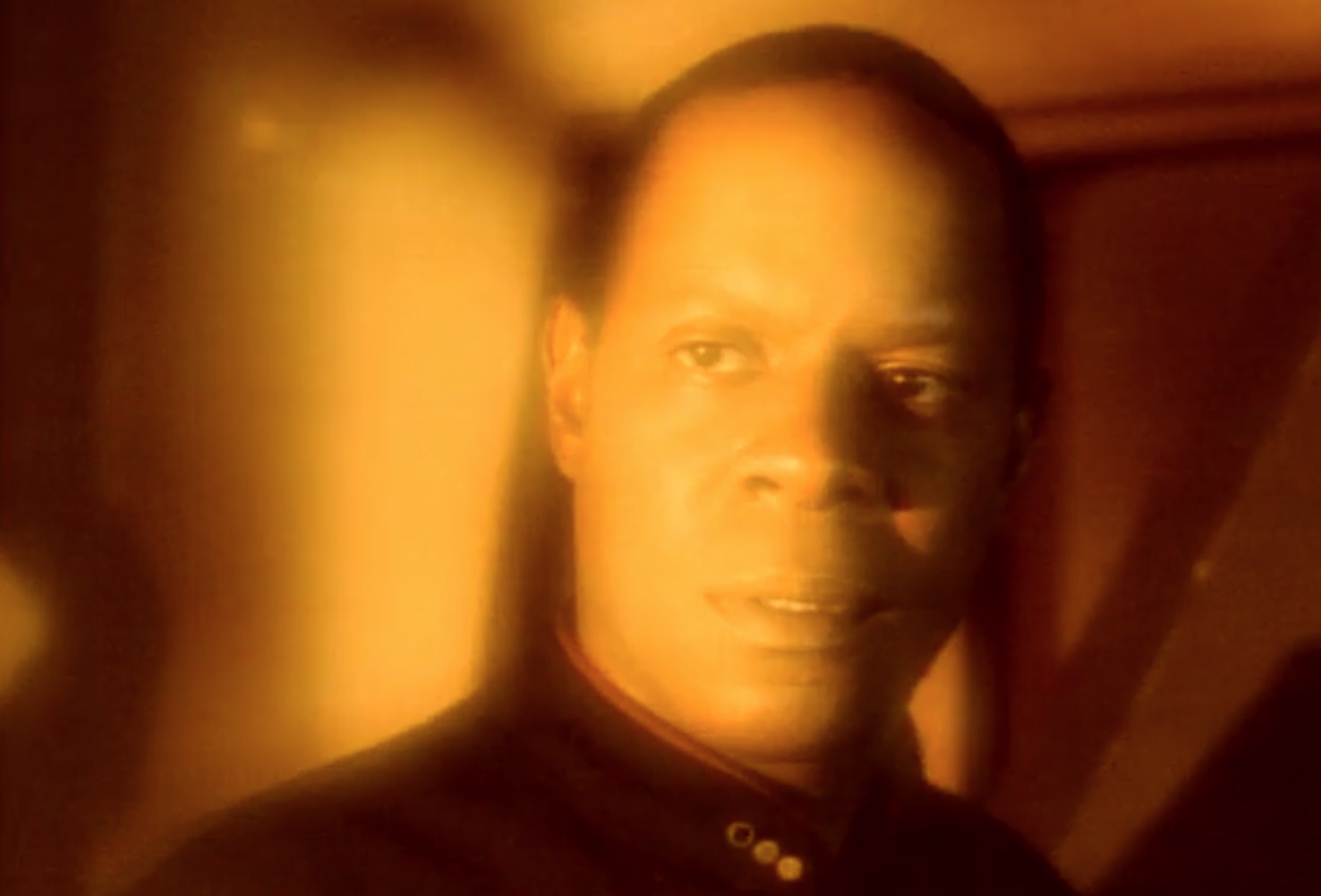 Deep Space Nine has always been my favorite of all the Star Trek incarnations. Sweeping in scope, meticulous with character, and challenging my moral intuitions, I got the feeling from the entirety from Deep Space Nine that one gets from a rich and satisfying novel: I felt like a better person for having experienced it.
Occasional viewings of particular out of context episodes aside, I’ve been through the series twice. Once when it originally aired in the 90s when I was in high school and college, probably missing a view episodes due to the ephemeral nature of fixed-schedule TV airings (which seems an absurd way to watch a series now); and in the aughts when I was in my twenties, mostly via torrented downloads on my computer and old-school video iPod.
I am now beginning a third time around, in my late 30s, this time alongside my wife who, while no stranger to Star Trek, never saw DS9. We’ve just watched the pilot episode, titled “Emissary,” and there was something different about it this time, some things I truly didn’t expect.
First of all, I think I expected it to seem more dated and hokey. Instead, it came off as rather mature, far more sure of itself than most TV pilots, and head and shoulders and freakin’ torso over other Star Trek pilots. Jessica, to my surprise, said it seemed a little more mawkish than she expected, but within acceptable parameters (my words, she never talks like that). But not for me. It really held up. I rarely felt taken out of the action by something that seemed forced or overdone.
Also, I know that DS9 has the reputation of being the “downer” of the franchise, the “grim” series, but coming back to it, from the beginning, after all these years, this really was something of a shock. The original series, The Next Generation, Voyager, and Enterprise all began their runs with heaps of wonder and optimism. (Things of course go badly wrong for Voyager in order to set the stage for the series, but the hopeful “second star to the right and straight on ’til morning” spirit was always there.)
The series opens with a flashback to a massacre, and our lead protagonist unable to save his dead wife, and having to abandon his ship to a relentless zombie-cyborg force. Being stationed then at Deep Space Nine, née Terok Nor, we are placed in the midst of an ugly transition out of a brutal occupation. In the pilot episode of a Star Trek series, we are immediately faced with violent, pointless deaths and several characters absolutely spilling over with anger, regret, and helplessness. It’s quite stirring, and it all works.
But there was one part that hit me the hardest, that sunk deep into me, and oddly it’s something I’d almost entirely forgotten about from past viewings.
Toward the end of the episode, Ben Sisko is conversing with the skeptical wormhole aliens, non-physical entities who don’t even experience linear time as we do. They speak to him by taking the form of people in his memories, in the very settings he originally experienced them. So, for example, he discusses how humans experience time with his “son” Jake as they sit by what appears to be a lake, or with his late wife “Jennifer” as they walk down the beach where they met. It’s not really Jake and Jennifer, but wormhole aliens who have assumed their forms, taken from Sisko’s memory.
Somehow, Sisko repeatedly finds himself talking to the aliens amid his memory of the day his wife was killed by the Borg, where he sees his wife, dead, under a pile of rubble, as he’s about to be pulled away toward an escape vessel by his Bolian crewmate. Memory after memory, conversation after conversation, Sisko returns to the place and time he lost his wife.
Throughout their conversations, which are some of the headiest and evocative pieces of dialogue one was ever likely to hear on prime time commercial television, Sisko struggles to explain to the aliens how humans and other “corporeal beings” do not exist in a timeless state, but begin an existence, live their lives through a chain of causal events, and then cease to exist. The aliens are entirely unfamiliar with such an existence, and they ask increasingly probing questions in order to grasp the concept.
One thing doesn’t make sense to them. Remember, they only have Sisko’s memories as a frame of reference. Sisko is telling them that corporeal beings travel along a timeline, and make the best of their lives from one moment to the next, aware that each choice affects and allows the moments to come. And yet, they keep returning to the scene of Jennifer’s death. One of them asks Sisko, “If what you say is true, then why do you exist here?!”
It’s not the aliens taking Sisko to this scene, it’s Sisko taking them.
 “I never left this ship,” Sisko says, a realization dawning on him.
“You exist here,” the alien in the form of Jennifer says, also beginning to understand.
“I exist here,” says Sisko. “I don’t know if you can understand.” He begins to sob, increasingly so as he speaks. “I see her like this, every time I close my eyes. In the darkness, in the blink of an eye, I see her… like this!”
“None of your past experiences helped prepare you for this consequence.”
“And I have never figured out how to live without her.”
“So, you choose to exist here,” says the alien, and Sisko nods. “It is not linear.”
“No,” he says, drained, exposed, defeated. “It’s not linear.”
In previous viewings, this scene was meaningful, but to the extent that it was a character I was interested in coming to terms with something painful. It did not truly resonate with me.
Now, as I approach 40, with a wife and two children that I love beyond measure, and with an ongoing struggle with my own post-traumatic stress, I understood.
For so long after I was attacked, I existed there, on that sidewalk, in the dark, with the sounds of footfalls running toward me, of the blows to my head and body, the impact of the concrete, the vertigo of the stumbling walk home. I existed there.
I existed in the throngs of middle school classmates joyfully mocking me, I existed in the oppressive air of the abuse and scrutiny (real and imagined) of my preteen and teenage years. Decades on, I stayed there.
And much to the sadness and frustration of those who loved me, but couldn’t understand, it was not linear.
I suppose I simply hadn’t yet lived enough to truly understand Sisko’s journey before. It’s amazing to me now, to think that this profound, climactic lesson of my favorite show just flitted away in previous viewings. I’m so glad I came back to it now to experience in earnest. I wonder what else Deep Space Nine will show me this time that it couldn’t before.
If you like my work, please consider supporting it through Patreon.
This Fucking Guy: How Our Shitty Electoral System Let a Monster Run Maine
 Even in the Age of Trump, one political figure stands out above all others as the lowest of the low, the king of the boors, the bastard of disaster, Paul LePage, second-term governor of the great state of Maine, my home.
In just the last 72 hours, he has left a threatening voicemail with a state legislator, promising to “come after you” and calling him a “cocksucker.” He also demanded the legislator “prove I’m a racist,” which LePage quickly did all by himself:
When you go to war, if you know the enemy, the enemy dresses in red and you dress in blue, you shoot at red, don’t you? You shoot at the enemy. You try to identify the enemy. And the enemy right now, the overwhelming majority right now coming in are people of color or people of Hispanic origin. I can’t help that. I just can’t help it. Those are the facts.These are just the latest two examples of what kind of an abysmal pit of a human being he is.
Believe me when I tell you that Maine is a good state. The people are by and large good-hearted, decent, and tolerant. There is a generosity of spirit within the state’s culture that I’ve not seen the likes of in any other place I’ve lived. Now, of course, Maine is populated by humans, and that means a large number of them will be assholes, ignoramuses, vultures, bullies, cowards, and gross opportunists. Such is homo sapiens in all its wonder.
But Paul LePage does not represent the Maine I know. His governorship is not a true reflection of the politics, nor even the simplest notions of decency, of Mainers as a whole. And yet somehow he has been elected the state’s leader, twice. How could this be?
You might already know that in both of LePage’s gubernatorial races, he faced not one but two opponents: A Democratic nominee, and an independent, Eliot Cutler. Now, Maine has a history of being open to independent candidacies that sets it apart from other states. Sen. Angus King is one such independent, and was previously a very popular governor. It is rational for other potentially-strong independent candidates to think they have a realistic shot at being elected over the major party candidates.
You know how this ends, of course. In 2010 the vote was more or less split three ways, with LePage eking out a plurality victory with almost 38%, and the independent Cutler coming in second with 36%, and the Democrat Libby Mitchell lagging with about 19%. Fast forward to 2014 and the unthinkable was thunk all over again, but this time Cutler faltered, earning only a little over 8% of the vote, but enough to deny a victory to the Democrat, Rep. Mike Michaud, who lost with 43% to LePage’s 48%.
I say that Cutler denied a victory to Michaud because there was very little overlap in those who favored both Cutler and LePage. Had Cutler not run, Michaud would have won. In 2010, had the Democrats realized they were out of luck that year, they could have rallied behind Cutler, and kept LePage from ever having gotten near the governorship, with a guaranteed blowout victory.
So is it all Cutler’s fault? Is it Libby Mitchell’s for not facing reality in 2010? In the narrow view, yes. For the good of the state they sought to lead, they should both have examined their consciences and done what needed to be done to stop LePage from becoming governor.
But in the broad view, the fault lies not with the candidates, who rationally believe they have a shot to win and a right to run, but with the electoral system itself. Hate the game, not the player.
I’m talking of course about the first-past-the-post system used for almost every office in American politics, where the person who simply gets the most votes – not the candidate who gets a majority of votes, and that’s important – wins. Pluralities, not majorities, decide who takes power. And pluralities have a funny way of being very small and very unrepresentative of electorates as a whole.
Let’s pretend that Maine instead used a voting method that allowed voters to rank the candidates in order of preference. If voters get to indicate their second and third (and so on) choices on their ballots, non-viable candidates can be eliminated and a real consensus can emerge.
You might have heard of Ranked Choice Voting or Instant Runoff Voting (insider secret: they’re the same thing!), particularly during the 2000 election when Ralph Nader began to whittle away at Al Gore’s support. It’s actually wicked simple.
To be brief, you look at your ballot, and you mark your favorite candidate with a 1, your second-favorite with a 2, and so on. In 2010, a Mitchell voter would likely have indicated Cutler as their second choice (not all of them, of course). So when the ballots were counted and showed that Mitchell had come in third place for first-choice votes, she’d have been eliminated, and those ballots would then be allocated to Mitchell voters’ second choices. Most of those would have been for Cutler, and Cutler would have gone over the 50% mark, winning with an actual majority instead of a mere plurality.
If you have a gut reaction to this along the lines of “well that doesn’t seem fair,” let me put it this way: Is it fair that the person taking office is someone wholly rejected and disliked by two-thirds of the electorate? By counting the second-choice votes of non-viable candidates, the electorate gets the candidate who was the true consensus choice of the majority. Mitchell voters, otherwise relegated to electoral irrelevance, can now say, “If I can’t have Mitchell, I’ll take Cutler,” and actually be heard. They still count.
Now repeat this for 2014. Chances are most Cutler voters (doomed to see their candidate get crushed) would have preferred Michaud over LePage. Eliminate Cutler in the first “round,” reallocate his supporters’ second-choice votes, and you probably have Michaud eking out a majority.
Or maybe you don’t! Maybe I’m wrong about who Cutler voters would have preferred and you still get a LePage win, but at least that would reflect the actual will of the electorate. As you can imagine, though, I find that implausible, and despite LePage’s strong 48% showing in 2014, a sizable enough portion of Cutler’s slice of the electorate would have pushed Michaud over the 50% mark, needing only an additional 6 and a half percent or so.
If Florida had used such a system in 2000, it’s inconceivable that Gore would not have won the state, being the overwhelming second-choice of Nader voters, and saving us from eight years of horror. And more to the point, it would have been the fair thing to do, representing the actual majority consensus of Florida’s voters. You know, “the people.”
(Now imagine if the current presidential election were closer than it is, and it really looked like Gary Johnson or Jill Stein might tilt the race from Clinton to Trump, when you know for certain that Trump doesn’t have the support of the majority of Americans. Yeah, think about that. Think hard about it, then get a drink.)
This is so obvious to me, that it pains me that the push to get ranked choice systems in place, even experimentally, is such an uphill slog. I was in the slog, having worked for FairVote back in the aughts, which is the country’s main advocate for these kinds of reform. There is a real movement to get this adopted in Maine statewide, as it has already been working successfully in the mayoral elections for Portland, Maine since 2011.
So let me wind this down by narrowing the focus back to the Goblin King of New England. Maine is not a state of grotesque monsters, and yet because of our first-past-the-post voting system, we have one for governor, and he’s one that threatens people who get under his skin and talks about shooting down black and Hispanic people. And that’s just what he says out loud. His policies (and just as important, the policies he blocks) are as dark and soulless as his words and his heart.
That’s not Maine. That’s not us. I wish we had a voting system that allowed us to say so.
If you like my work, please consider supporting it through Patreon.
You Don't Seem Autistic to Me: Asperger's and the Fear of Not Being Believed
[Updated below]
Do you remember when you were a kid, and being sick meant the tantalizing possibility of staying home from school for a day? I was usually pretty pleased to be just sick enough to avoid the misery of middle and high school, as long as the illness in question wasn’t something agonizing. (I did have some brutal ear infections back then that I did not enjoy.)
I remember that I would become pretty defensive about just how sick I really was. “Are you sure you’re not well enough to get through the day?” my parents would ask. I, taken aback by my parents’ skepticism, would respond with incredulity. “Yeeeesssss! I’m suuuuuure!” That defensiveness was due to the fact that I knew I wanted to be sick, and I knew that it was possible that I could maybe make it through the day, that I was perhaps playing it up a bit. It didn’t occur to me then, but does now, that this over-dramatization of illness on my part was probably already being taken into account by my parents and their decision to allow me to stay home. Melodrama was built into the stock, as it were.
Today something very similar is cropping up for me in a whole new way with my recent diagnosis of Asperger’s syndrome. (Here’s my first post on this new revelation, and some follow-up.) I am finding myself feeling very defensive about the fact of my condition. I am often under the suspicion that certain people in my life doubt the reality of my Asperger’s, that they think I’ve either gotten a bad diagnosis, or that I’ve somehow manipulated the process to get it.
In reality, only one person has actually said anything like this, and it was said with the best and most generous of intentions, saying that I am just too “charming” and personable to be someone with Asperger’s, comparing the behavior they see from me with others they know with the same condition, and who seem very, very different.
And I get that. Many people with Asperger’s, and many of the fictionalized portrayals of Asperger’s in entertainment, have glaringly severe social impairments that are obvious and off-putting to neurotypical people. There are aspies who really look like they “have something.” Whereas I don’t seem that way to most people. I would venture to say that no one, save my wife and therapist, would have ever entertained the notion that I might be at all autistic. I pass extremely well in most cases.
And why wouldn’t I? I have spent the better part of four decades trying to not seem like an alien, but suffering under the constant stress of my what I perceived to be scrutiny and revulsion from others. I had every incentive to appear as normal, as charming, as personable, and as funny as possible when in the company of people. And when attention on me wasn’t a requirement, my incentive was to blend, to disappear, to go as unnoticed as possible. As far as my brain was concerned, this was a struggle for survival. I, at a biological level, believed I needed to pass and to blend in order to live.
And I had no idea why it was so, so incredibly hard. I had to assume it was my own stupidity, laziness, obliviousness, or defectiveness.
So of course I don’t seem like an aspie to most people most of the time. As a contrast, there’s a person I know who I strongly suspect is also an aspie, but hasn’t felt the same need to adapt or ingratiate themselves to others, and has instead fully embraced their quirks, to hell with everyone else if they don’t like it. I never had the luxury to go in that direction, and it never occurred to me to be an option. I felt I had absolutely no choice but to pass.
And like the kid who is secretly glad to be sick in order to be able to stay home and watch TV all day, I wanted this diagnosis. I hoped the neuropsychologist would come back with a clear statement that I, indeed, had Asperger’s. It promised to explain so much of the pain and alienation and utter confusion I’ve experienced all my life, and it would mean that it wasn’t all due to my own failures to “live up” to the rest of the world’s norms and expectations. So I worried that in my testing, I might unconsciously try to “game the system,” and make myself seem more “aspie” (as though I would really know how to do that). Just as I was worried about others’ suspicions of me, I was suspicious of myself.
This worry, though, turned out to be a pointless one. The testing, which took about 10 hours total, was so, well, alien to me, so removed from anything that I thought could relate to Asperger’s or much of anything else, I couldn’t have gamed it if I’d wanted to. And like the mom who already presumes their sick kid is probably overstating things just a little, these tests and evaluations have unconscious leanings already taken into account, as their abstractness and inscrutability are a definite check against the gilding of psychological lilies.
In the interviews and written portions of the evaluation, I did check myself for embellishment, but it turned out I felt no impulse to embellish. Honest, straightforward answers according to my own genuine thoughts and feelings were enough. They spilled out. I told my story as honestly as one could, because that story was full and rich and silly and sad all by itself. It didn’t need any dramatization or exaggeration. It was whole on its own.
And the doctor’s diagnosis was indeed definitive. There was no hedging, no “jump ball,” as Ray Romano’s character on Parenthood put it when he looked into the possibility of being an aspie himself. It was for sure. The doctor described it as “severe,” meaning firmly on the spectrum, and she explained how my results on the barrage of seemingly unrelated tests all confirmed this, one after the other.
She also described how people with Asperger’s commonly find themselves drawn to the arts and to acting in particular. Aspies usually have sharp minds and good observational skills, and use those to their advantage in learning particular crafts and in the imitation of others’ mannerisms and behavior. I’m a pretty good stage actor, and it turns out I’m also a pretty good neurotypical imitator. As I said, I’ve had almost 40 years of practice.
So it’s no surprise that I don’t “seem” autistic to most people. The doctor actually tried to impress upon me what a remarkable achievement it is that I’ve gotten this far, with a master’s degree and a meaningful job and a wonderful wife and amazing kids, all while trudging through this morass, and navigating through the confounding labyrinth of my differently-wired brain.
But rather than take pride, I tend to feel defensive. I still stress over scrutiny. I still worry about the doubts of others. Just as I’ve felt like a fraudulent human, always about to unmasked and humiliated (which, remember, I internalize as a genuine threat to my survival), here I am again afraid that others will think my autism is overstated or a mere performance.
Just last night I had a conversation about my autism with someone who has their own personal experience with people close to them who also have Asperger’s, and I felt like I was drowning. I rambled and sputtered, I spoke too loud and too fast, and I kept lurching back and forth between filling up conversational space and worrying that I had gone on too long. I was a hot mess, and now I realize it was because I was afraid I wasn’t being believed. This person had not said or done anything to make me think that, but I just thought that. In discussing something so new and personal and raw, I scrambled and flailed to protect myself.
I don’t want to feel that way anymore. Part of this new chapter of my life is the beginnings of acceptance and belief in myself, regardless of what others think, or even more important, what I perceive or suspect they think. That would be true even if I didn’t have Asperger’s.
This is real. This is who I am, and who I have always been. And though it is as old as I am, for now it is also new. In some ways, I am new. The coming months and years will find me experimenting with and easing into new ways of being and behaving that better suit me, and stepping back from many of the affectations and masks I’ve layered upon myself over the years. Many of those layers will stay, because they, too, are me.
I guess, when it comes down to it, I get to decide. I will try not to make that process harder on myself by worrying about the imagined doubts of others, which only fixes those layers more firmly in place.
Update August 27: Since writing this, one thing should be clarified. Some of the doubt I imagine to exist, but likely doesn’t, is about me, but another more problematic version of skepticism is doubt about the neuropsychologist who diagnosed me. And I just don’t know what to say to that. She’s an expert in her field, with decades of experience, and a particular specialization in adults on the spectrum, and she tested me for hours and hours over a period of months. And that’s in addition to the diagnosis of my regular therapist. But they don’t know what they’re talking about?
Honestly, if you think my doctor is wrong, I don’t know what to say to you. I’m not sure why you’d know better than them, or know enough to think they somehow screwed up completely. But it’s very frustrating.
If you like the work here, please consider supporting it at Patreon.
I'm Now On Patreon (And I Feel a Little Weird About It)
I am now experimenting with Patreon, the crowdfunding service, in order to see if I can ease some of my financial stress by creating meaningful units of consumable Content™. I feel a little weird about it, and I’m a little uneasy about the idea that there might be people who want to give their money to support my extracurriculars. But I already have one patron (thank you so much, Lisa Boban!), so maybe there are more who are similarly generous.
Go check out my Patreon page if you’re so inclined, and if you’re feeling really inclined, maybe pitch in. If you want. But you totally don’t have to.